


Aerial Real Estate Photography AZ/NV | Extreme Aerial
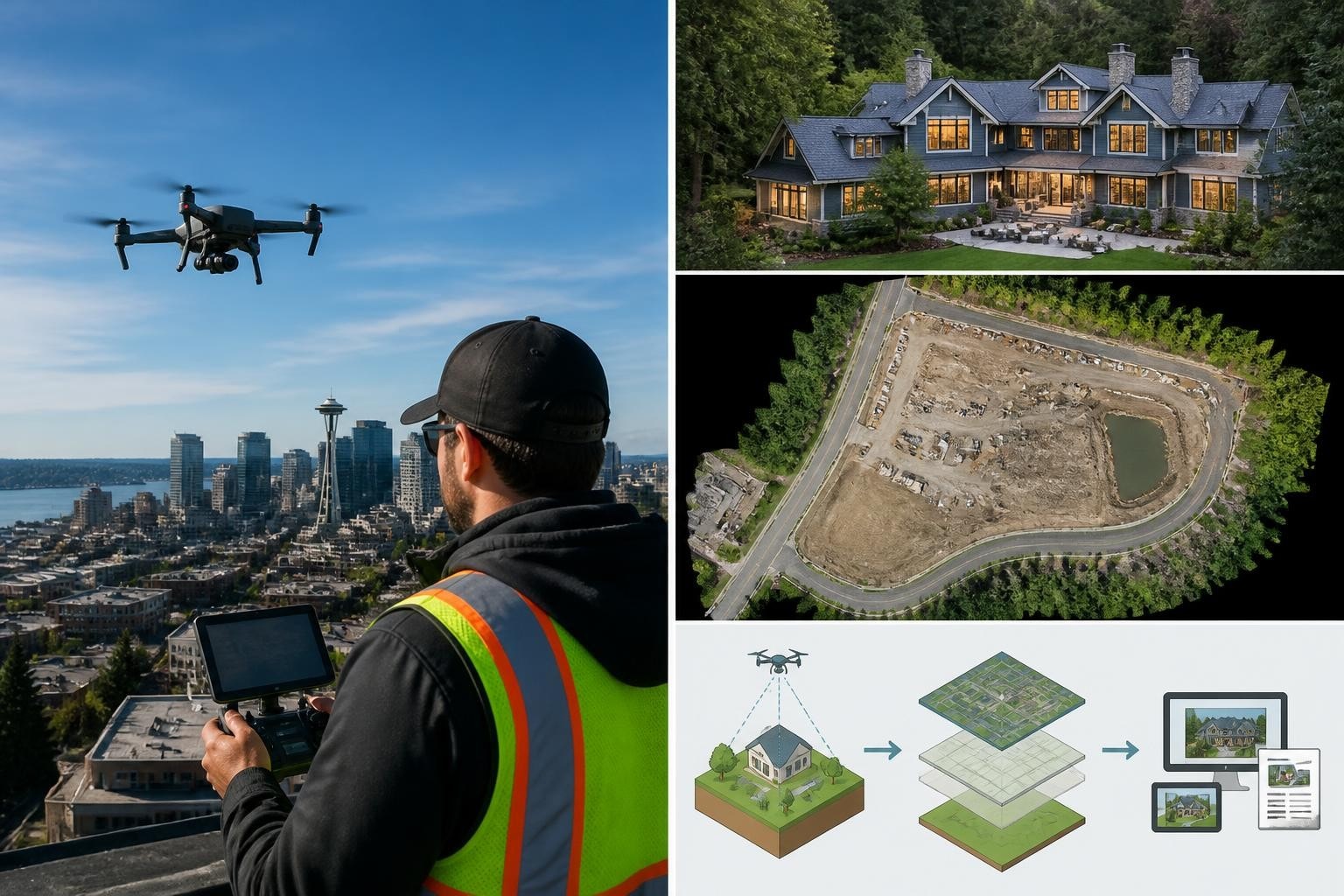
A Scottsdale luxury broker contacted us in January 2026 with a problem: a 4.2-acre estate listing had sat for nine weeks with no serious offers. The ground-level photos showed architecture and interiors but failed to communicate the property's privacy, lot lines, mountain backdrop, or proximity to the McDowell Sonoran Preserve. We delivered 18 aerial real estate photography images from multiple altitudes and angles in 48 hours. The listing went under contract 11 days later at 97% of asking. The broker credited the aerial package for shifting buyer perception from "another desert house" to "once-in-a-lifetime retreat."
Project Snapshot: Scottsdale, Arizona | Luxury residential real estate | Deliverables: 18 edited aerial stills (oblique, nadir, twilight progression) | DJI Mavic 3 Pro with Hasselblad L2D-20c sensor | 48-hour turnaround | Constraints: Class D airspace coordination with Scottsdale Airport, HOA flight restrictions, winter sun angle for mountain emphasis.
Why Aerial Real Estate Photography Changes Buyer Behavior
Traditional ground photography shows rooms and curb appeal. Aerial real estate photography shows context. Buyers see lot boundaries, neighbor spacing, access routes, landscaping maturity, roof condition, and geographical assets in a single frame. According to the National Association of Realtors, listings with aerial imagery receive 68% more online inquiries than ground-only listings, and 73% of homeowners prefer agents who offer drone photography (NAR, 2025). In competitive Arizona and Nevada markets where similar floor plans saturate inventory, aerial perspective separates ordinary listings from premium ones.
We've documented this shift across 340+ real estate projects since 2014. Aerial views compress decision timelines. Instead of scheduling second showings to confirm property lines or neighborhood character, buyers arrive prepared. Agents report fewer tire-kickers and more qualified offers. One Henderson broker told us her average days-on-market dropped from 42 to 28 after adding aerial real estate photography to every listing above $600,000.
Effective aerial real estate photography requires more than altitude. You need the right time of day, sun position, altitude ladder, and lens choice. Morning light emphasizes texture and depth. Golden hour adds warmth. Twilight exteriors with interior lights create aspiration. We typically shoot three passes: high nadir for lot context, mid-oblique for architecture and surroundings, and low hero angle for emotional pull. Each serves a different phase of the buyer's mental checklist.
Planning Flights That Respect Airspace and Neighbors
Arizona and Nevada real estate sits in varied airspace. Scottsdale, Paradise Valley, Summerlin, and Henderson all require coordination. We file LAANC authorizations for controlled airspace, confirm altitudes with local tower facilities, and review Temporary Flight Restrictions before every mission. FAA regulations for real estate drone operations demand Part 107 certification, but they also require judgment. Flying at legal altitude over a residence at 7 a.m. might be compliant but generates complaints. We schedule flights between 9 a.m. and 5 p.m. unless twilight shots are requested, and we notify adjacent property owners when possible.
Airspace isn't the only constraint. HOAs, especially in master-planned communities around Phoenix and Las Vegas, enforce drone restrictions. We've worked with agents to secure written HOA approvals, adjusted flight paths to avoid common areas, and timed flights during low-traffic windows. One Anthem project required a 72-hour notice and board approval. We submitted flight plans, pilot credentials, and insurance certificates three days ahead. The mission launched on schedule, and the listing went live the same week.
Field Note (Mark, Extreme Aerial Productions): We chose the Mavic 3 Pro for Scottsdale real estate work because the Hasselblad sensor captures 20MP stills with excellent dynamic range. Arizona's high-contrast light-bright stucco against dark mountains-can blow highlights or crush shadows. The L2D-20c handles that range cleanly. We also carry ND filters for midday shoots and polarizers to cut haze. Backups matter. On a $2.4M Paradise Valley listing last month, our primary aircraft threw a gimbal error during preflight. We swapped to the backup Mavic 3, recalibrated, and launched within six minutes. The agent never knew.
Executing the Shoot: Altitude, Angles, and the Shot List
We start every aerial real estate photography mission with a shot list built during the pre-flight call. Agents tell us what's unique: pool and outdoor kitchen, mountain views, golf course frontage, preserved open space, cul-de-sac privacy. We translate that into altitude and angle combinations. A typical residential shoot includes 12–20 images across three altitude bands.
High nadir (200–300 feet AGL): Shows lot shape, boundaries, landscaping layout, rooflines, and neighborhood grid. Buyers see property lines, setbacks, and mature trees. We frame these shots to include nearby amenities-parks, trails, golf holes-without violating neighbor privacy.
Mid oblique (80–150 feet AGL): Captures architecture, hardscape, and immediate surroundings. This is where pool decks, courtyards, driveways, and covered patios read clearly. We adjust gimbal angle between 25–45 degrees to balance elevation and detail. A 35-degree angle at 120 feet typically nails the hero shot.
Low reveal (40–70 feet AGL): Emphasizes scale and emotion. We shoot wide-angle to include foreground landscaping and background vistas. These images anchor marketing videos and social posts. One Summerlin agent uses our low-angle twilight shot as her listing card cover. She says it pulls more walk-ins than any other visual.
We also shoot bracketed exposures for HDR processing. Arizona sun and Nevada glare demand it. A single exposure at noon either loses sky detail or underexposes architecture. Three-stop brackets give us clean skies, readable facades, and rich shadow detail in post. We deliver edited JPEGs and full-resolution TIFFs. Agents use JPEGs for MLS and social; designers pull TIFFs for print collateral.
Post-Processing and Turnaround Expectations
Raw aerial captures need color correction, perspective adjustment, horizon leveling, and distortion correction. We process every real estate image in Adobe Lightroom and Photoshop. Typical adjustments include white balance correction (Arizona skies skew warm), shadow lift, highlight recovery, lens profile correction, and vertical line alignment. We remove minor distractions-yard equipment, trash cans, vehicles if requested-but avoid excessive manipulation. Buyers expect accurate representation.
Turnaround matters. Most agents need images within 48 hours to hit MLS deadlines. We deliver edited finals via cloud link within two business days. Rush requests-listing launch the next morning-cost extra but happen regularly. One Las Vegas agent called us at 3 p.m. on a Tuesday for a Thursday morning MLS upload. We flew Wednesday at sunrise, processed by 2 p.m., and delivered 16 finals by 5 p.m. The listing went live Thursday at 9 a.m. and had four showings scheduled by noon.
According to Adobe's best practices for aerial real estate photography, consistency across images improves listing presentation. We maintain color continuity, matching sky tones and landscape hues across all angles. If one shot shows rich blue sky and another shows washed cyan, the listing looks disjointed. We also deliver images at consistent aspect ratios-3:2 for print, 16:9 for video stills, and 4:5 for Instagram if requested.
Compliance, Licensing, and Legal Considerations
Aerial real estate photography operates under FAA Part 107 rules. Pilots must hold current Remote Pilot Certificates, but compliance extends beyond certification. We carry $2 million general liability coverage and $1 million hull coverage on every aircraft. Agents request certificates of insurance before signing agreements, and we provide them within hours. Some brokerages require named insured endorsements. We add those at no charge.
State-level regulations also apply. A 2023 federal appeals court ruling in North Carolina affirmed that drone mapping services may require surveyor licensing depending on deliverable use. While Arizona and Nevada have not adopted identical statutes, we coordinate with licensed surveyors when projects involve boundary determination or legal descriptions. Real estate aerials for marketing fall outside surveying scope, but we stay current on case law and licensing requirements.
We also handle location releases and neighbor notifications. If a flight path crosses adjacent properties or captures identifiable private features, we document consent. On one Carefree estate project, the listing property bordered a private ranch. We contacted the ranch owner, explained the flight plan, and secured written permission. No complaints, no delays. Understanding legal requirements for real estate drone photography prevents post-shoot headaches and protects agents from liability.
Pricing Models and What Agents Should Expect
Aerial real estate photography pricing varies by property size, complexity, and deliverable count. We quote by the project, not by flight hour. A standard single-family residential package-12–18 edited images from multiple angles and altitudes-ranges from $350 to $650 in Phoenix and Las Vegas markets. Luxury estates, acreage properties, and ranch listings requiring extended flight time or twilight shoots run $750 to $1,200. Add-ons like 4K video walkthroughs, FPV interior-to-exterior transitions, or same-day rush delivery carry separate fees.
Some agents bundle aerial photography with ground shoots and virtual tours. We collaborate with interior photographers to deliver combined packages. On a recent Anthem project, we coordinated with the listing photographer to shoot aerials at 4 p.m. while interiors wrapped at 3 p.m. The agent received ground and aerial galleries the same day. Combined turnaround reduces listing prep time and aligns visual consistency.
Transparent pricing builds trust. We provide written quotes that detail deliverable counts, file formats, usage rights, and turnaround windows. No surprise fees. No "editing costs extra" clauses. Agents know the total before we launch. One Summerlin broker told us she switched from another provider because our quote matched the final invoice. She's booked 22 projects with us since March 2025.
When to Add Aerial Real Estate Photography to Listings
Not every listing needs aerial coverage. A 1,200-square-foot condo in a mid-rise building gains little from aerial perspective. But properties with land, views, privacy, or unique features benefit immediately. We recommend aerial real estate photography for:
Luxury and estate properties ($800,000+ in Phoenix/Las Vegas markets) where buyers expect comprehensive visual packages and context matters as much as interiors.
Acreage and ranch listings where lot size, topography, water features, or boundary clarity drive value and ground photos can't communicate scale.
Golf course, mountain, or water-view homes where location and backdrop justify premium pricing and aerial shots prove the view claim.
New construction in master-planned communities where aerial context shows amenities, trails, parks, and schools within walking distance.
Unique architectural or landscape features like infinity pools, multi-level terracing, circular driveways, or desert landscaping that read better from above.
One Henderson agent uses aerial coverage on every listing above $750,000 and selectively on $500,000–$750,000 homes with view or lot features. Her aerial-enhanced listings average 34 days on market versus 47 days for ground-only comparables in the same ZIP code (internal EAP client data, 2025–2026). Faster turnover means lower holding costs and quicker commissions.
Combining Aerial Photography with Video and FPV
Static aerials establish context. Video adds movement and narrative. We frequently pair aerial real estate photography with short cinematic overviews-30–60 second sequences that start high, descend through the property, and end on a hero ground angle. These clips anchor listing videos, social ads, and email campaigns. Agents report higher engagement on posts with video versus stills alone.
FPV drone videography takes immersion further. We fly through open front doors, down hallways, into kitchens, and out to poolside patios in a single continuous shot. The effect is visceral. Buyers feel the flow of the home. One Paradise Valley listing video-combining aerial stills, traditional video, and an FPV interior-to-exterior transition-generated 12,400 views on Instagram in five days. The agent credited the FPV sequence for three of the four showing requests that week.
We also deliver drone services for real estate that extend beyond photography. Progress documentation for new builds, pre-listing roof inspections, and neighborhood flyovers for builder marketing all use the same aircraft and workflow. Multi-service projects reduce mobilization costs and streamline scheduling.
Seasonal and Lighting Considerations in Arizona and Nevada
Arizona and Nevada light changes dramatically by season and time of day. Summer sun peaks high and harsh. Winter sun stays low and warm. Spring and fall offer balanced light with manageable shadows. We schedule aerial real estate photography to match property features and listing goals.
Morning light (7–10 a.m.) works well for east-facing facades and properties with mountain backdrops to the west. Shadows are long but soft. Colors are cool. Afternoon light (3–6 p.m.) favors west-facing views and evening entertainment spaces. Skies shift from blue to golden. Twilight (30 minutes after sunset) creates drama. Exterior lights, pool lighting, and landscape uplighting glow against deep blue skies. Twilight shots consistently become hero images in listing galleries.
Seasonal timing also matters. Desert landscaping looks best after winter rains (January–March) when ocotillo, palo verde, and saguaro bloom. Summer heat fades turf and stresses plantings unless irrigation is aggressive. We advise agents to schedule aerial shoots in late winter or early spring for maximum curb appeal. Fall (October–November) also works well as temperatures cool and grass greens up.
We track sun position using Photopills and UAV Forecast. For a February Fountain Hills shoot, we calculated exact sunset azimuth to align the sun behind Four Peaks in the background. The resulting hero shot framed the property's western deck with a mountain silhouette and orange sky. The agent ordered a 40×60 print for her office lobby.
Common Mistakes Agents Make When Hiring Drone Operators
We've seen agents hire uninsured hobbyists, unlicensed operators, and pilots who deliver raw, unedited files. The results range from disappointing to legally problematic. Common mistakes include:
Choosing the cheapest bid without verifying credentials. Part 107 certification, insurance, and airspace authorization are non-negotiable. Tips for capturing stunning aerial real estate shots emphasize skill and planning over equipment cost.
Requesting flights in controlled airspace without confirming LAANC approval. Operators who launch without authorization risk fines, and agents risk association with violations.
Assuming all drone operators deliver edited, MLS-ready images. Some provide raw JPEGs straight from the camera. Color, exposure, and perspective correction are essential.
Scheduling flights without discussing sun angle, time of day, or weather windows. A 2 p.m. shoot in July produces washed skies and harsh shadows. A cloudy day flattens dimension.
Skipping shot list discussions. Without clear direction, pilots guess at priorities. You might get beautiful aerials that miss the property's best features.
We provide pre-flight consultations to align on goals, timing, and deliverables. Agents describe the property's standout features. We recommend altitudes, angles, and lighting conditions. This front-end planning eliminates surprises and ensures the final gallery supports the listing narrative.
Working with Extreme Aerial Productions on Real Estate Projects
We've flown real estate missions in Scottsdale, Paradise Valley, Fountain Hills, Cave Creek, Carefree, Gilbert, Chandler, Tempe, Mesa, Henderson, Summerlin, and Lake Las Vegas since 2014. Our approach centers on reliability, quality, and communication. Agents tell us what matters. We plan the flight, handle airspace, show up with backups, and deliver edited finals on deadline.
We also coordinate with listing timelines. If MLS upload is Monday morning, we schedule Friday flights and deliver Saturday evening. If you need twilight shots for a luxury listing, we wait for optimal sky color and execute in a tight window. Precision matters. One Arcadia agent books us for every listing above $1.5M because, as she put it, "you just show up, do the work, and send me exactly what I need."
Our contact page includes a project intake form. Fill it out with property address, listing date, and feature priorities. We respond with a quote and suggested flight window within four hours. Book a scout call if the property has unique airspace or access challenges. We'll walk the site virtually, confirm altitudes, and lock the plan before the shoot date.
Evaluating Aerial Real Estate Photography Results
Results show up in listing performance. Track metrics like days on market, showing requests, online engagement, and offer count. Compare aerial-enhanced listings against similar ground-only comps in the same neighborhood and price band. We've documented the following outcomes across our Arizona and Nevada real estate clients (EAP client data, 2025–2026):
Listings with aerial photography received 41% more MLS views in the first seven days compared to ground-only listings in matched price ranges.
Average days on market dropped 22% for aerial-enhanced listings versus historical ground-only averages for the same agents and markets.
Agents reported 33% higher showing-to-offer conversion rates on properties marketed with aerial stills and video versus stills alone.
These numbers reflect correlation, not pure causation, but the pattern holds across luxury, mid-tier, and acreage segments. Buyers engage more when they see property context. Engagement drives showings. Showings convert to offers. Aerial real estate photography accelerates the cycle.
Quality also matters. Poorly composed or under-edited aerials can harm listings. Tilted horizons, blown highlights, or distracting backgrounds create negative impressions. We deliver images that look intentional and professional. Every frame is leveled, color-corrected, and checked for visual distractions. If a shot doesn't meet our standard, we reshoot or exclude it.
Aerial real estate photography delivers measurable advantages in competitive markets by showing buyers the full property story in a single glance. When you need dependable coverage, clean edits, and on-time delivery for Arizona and Nevada listings, Extreme Aerial Productions brings the planning, credentials, and gear to keep your marketing on schedule. Request a quote or book a scout call and we'll lock the flight plan, confirm the deliverables, and get your listing live.
Frequently Asked Questions
How much does aerial real estate photography cost in Arizona and Nevada?
Standard residential packages with 12–18 edited aerial images range from $350 to $650 in Phoenix and Las Vegas markets. Luxury estates, acreage properties, and projects requiring twilight shoots or extended flight time typically run $750 to $1,200. Add-ons like 4K video, FPV transitions, or same-day delivery carry separate fees. We provide written quotes detailing deliverable counts, turnaround, and total cost before launching any project.
Do I need special permits or approvals for aerial real estate photography?
Pilots must hold FAA Part 107 certification and file LAANC authorizations for controlled airspace around Scottsdale, Phoenix Sky Harbor, Henderson, and Las Vegas. HOA approval may be required in master-planned communities. We handle airspace coordination and provide insurance certificates to brokerages. If flights cross adjacent properties, we secure location releases to prevent complaints and protect agents from liability.
How long does it take to receive edited aerial real estate images?
We deliver edited finals within 48 hours for standard projects. Rush requests for next-day MLS uploads are available with advance notice. Files are delivered via secure cloud link in high-resolution JPEG and TIFF formats. Typical packages include 12–20 images from multiple altitudes and angles, color-corrected, leveled, and ready for MLS, print, and social use.
What types of properties benefit most from aerial photography?
Luxury and estate properties above $800,000, acreage and ranch listings, golf course or mountain-view homes, new construction in master-planned communities, and properties with unique landscape or architectural features all benefit from aerial coverage. Aerial real estate photography proves context, scale, and location advantages that ground photos cannot communicate. Condos and small urban lots typically see less impact.
Can you combine aerial photography with video or FPV for real estate listings?
Yes. We frequently pair aerial stills with 30–60 second cinematic overviews and FPV interior-to-exterior transitions. Combined packages create comprehensive listing videos that increase engagement on social media and MLS platforms. Agents report higher showing conversion rates when using multi-format aerial content versus stills alone. We coordinate delivery timelines to match listing launch schedules.


Comments