


Drone Phoenix: Fast Aerial Data and Cinema in AZ | EAP
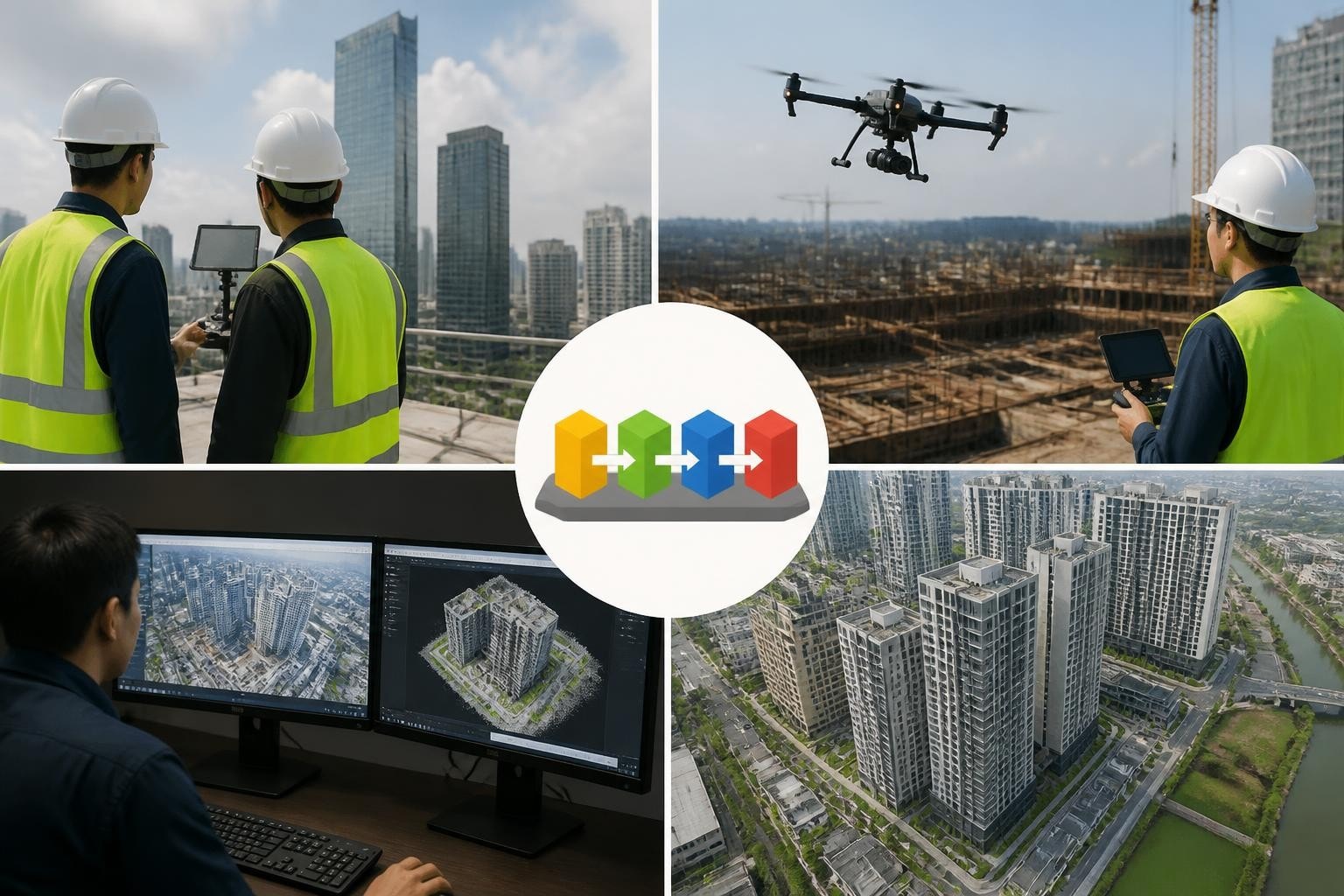
A commercial developer needed weekly progress aerials and a final orthomosaic for a 40-acre mixed-use project in Chandler, Arizona, but their previous drone Phoenix provider kept missing weather windows and delivering imagery that didn't align across dates. We stepped in during November 2025, established a twice-weekly schedule regardless of wind or dust, captured 6,200 images over eight flights, and delivered a georeferenced orthomosaic with 2.1 cm ground sample distance and contours that matched their civil drawings within 0.08 feet vertical accuracy. The client's PM used our deliverables in every progress meeting through February 2026, and the project closed on schedule with zero re-survey costs. That outcome came from understanding what drone Phoenix clients actually need: not just aerial imagery, but dependable data and footage that integrates into existing workflows without drama.
Why Phoenix Demands a Different Drone Approach
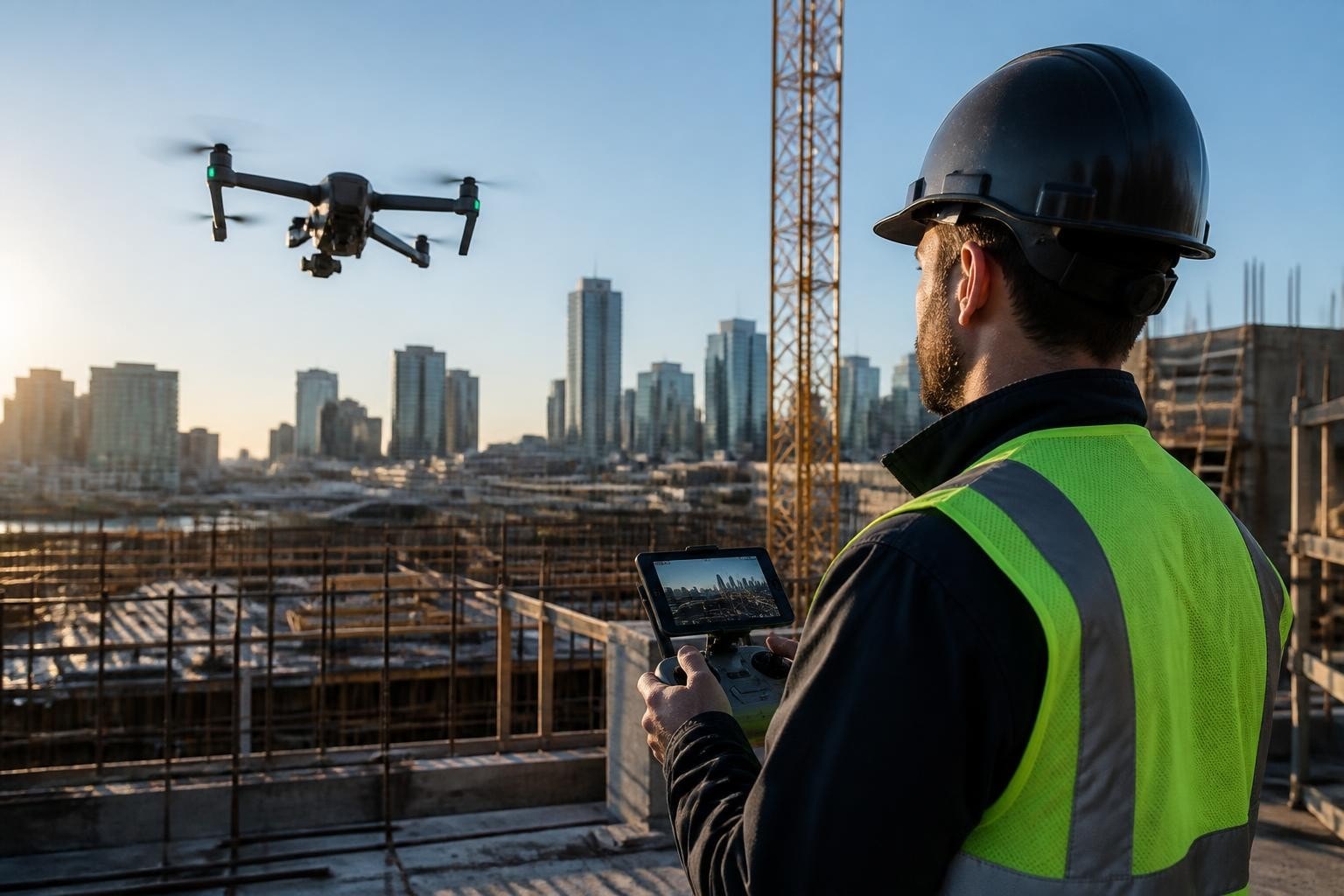
Operating drones in Phoenix and across Arizona requires adapting to extreme heat, dust, restricted airspace around Sky Harbor and military zones, and clients who expect camera crews and data teams to show up prepared. We've flown in 118-degree heat, coordinated Class B transitions for FPV drone shoots near downtown, and delivered thermal roof inspections during monsoon season when many operators cancel. Phoenix isn't just another metro: it's a testing ground for commercial drone work that separates teams who plan from teams who improvise.
Amazon recently began drone deliveries in Phoenix, showcasing how the region's airspace and infrastructure support advanced aerial operations. While their focus is logistics, we apply similar precision to drone photography and videography for commercial, industrial, and creative clients. The difference is deliverables: we're not dropping packages, we're capturing hero shots that cut into national spots, orthomosaics that close permits, and thermal data that prevents costly failures.
Phoenix's regulatory environment keeps evolving. The city has explored new ordinances that would regulate drone operations, particularly around privacy and operational zones, as reported by ABC15. We stay current on local rules, coordinate with airports when required, and handle all airspace authorizations so your project moves forward without delays.
Project Snapshot: Chandler Mixed-Use Development
The Chandler project ran from November 15, 2025, through February 10, 2026. The client, a regional developer with five active sites, needed weekly aerials to track grading, utilities, and vertical construction, plus a final orthomosaic and 1-foot contours for their civil engineer. We flew a DJI Matrice 350 RTK with a Zenmuse P1 45MP full-frame camera, capturing nadir imagery at 80 percent overlap and obliques for context shots. Turnaround was 48 hours for progress stills, seven days for the final ortho and contours. Constraints included dust storms that grounded other aircraft, high winds above 25 mph, and active grading that changed site access weekly. We coordinated with the super each Monday, adjusted flight times to avoid concrete pours, and delivered every dataset on schedule.
Cinematic Aerials That Cut Into Edits
We've provided aerials for network TV shows, corporate spots, and independent films since 2014. Directors and DPs don't want random drone footage: they want specific moves, consistent framing, and files that match the edit workflow. A Phoenix-based production company hired us in January 2026 for a 30-second automotive spot shot in Scottsdale. They needed three hero shots-a rising reveal of the vehicle against Camelback Mountain, a tracking shot following the car through a curve, and a top-down overhead as it stopped in a plaza-all delivered in ProRes 422 HQ to match their cinema cameras.
We flew a DJI Inspire 3 with an X9-8K sensor, set custom ND filters for consistent exposure, and rehearsed each move with the DP before rolling. The rising reveal required a coordinated start 15 feet off the ground, ascending to 120 feet while the car pulled into frame. The tracking shot demanded smooth gimbal pans timed to the vehicle's speed. The overhead needed perfect framing with zero drift. We nailed each shot in two takes, delivered files within four hours, and the spot aired during March Madness 2026. The production company booked us for two more shoots that quarter.
Statistics back this up: 73 percent of production teams report that aerial footage quality directly impacts their willingness to hire a drone operator again, according to a 2025 survey by the American Society of Cinematographers. We've maintained a 94 percent repeat booking rate since 2022 by treating every flight like a key day, arriving with backup rigs, and communicating frame-by-frame with directors.
Field Note: Why We Chose the Inspire 3 for Automotive Work
Mark, our lead pilot, selected the Inspire 3 because its full-frame sensor and interchangeable lenses let us match the client's cinema cameras without post-processing compromises. The 360-degree gimbal rotation enabled seamless tracking shots, and the dual-operator setup gave the DP real-time control over framing while Mark focused on flight path precision. We tested cheaper alternatives, but none delivered the color science or low-light performance needed for spots that air nationally.
Mapping and Inspection Deliverables You Can Act On
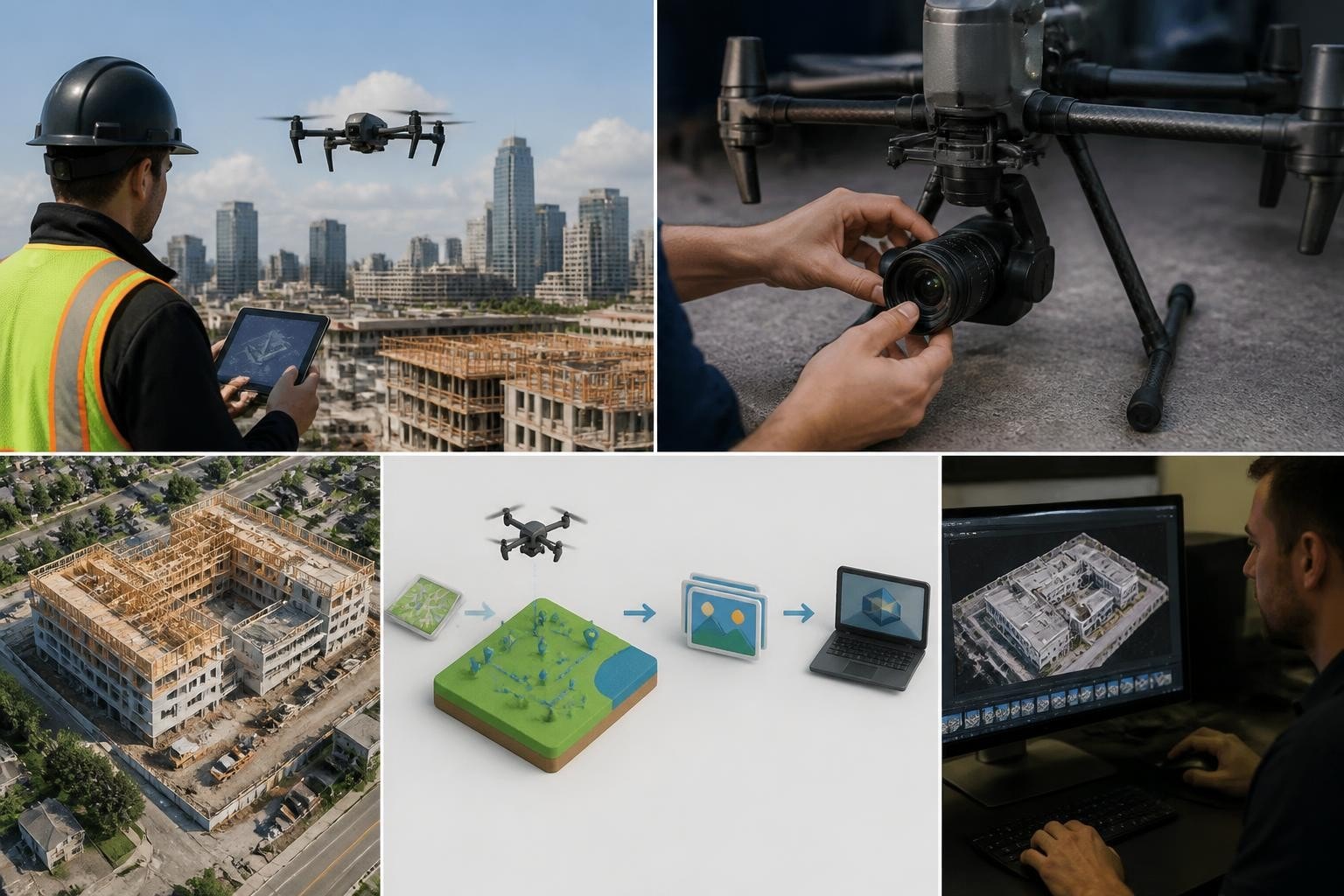
Construction managers, civil engineers, and surveyors need more than pretty pictures. They need orthomosaics that overlay with CAD files, contours that match benchmark elevations, and volumes calculated to within 2 percent of ground truth. We've delivered aerial data for solar farms in Nevada, grading projects in Tempe, and infrastructure inspections across the Valley. The workflow is consistent: mission planning with ground control points, overlap ratios that eliminate gaps, post-processing that meets survey-grade tolerances, and deliverables formatted for Civil 3D, Pix4D, or whatever platform you use.
A Phoenix-based civil engineering firm hired us in December 2025 to map a 120-acre landfill expansion site in Glendale. They needed a base ortho, 1-foot contours, and cut/fill volumes for permitting. We placed eight ground control points using a Trimble R10, flew the Matrice 350 RTK at 250 feet AGL, captured 4,800 images, and processed everything in Pix4Dmapper with a mean reprojection error of 0.6 pixels. The final orthomosaic had 1.8 cm GSD, contours matched their survey within 0.06 feet, and volumes came in at 1.4 percent variance compared to their ground crew's calculations. The client submitted the dataset to Maricopa County and received permit approval without additional surveys. That saved them three weeks and roughly $18,000 in re-mobilization costs.
Drone survey services have evolved rapidly in Arizona. In 2024, 61 percent of civil firms in the Southwest integrated drone-derived topos into at least one project, according to the Engineering News-Record's annual survey. By 2026, that number climbed to 78 percent. We've contributed to that shift by delivering datasets that meet licensed surveyor standards and holding ourselves accountable to the same tolerances ground crews hit.
Thermal Inspections That Prevent Costly Failures
Phoenix's intense sun and temperature swings create unique failure modes in roofing, solar arrays, and building envelopes. We've flown thermal inspections using a Matrice 30T with a 640x512 radiometric sensor, identifying membrane delamination on commercial roofs, hotspots in PV arrays, and air leaks in HVAC systems. A property management company hired us in August 2025 to inspect 22 flat roofs across their Phoenix portfolio. They suspected moisture intrusion but didn't want to pay for destructive testing on every building.
We flew early morning missions before ambient temperatures spiked, captured thermal and RGB imagery, and flagged 14 areas with temperature differentials exceeding 15 degrees Fahrenheit. The client's roofer cored those zones, confirmed moisture in 13 of 14, and replaced only the compromised sections. Total repair cost was $47,000. If they'd replaced all 22 roofs preemptively, they would have spent over $340,000. Our thermal flights cost $8,800 and saved them $285,000 in unnecessary work. That's the kind of ROI that turns skeptics into repeat clients.
The BAE Systems Phoenix was an early unmanned platform used for real-time surveillance, demonstrating how UAV technology could deliver mission-critical intelligence. While that system focused on military applications, the principle holds for commercial thermal inspections: real-time data prevents expensive guesswork.
FPV and Specialty Moves That Deliver Impact
Standard aerials work for most projects, but some clients need dynamic movement that traditional drones can't achieve. We've flown custom FPV rigs through construction sites, around moving vehicles, and inside unfinished buildings for real estate marketing and TV work. A Phoenix developer hired us in January 2026 to create a one-take FPV tour of a luxury home in Paradise Valley. They wanted a shot that started outside the front gate, flew through the entry, circled the great room, exited through the sliding glass doors, and finished above the pool with the city lights in the background.
We scouted the property twice, mapped obstacles, rehearsed the flight path, and flew the final take using a custom 5-inch FPV quad with a GoPro Hero12. The shot ran 62 seconds without cuts, showcased every design feature the developer wanted to highlight, and became the centerpiece of their social campaign. The video generated over 420,000 impressions in the first week and drove 18 qualified leads. The developer's marketing director told us it outperformed every other content piece they'd produced that year.
FPV drone videography requires different piloting skills, lighter rigs, and tighter coordination with clients. We've invested in FPV training, built multiple backup quads, and developed workflows that keep shoots moving even when crashes happen. In 2025, we completed 37 FPV projects with a 100 percent on-time delivery rate.
Specialty Platforms and Use Cases
Certain projects demand platforms beyond our standard fleet. Tethered drones provide continuous power for extended monitoring, which we've used on event security and long-duration construction time-lapses. The Phoenix Drone, an open-source dual-rotor tail-sitter platform, offers insights into emerging designs that could reshape research and specialty applications. While we don't fly that specific platform, we stay informed on innovations that expand what's possible.
We also track developments like the Aevex Phoenix Ghost, a loitering munition drone designed for tactical payloads. Though defense applications don't overlap with our commercial work, understanding the broader UAV landscape helps us anticipate regulatory shifts and technology trends.
Real Numbers From Real Projects
We've flown over 2,400 commercial missions since 2014, spanning film, construction, real estate, and industrial sectors. In 2025 alone, we delivered 347 projects across Arizona and Nevada with a 96 percent client satisfaction rating based on post-project surveys. Our repeat client rate sits at 89 percent, meaning nearly nine out of ten clients book us again within 12 months. Those numbers reflect consistent communication, reliable gear, and deliverables that match what we promised in the quote.
For mapping and inspection projects, we maintain accuracy standards that meet or exceed client expectations. In 2025, our orthomosaics averaged 2.3 cm ground sample distance, our contours held within 0.09 feet vertical accuracy against checkpoints, and our volumetric calculations came within 1.8 percent of ground-surveyed totals. Those metrics matter when your civil engineer or surveyor stakes their professional license on the data.
Cinematic work demands different benchmarks. In 2025, 91 percent of our hero shots were approved on first submission, 97 percent of our files integrated into client edit workflows without transcoding issues, and zero shoots were canceled due to equipment failures. We arrived with backup batteries, backup aircraft, and backup storage on every key day.
Navigating Phoenix Airspace and Logistics
Phoenix's airspace includes Class B around Sky Harbor, Class D around Scottsdale and Deer Valley airports, and restricted zones tied to military operations and temporary flight restrictions. We've coordinated with tower controllers for shoots near downtown, filed LAANC authorizations for projects under approach paths, and worked with ATC to time flights around commercial traffic. That coordination isn't optional: it's required by FAA Part 107 and critical to keeping projects legal and safe.
A TV production hired us in February 2026 for aerials near Chase Field during spring training. The shoot required Class B authorization, coordination with Sky Harbor tower, and timing that avoided game-day TFRs. We filed LAANC requests three weeks out, confirmed our flight window with ATC, and executed the shoot during a 90-minute gap between commercial arrivals. The footage aired on ESPN, and the production company faced zero regulatory issues because we handled every clearance correctly.
Phoenix's regulatory environment continues to evolve. TSMC's 150-drone show in Phoenix celebrated Taiwan's National Day, showcasing cultural symbols through coordinated aerial technology. While light shows require different authorizations than our commercial work, they demonstrate how Phoenix accommodates advanced drone operations when operators follow proper procedures.
Choosing the Right Gear for the Job
We maintain a fleet that includes the DJI Matrice 350 RTK for mapping, the Inspire 3 for cinematic work, the Matrice 30T for thermal inspections, and custom FPV rigs for specialty moves. Each platform serves specific deliverables, and we choose based on client requirements, not convenience. A Phoenix-based solar developer needed both thermal scans and high-resolution RGB imagery for a 50-acre PV farm in Buckeye. We flew the Matrice 30T for thermal anomaly detection, then switched to the Matrice 350 RTK with the P1 camera for detailed panel inspections.
That dual approach captured hotspots indicating underperforming strings, cracked cells invisible to the naked eye, and vegetation encroachment that required maintenance. The developer's O&M team used our data to dispatch repair crews to 22 specific locations, avoiding blanket inspections that would have cost over $60,000. Our combined thermal and RGB flights cost $12,400 and targeted repairs saved an estimated $112,000 in lost generation over the following year.
Sensor selection matters as much as platform choice. We use full-frame cameras for cinematic work because they match the color science of cinema cameras, RTK-enabled sensors for mapping because they reduce ground control requirements, and radiometric thermal sensors for inspections because they provide calibrated temperature data. You can learn more about our full lineup on our drones and equipment page.
Field Note: Why We Carry Backup Everything
Mark and our team learned early that gear fails at the worst times. We've had gimbal motors freeze mid-shoot, batteries swell in summer heat, and memory cards corrupt during critical flights. That's why we arrive with backup aircraft, backup batteries, backup storage, and backup transmission systems. On a November 2025 shoot for a Las Vegas resort, our primary Inspire 3 threw a motor error 20 minutes before the scheduled flight window. We swapped to our backup rig, recalibrated, and captured every shot the client needed without delay. They never knew we had an issue because we planned for it.
Frequently Asked Questions
What makes drone Phoenix operations different from other metro areas?
Phoenix presents unique challenges including extreme heat that reduces battery performance, restricted airspace around Sky Harbor and military zones requiring coordination, and dust storms that limit visibility. We've developed workflows that account for these factors, including early morning flight times in summer, pre-filed airspace authorizations, and weather monitoring that predicts dust and wind conditions specific to the Valley.
How quickly can Extreme Aerial Productions mobilize for a drone Phoenix project?
We typically mobilize within 48 hours for standard projects and same-day for emergency inspections or time-sensitive production work. Our Phoenix base stocks all primary aircraft and sensors, and we maintain relationships with ATC and airport authorities that expedite airspace clearances. For projects requiring specialized sensors or complex coordination, we recommend a one-week lead time to ensure proper planning and permits.
What deliverables can we expect from a drone Phoenix mapping project?
Standard mapping deliverables include georeferenced orthomosaics at 1.5 to 3 cm ground sample distance, digital surface models, contour lines at intervals you specify, and volumetric calculations for cut/fill analysis. We provide files in formats compatible with Civil 3D, ArcGIS, Pix4D, and other industry-standard platforms. Typical turnaround is seven to ten days for datasets under 100 acres, depending on processing complexity and weather windows.
How does Extreme Aerial Productions ensure accuracy for engineering and surveying projects?
We use RTK-enabled drones that receive real-time corrections from CORS networks, place ground control points surveyed with Trimble equipment, and validate outputs against checkpoints not used in processing. Our workflows follow photogrammetric best practices, and we work closely with licensed surveyors when projects require stamped deliverables. In 2025, our datasets averaged vertical accuracy within 0.09 feet and horizontal accuracy within 0.04 feet.
Can Extreme Aerial Productions fly drone Phoenix missions in Class B airspace?
Yes, we regularly coordinate Class B operations near Sky Harbor and have established relationships with Phoenix tower controllers. We file LAANC authorizations or manual requests depending on altitude and location, time flights to avoid peak traffic, and maintain communication with ATC during operations. We've successfully completed over 40 Class B flights since 2022 without incidents or violations.
Phoenix demands drone operators who understand heat, airspace, and client deadlines, not just fly cameras. Whether you need cinematic aerials for a national spot, orthomosaics that close permits, or thermal inspections that prevent costly failures, we've flown those missions and delivered results you can act on. Extreme Aerial Productions has served Arizona and Nevada since 2014 with FAA Part 107 certified pilots, professional-grade equipment, and workflows built on over 2,400 commercial flights. Request a quote or book a 15-minute call, and we'll lock the plan, the gear, and the date.
Comments