


FAA Drone Enforcement Tightens in 2026: What It Means for Businesses Hiring Drone Services

Updated: Feb 26

FAA drone enforcement 2026 is not subtle. The FAA has made its position clear: reckless or unauthorized drone operations are no longer getting handled with a warning and a handshake. In 2026, enforcement has teeth, and the fastest way to end up in trouble is to treat airspace rules like optional reading.
If you hire drone work for construction, engineering, surveying, or media production, this matters to you too. Whether you're commissioning drone mapping and surveying services or aerial documentation for a live jobsite, the liability chain doesn’t stop at the pilot.

What Changed in 2026
The big shift is simple: for high-risk operations, the FAA is moving toward legal enforcement as the default, not the exception. That means:
More cases getting escalated instead of handled informally
Bigger financial penalties per violation
Increased likelihood of certificate action (suspension or revocation)
The headline everyone remembers: drone fines $75,000 per violation are now a very real possibility.
Where Enforcement is Focusing (The Predictable Trouble Zones)
Most enforcement attention clusters around the same repeat offenders and repeat locations. If you want to stay out of the blast radius, take these seriously:
1. Emergency response scenes
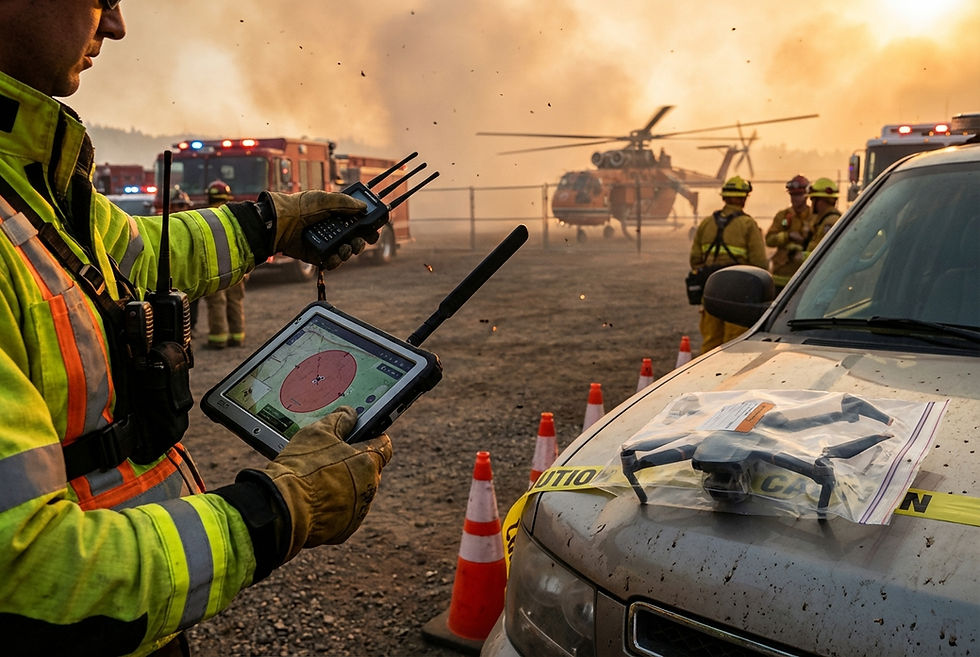
Wildfires, police activity, medical evacuations, rescue operations. Even a small drone can ground aircraft and put people at risk.
2. Restricted airspace and TFRs
VIP movement, critical infrastructure areas, major events, and TFR drone rules tied to temporary flight restrictions all require active verification.
3. Flights over crowds and public events
Stadiums, festivals, packed streets. A falling drone is not a minor incident when it lands on someone’s head.
4. Loss of control events Entanglements, flyaways, dropping objects, or creating a hazard to other aircraft. These are the kinds of moments that turn a “hobby flight” into a case file.
What This Means for Professional Operators
Professional drone work is not about owning a nice aircraft. It is about running a safe, documented operation every time:
Preflight airspace review (controlled airspace, NOTAMs, TFRs)
Proper LAANC authorization or waivers where required
Remote ID compliance and operational checks
Risk assessment for people, property, and nearby aviation activity
Clear crew roles, communications, and emergency procedures
Flight logs and documentation that stand up to scrutiny
The operators who are fine are the ones who can prove they planned the flight, flew what they planned, and operated within the rules.
What This Means if You Are Hiring Drone Services
If you are bringing a drone crew onto a jobsite or into an aerial video production, protect yourself with a quick due diligence checklist. Ask for:
Part 107 compliance, including credentials and confirmation of who will actually fly
Proof of insurance that matches your risk profile
A basic flight plan and airspace authorization approach (LAANC/TFR checks)
Remote ID compliance confirmation
Safety procedures for operations near people, traffic, or active worksites
A policy for emergency scenes and restricted airspace (the correct answer is: we avoid it unless authorized)
A clear scope and contract language that keeps everyone aligned
If an operator gets defensive about any of this, that is your sign to keep shopping.
Quick Compliance Checklist (The Boring Stuff That Saves Your Project)
Before every flight:
Confirm airspace status (including TFRs) and any site-specific restrictions
Secure LAANC or waivers where required
Confirm Remote ID is functioning and aircraft is configured correctly
Confirm your operating category for flights near or over people
Avoid emergency response activity unless you are authorized and coordinated
Brief the crew and document the plan
Log the flight and any anomalies immediately
For companies hiring drone services in Arizona or drone services in Nevada, the compliance bar is identical. State lines do not dilute federal aviation law.
Bottom Line
The FAA is sending a message: professionalism is not optional. If you fly drones for work, you need the same mindset as any other aviation operation: authorization, discipline, and accountability.
If your next project requires compliant, documented, airspace-verified operations, it’s worth having a conversation before the aircraft ever leaves the ground.
Contact Extreme Aerial Productions to plan it correctly from day one.
Disclaimer: This article is for general information and does not constitute legal advice.


Comments