


Crop to Cloud: Precision Agriculture’s Sensor Revolution


Agriculture used to be a simple equation: plant, pray, and hope the weather behaved itself. Today, farmers are running data operations that would make a Silicon Valley analyst blink twice. And drones—specifically, drones armed with next-gen sensors—are driving that shift. At Extreme Aerial Productions, we’ve watched precision agriculture transform from “nice to have” aerial photos into full-blown, sensor-driven intelligence. Modern farming isn’t just rows of crops; it’s datasets, spectral indices, thermal signatures, and LiDAR point clouds.
And yes, it’s every bit as brilliant as it sounds.
Precision Agriculture Drone Tech Has Grown Up
Once upon a time, a precision agriculture drone simply took pictures—decent ones, admittedly—but still just pictures. Today’s agricultural drone sensors can read fields the way radiologists read MRI scans. Multispectral bands identify stress before it appears to the naked eye. Thermal signatures reveal irrigation issues before they become yield-eaters. LiDAR maps terrain so accurately you could practically measure the farmer’s pulse if you aimed low enough.
Call it farming’s glow-up.
This shift is being felt everywhere—from large-scale growers managing thousands of acres to specialty farms where every plant carries its own economic weight. And to absolutely no one’s surprise, farmers have discovered that when you pair next-gen sensors with aerial vantage points, you get information faster, cheaper, and more accurately than any ground crew armed with clipboards.
Multispectral Imaging: The Field’s Early-Warning System
If traditional photography shows you what is happening, multispectral drone imaging shows you why. These sensors capture distinct spectral bands that reveal crop stress, nutrient deficiencies, and irrigation inconsistencies long before they’re visible at ground level.
This is where NDVI drone mapping comes into play. NDVI—once the darling of academic researchers—is now a practical tool farmers use weekly. It highlights chlorophyll activity, turning raw acreage into actionable insight. In plain English: if your crops aren’t happy, NDVI will tattle.
For farmers, that means targeted intervention instead of blanketing an entire field with extra water, fertiliser, or—heaven forbid—guesswork.

Thermal Drone Agriculture: Heat Signatures Don’t Lie
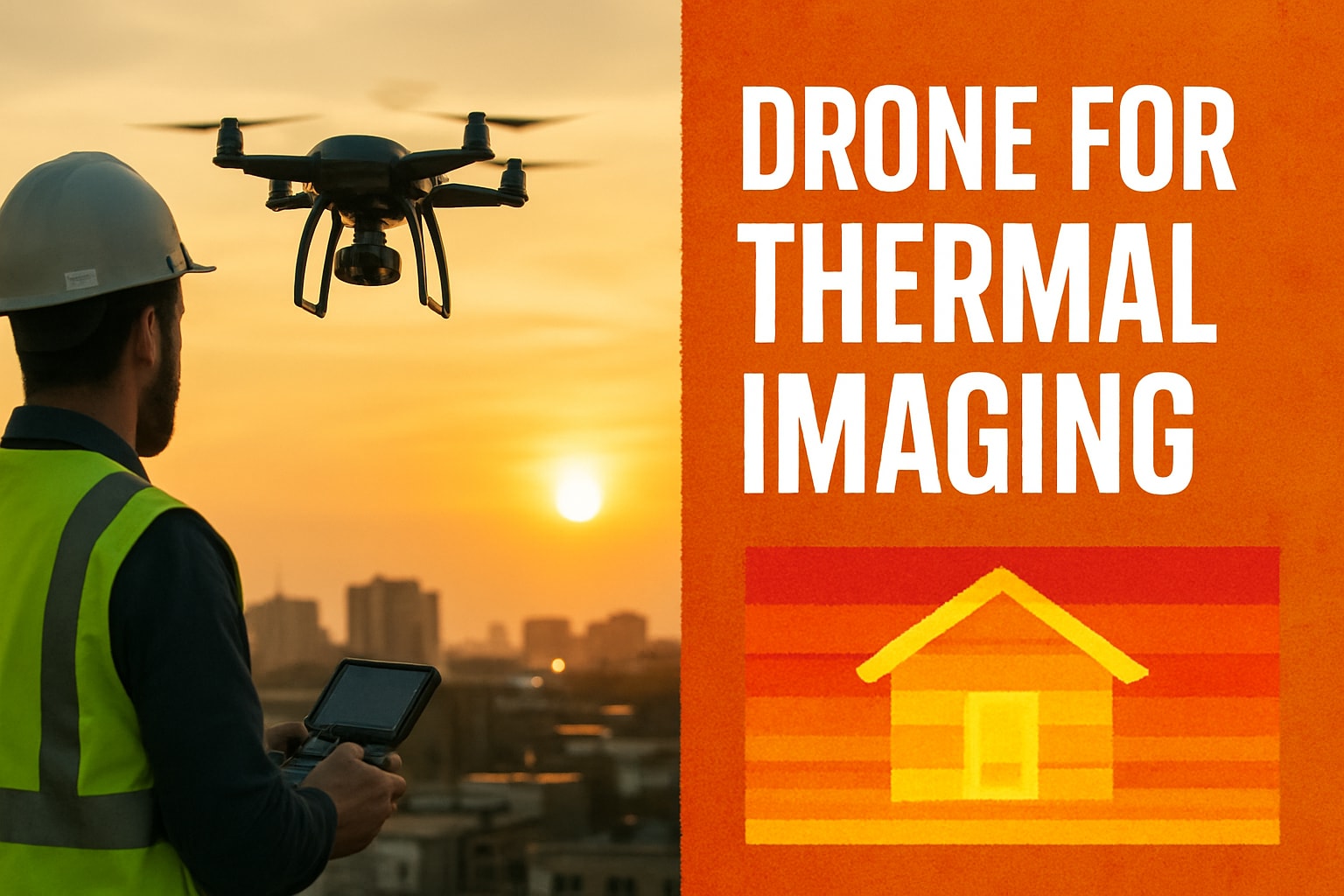
Drought, over-watering, clogged drip lines, failing pivots—irrigation issues tend to announce themselves in spectacular fashion… if you catch them too late. Thermal drone agriculture turns the tables by spotting problems when they’re still quiet enough to fix without drama.
By measuring heat loss and retention across fields, thermal sensors help pinpoint exactly where water is—or isn’t—getting where it needs to go. It tightens irrigation efficiency and protects yields, which is exactly the sort of intel that makes agronomists feel warm inside (thermally consistent, of course).
Drone LiDAR Agriculture: Mapping the Un-Mappable
LiDAR has long been the egotistical older sibling of imaging sensors—highly accurate, slightly smug, and undeniably useful. In agriculture, drone LiDAR is becoming indispensable for understanding terrain, drainage, substrate variation, and canopy density.
Unlike photogrammetry, LiDAR doesn’t rely on light conditions, shadows, or leaf cover. It punches through vegetation and delivers clean, engineering-grade elevation models. Farmers use these models to optimise planting lines, plan water flow, and redesign fields for higher yield and lower resource waste.
If multispectral imaging tells you how your crops feel, LiDAR tells you what the land is planning.
Drone Data for Farming: The Real Crop Booster
Next-gen agriculture is not about gathering more data—it’s about gathering the right data, and then using it to make decisions that move the needle. That’s where crop monitoring with drones and drone scouting for crops shine. Regular flights create timestamped snapshots that reveal trends, not just moments.
This leads directly to smarter strategies for:
yield prediction using drone data
targeted fertilisation
disease and pest detection
optimised planting and harvest timing
From vineyard managers in need of precise canopy vigor analysis to large-scale commodity growers chasing efficiency gains, drone services for agriculture are rapidly becoming the backbone of modern farm decision-making.
Why the Agriculture World Is Hungry for Next-Gen Sensors
There’s no mystery here. When farmers get rapid insights on crop health, field conditions, and yield variance, they reduce waste, increase output, and dodge costly surprises. That’s the real benefit of drone sensors in agriculture—they turn uncertainty into strategy.
And while EAP’s bread-and-butter has traditionally included real estate, inspection, surveying, and cinematic work, we’re watching agriculture lean hard into aerial intelligence. The industry isn’t “adopting technology” anymore—it’s running on it.
Precision agriculture isn’t the future. It’s already happening, and the farms using next-gen sensors will be the ones leading the field—quite literally.
Ready to see what next-gen agriculture looks like from above?
When you’re ready for farm data that actually earns its keep, contact Extreme Aerial Productions and let’s map it out.


Comments