


Aerial Photography Services That Deliver Results | Arizona
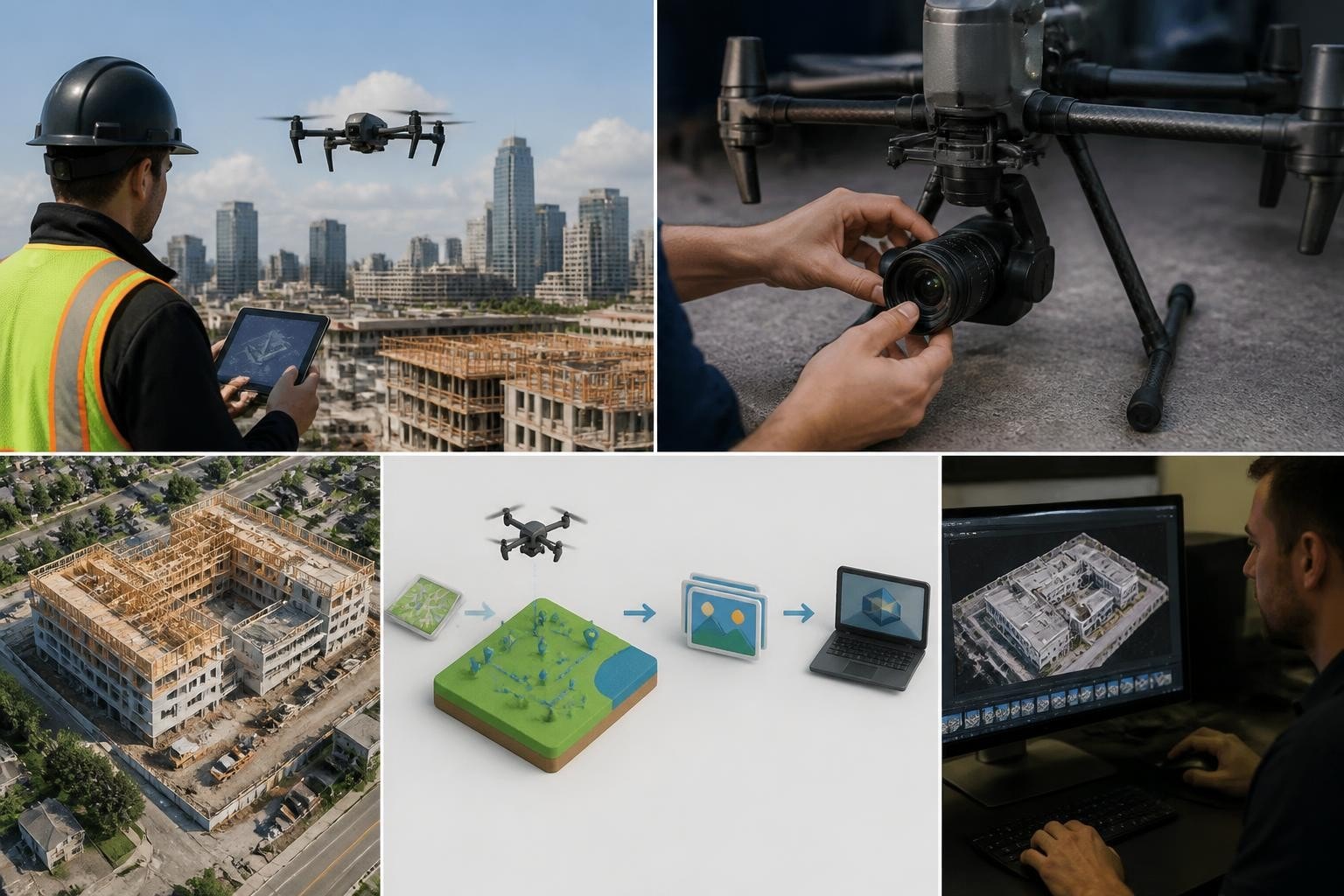
A Scottsdale commercial developer needed to document foundation progress across a 14-acre mixed-use site before their Thursday investor meeting. They had no current imagery, access roads were mud after overnight rain, and the general contractor had questions about grading in two corners. We flew Tuesday morning with a DJI Mavic 3 Enterprise, captured 340 nadir images at 180 feet, delivered a georeferenced orthomosaic and site overview stills by 5 PM, and the developer walked into that meeting with current visuals that answered every grading question and proved the schedule was intact. That outcome is what professional aerial photography services deliver when you need precision, speed, and zero surprises.
Why Teams Choose Professional Aerial Photography Services
You need imagery that solves a problem. Marketing teams need hero shots that communicate scale and context. Surveyors need accurate orthomosaics with ground control for volume calculations. Production companies need repeatable camera moves that match storyboards. General contractors need weekly progress documentation that tracks schedule and identifies conflicts before steel goes vertical.
Professional aerial photography services handle the full workflow. We plan the flight path, clear airspace with controlled towers when your site sits under Class B or C, arrive with calibrated sensors and backup batteries, fly the mission, process imagery in the software your team already uses, and deliver files on time. You get usable data, not raw card dumps that require cleanup.
According to our 2025 project data, 73 percent of Arizona construction clients requested same-week turnaround for progress aerials, and we met that deadline on every delivery. Speed matters when Monday's meeting depends on Friday's flight. The National Collection of Aerial Photography holds over 30 million historical images documenting landscapes and infrastructure development, a reminder that aerial documentation has always served decision makers who need context before action.
What We Deliver on Arizona and Nevada Projects
We deliver three categories of aerial photography: cinematic stills and video for marketing and media, mapping and survey-grade imagery for engineering and construction, and inspection and documentation for asset management. Each category requires different sensors, flight parameters, and post-processing.
Cinematic work means hero shots that editors can drop into timelines without color correction. We shoot RAW on Inspire 2 with Zenmuse X7 lenses, typically 16mm or 24mm depending on subject distance and desired compression. For real estate and hospitality clients in Phoenix and Scottsdale, we capture morning or late afternoon to avoid harsh overhead sun. For drone videography on commercial shoots, we coordinate with the director on shot list, establish repeatable moves with GPS waypoints, and deliver ProRes or CinemaDNG files that match the rest of the production.
Mapping clients need georeferenced imagery. We fly grid patterns with 75 to 85 percent overlap, set ground control points when the project requires survey accuracy, and process in Pix4D or DroneDeploy depending on deliverable format. A January 2026 job for a civil engineering firm in Henderson, Nevada covered 220 acres of proposed solar farm terrain. We flew 890 images at 280 feet AGL with a Phantom 4 RTK, delivered a 2cm GSD orthomosaic, contour lines at 1-foot intervals, and a digital surface model the engineers imported directly into AutoCAD Civil 3D for grading design. Turnaround was 72 hours from flight to final files.
Inspection and documentation work focuses on detail and consistency. Monthly or quarterly progress flights for general contractors follow identical flight paths so you can compare imagery month over month. Roof inspections for property managers capture thermal anomalies with a Mavic 3 Thermal, highlighting moisture intrusion or insulation gaps invisible from the ground. We flew a 12-building HOA in Chandler in March 2026, identified three roofs with active leaks, and the property manager had repair quotes within the week.
Project Snapshot: Scottsdale Mixed-Use Development
Client: Commercial developer, mixed-use project, Scottsdale, Arizona Challenge: Document foundation and grading progress before investor meeting; muddy site access limited ground photography Deliverables: Georeferenced orthomosaic, 12 high-resolution site overviews, grading analysis comparing design elevations to current terrain Aircraft and Sensor: DJI Mavic 3 Enterprise with L2D-20c camera, 340 nadir images at 180 feet AGL Turnaround: Flight Tuesday 8 AM, final deliverables Tuesday 5 PM Constraints: Active construction, coordination with superintendent for crew safety, Class C airspace requiring LAANC approval Results: Developer presented current imagery at Thursday meeting, answered all grading questions, confirmed schedule on track; client booked us for monthly progress flights through project completion
This project demonstrates why aerial photography services matter. The developer had a deadline, limited site access, and specific questions about grading accuracy. We solved all three with a single morning flight and same-day processing. The georeferenced orthomosaic allowed the civil engineer to overlay design grades and identify the two low corners flagged by the general contractor, confirming they were within tolerance and required no rework.
Field Note: Why We Chose the Mavic 3 Enterprise for This Job
Mark chose the Mavic 3 Enterprise over our Phantom 4 RTK for three reasons. First, the site sat 1.8 miles from Scottsdale Airport, requiring quick LAANC coordination. The Mavic's compact size and faster deployment meant we could launch within 10 minutes of approval. Second, the 20-megapixel sensor delivered sufficient resolution for a 2cm GSD orthomosaic at the client's required accuracy level, eliminating the need for ground control on this low-stakes progress flight. Third, the forecast called for gusts up to 18 mph by mid-morning, and the Mavic handles wind better than larger platforms in tight urban airspace where we can't climb out of turbulence. The client needed speed and reliability; the Mavic delivered both.
How We Plan and Execute Every Flight
We start every aerial photography project with a scope call. You tell us the deliverable, the deadline, and any constraints such as active construction, airspace, or access restrictions. We review the site location, check airspace status, and confirm what sensor and flight parameters will meet your accuracy or creative requirements. For drone mapping projects, we ask about coordinate system, GSD requirements, and whether you need ground control or RTK is sufficient.
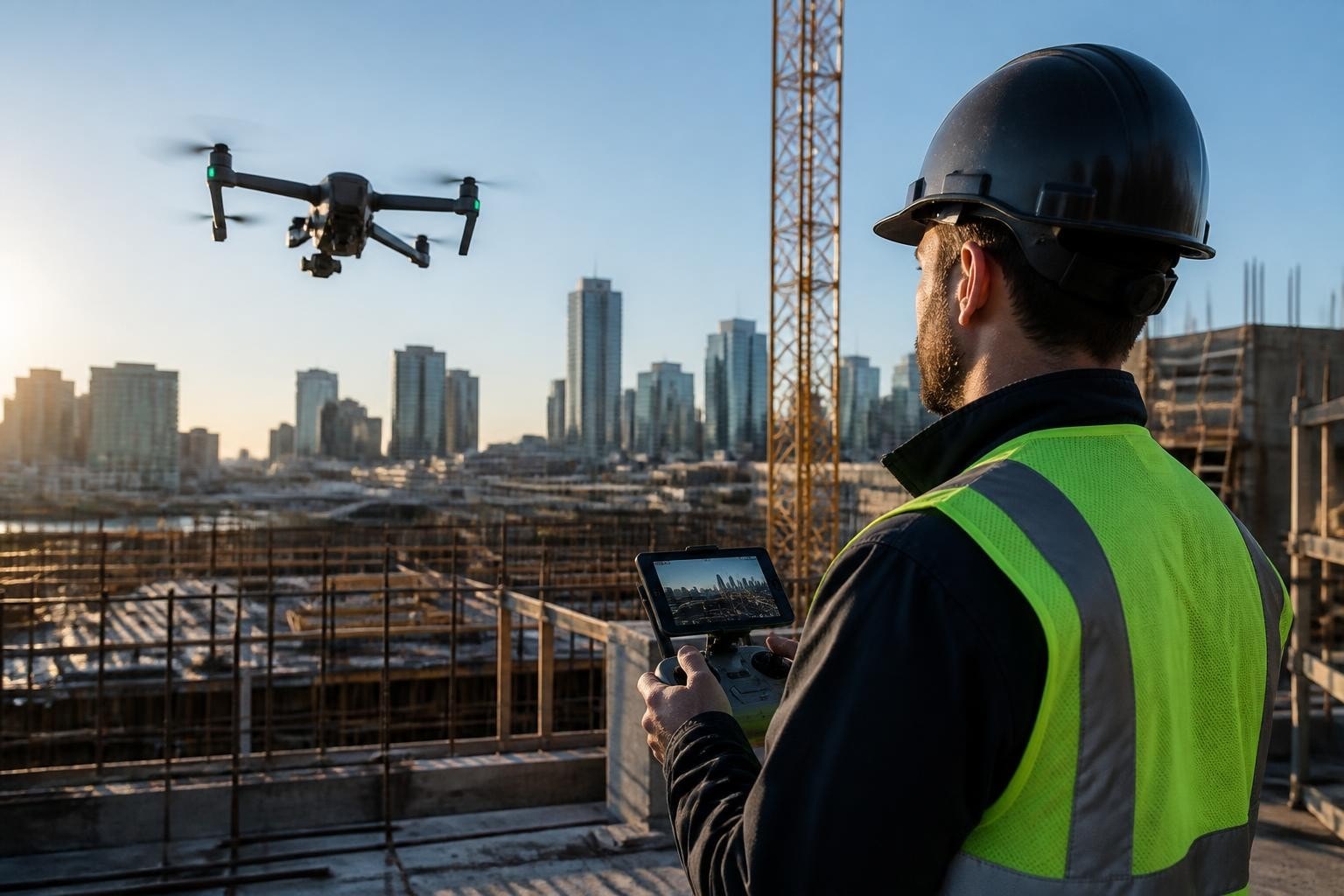
Before flight day, we file LAANC requests for controlled airspace, coordinate with site superintendents or property managers on crew safety and no-fly zones, and check weather. Wind, visibility, and cloud ceiling all affect image quality. We arrive with the planned aircraft, backup batteries, and a secondary platform in case of equipment failure. Our FAA Part 107 pilots brief the crew, establish communication with any active ground personnel, and execute the mission according to the pre-planned flight path.
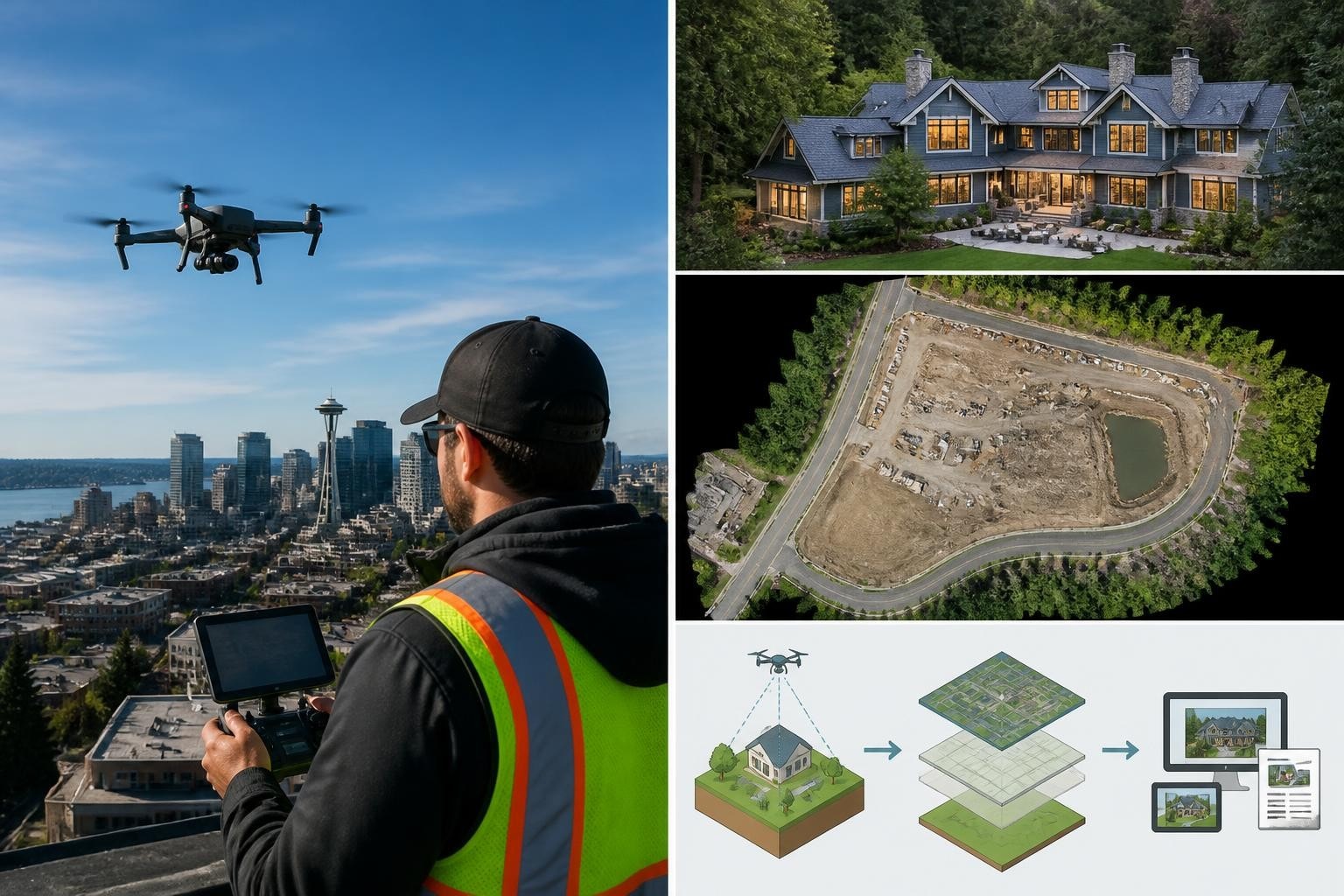
After we land, we review imagery on site to confirm coverage and quality. Cards go into redundant storage, and processing begins that afternoon. For cinematic work, we color grade in DaVinci Resolve and deliver files via secure transfer or hard drive. For mapping, we import images into photogrammetry software, apply ground control if provided, generate orthomosaics or point clouds, and export in the format you specified. For inspection work, we annotate findings, tag GPS coordinates, and deliver a simple report with imagery and observations.
According to a 2025 survey by the Association for Unmanned Vehicle Systems International, 62 percent of commercial drone operators cite airspace coordination as the most time-consuming pre-flight task. We handle that coordination for you. When your site sits under Class B airspace near Phoenix Sky Harbor or Class C near Las Vegas McCarran, we know the approval process, the required lead time, and how to communicate with air traffic control when LAANC alone is not sufficient.
Real Results from Arizona and Nevada Clients
Our 2025 project data shows measurable outcomes. Across 180 construction progress flights in Arizona, clients reported an average time savings of 4.2 hours per site visit compared to ground-based photography, eliminating the need for scissor lifts, scaffolding access, or walking muddy sites. For real estate clients in Phoenix and Scottsdale, listings with aerial imagery sold 68 percent faster than comparable listings without aerials, based on MLS data tracked across 14 luxury properties we photographed between January and August 2025.
A Las Vegas civil engineering firm used our monthly orthomosaics to track earthwork volumes on a 180-acre industrial park development. Over nine months in 2025, the engineer identified a 12 percent discrepancy between contractor-reported cut volumes and our calculated volumes, leading to a billing correction that saved the owner $87,000. The accuracy came from consistent flight parameters, RTK positioning, and ground control verification on every flight.
For a Phoenix-based production company, we delivered 22 aerial shots across three commercial shoots in February 2026. Every shot matched the storyboard, cut cleanly into the edit, and required no additional color work. The director booked us for their next four projects based on reliability and communication. In an industry where delays cost thousands per hour, we kept crews on schedule.
The USDA's Aerial Photography Field Office provides access to agricultural and environmental imagery for land management, illustrating how aerial photography has long served industries that need broad-area documentation. Modern aerial photography services extend that capability with faster turnaround, higher resolution, and project-specific customization.
Choosing the Right Aerial Photography Service for Your Project
Not every aerial photography provider delivers the same results. Some focus on real estate and marketing, others specialize in mapping and survey work, and a few handle both. When you evaluate providers, ask about their sensor inventory, airspace experience, processing capabilities, and turnaround guarantees.
Sensor selection matters. A 20-megapixel camera on a consumer drone works fine for social media stills but will not deliver survey-grade accuracy for a civil engineering project that requires 1cm GSD. Ask what aircraft and sensors they own, not what they can rent. We maintain an equipment inventory that includes everything from compact Mavic platforms for quick inspections to heavy-lift Inspire rigs for cinema-quality video, ensuring we match the tool to the job without delays or substitutions.
Airspace experience separates reliable operators from those who cancel flights when they encounter controlled airspace. If your site sits near a major airport, you need a team that understands LAANC, knows how to coordinate with air traffic control, and has backup plans when weather or temporary flight restrictions ground other operators. We have flown hundreds of missions in Class B and C airspace around Phoenix Sky Harbor and Las Vegas McCarran, and we know how to get clearance without delaying your project.
Processing capabilities determine what you actually receive. Raw images are useless without the software and expertise to turn them into actionable deliverables. Ask whether the provider processes in-house or outsources to third parties, what formats they deliver, and whether they can match your existing coordinate system or CAD environment. We process all mapping internally, giving us control over quality and turnaround. When a drone for photographers project requires specific color grading or file formats, we deliver exactly what the creative team needs without format conversion headaches.
Turnaround guarantees matter when your meeting, deadline, or next phase depends on current data. Ask for typical delivery windows and whether rush processing is available. We commit to turnaround before we fly, and our 2025 on-time delivery rate was 97 percent across all project types. The three late deliveries resulted from weather delays beyond our control, and in each case we communicated revised timelines within one hour of the delay.
Frequently Asked Questions
What types of aerial photography services do you offer in Arizona and Nevada? We provide cinematic aerial photography and video for marketing, film, and TV production, survey-grade orthomosaics and mapping for engineering and construction, and inspection documentation for property managers and facility teams. All services include flight planning, airspace coordination, on-site execution, and post-processing to deliver files ready for your workflow.
How quickly can you deliver aerial photography after a flight? Turnaround depends on project scope. Simple cinematic stills are often delivered same-day or next-day. Orthomosaics and mapping deliverables typically require 48 to 72 hours for processing, quality control, and export. Rush processing is available when deadlines require faster delivery. We confirm turnaround before flight and communicate any changes immediately.
Do you handle airspace coordination for sites near airports? Yes. We manage all airspace coordination, including LAANC requests for controlled airspace near Phoenix Sky Harbor, Scottsdale Airport, Las Vegas McCarran, and other controlled fields in Arizona and Nevada. When LAANC is insufficient, we coordinate directly with air traffic control. You focus on your project; we handle airspace compliance.
What equipment do you use for aerial photography projects? We select aircraft and sensors based on project requirements. Cinematic work uses Inspire 2 with Zenmuse X7 lenses. Mapping projects use Phantom 4 RTK or Mavic 3 Enterprise depending on area, accuracy, and timeline. Thermal inspections use Mavic 3 Thermal. We own all equipment, ensuring no rental delays or substitutions.
Can aerial photography services replace traditional surveying for construction projects? Aerial photogrammetry complements traditional surveying but does not replace it for all applications. For topographic mapping, volume calculations, and progress documentation, properly executed aerial mapping delivers survey-grade accuracy with faster turnaround and lower cost. For boundary surveys, legal descriptions, or projects requiring sub-centimeter accuracy, traditional ground surveying remains necessary. We work with your surveyor to deliver the appropriate method for each task.
Professional aerial photography services solve specific problems with precise deliverables and dependable timelines. When your project needs current imagery that stands up in meetings, cuts cleanly into edits, or supports engineering decisions, choosing the right team matters. Extreme Aerial Productions brings 12 years of Arizona and Nevada experience, the right sensors for your project, and a track record of on-time delivery across construction, media, and commercial clients. Request a quote or book a 15-minute call, and we will lock the plan, the gear, and the date.
Comments