


American Drone Companies: A Buyer's Guide for Aerial Teams
American drone companies range from small airframe builders to defense primes, and the right one depends on your mission, your compliance needs, and who supports the aircraft after the sale. Skydio, Teal Drones, Freefly Systems, Inspired Flight, and Parrot's US operations lead the commercial field, while AeroVironment, Anduril, and Shield AI focus mostly on defense.
We fly aerial marketing and site-data jobs across Arizona and Nevada, so we look at this market as people who depend on the aircraft, not as shoppers. Here is how we sort the field, what the rules mean for your project, and what to ask before you hire or specify an American-made platform.
Which Drones Are Made in the USA?
Drones made in the USA include Skydio's X10 family, Teal's Black Widow, Freefly's Alta and Astro lines, Inspired Flight's IF800 and IF1200, and fixed-wing systems from AeroVironment and Censys. "Made in the USA" is not a single standard, so ask each vendor where the airframe is assembled and where the flight controller, motors, and radios come from.
Most US platforms still carry some imported components, especially motors, batteries, and sensors. That matters less for a marketing shoot than for a government contract. Federal buyers care about the supply chain. A builder or roofing contractor usually cares about whether the aircraft can fly the job, deliver clean data, and stay legal.
What "American-Made" Usually Means
Assembled in the US: final build and testing happen domestically.
Designed in the US: engineering and firmware are American, but parts may be global.
NDAA-compliant: components avoid restricted foreign sources under federal procurement rules.
Blue UAS listed: the platform passed a government security and performance review.
The Defense Innovation Unit's Blue UAS Cleared List contains commercial drones that have undergone government security and performance assessments. DIU announced its transition to the Defense Contract Management Agency in December 2025, and its Blue UAS program page explains how vetted platforms are used by the Department of Defense.
Who Is the Biggest Drone Manufacturer in the United States?
On the defense side, companies such as AeroVironment and General Atomics are prominent, while Skydio is a leading American maker of commercial and public-safety drones. The answer shifts depending on whether you count military aircraft, small tactical systems, or enterprise quadcopters.
For the work we do, the useful question is narrower. Which companies build aircraft that a film crew, a homebuilder's marketing team, or a solar developer can realistically buy, service, and fly under Part 107? That list is shorter, and it is where the rest of this guide focuses.
The Top American Drone Companies for Commercial Teams
Five American drone companies matter most for commercial aerial work: Skydio, Teal Drones, Freefly Systems, Inspired Flight, and Parrot. Each serves a different mission, and none is the best at everything.
Skydio. Known for obstacle avoidance and autonomy. Strong for inspections, public safety, and repeatable capture around structures. The software and dock ecosystem is a major draw.
Teal Drones. Part of Red Cat, built around defense and security users. The Black Widow is a compact, ruggedized platform with a strong compliance story.
Freefly Systems. Builds heavy-lift aircraft that carry cinema cameras and LiDAR. This is the American name that matters most for film and high-end payloads.
Inspired Flight. Modular enterprise multirotors designed for sensor payloads, with a focus on supply-chain transparency.
Parrot. A French company with US operations. Its Anafi USA line targets government and enterprise buyers who want a domestic support path.
Where Defense-First Companies Fit
AeroVironment, Anduril, Shield AI, Kratos, and General Atomics build for military and government customers. Their aircraft are impressive, but they are not products a real estate agent or roofing company will ever buy or fly. We mention them so you can place them on the map, not because they belong on a commercial shortlist.
How the Rules Shape Your Choice
FAA and federal rules affect every drone purchase, and they apply the same way to American and imported aircraft. Registration, Remote ID, and airspace authorization all come before the first flight.
Registration: FAA registration costs $5 per drone for Part 107 operations and is valid for three years, per the FAA registration page. Part 107 pilots register each drone separately.
Remote ID: Drones that must be registered must comply with the FAA Remote ID rule, including drones used for business, as described on the FAA Remote ID page. Compliance can come from a Standard Remote ID drone or an attached broadcast module.
Certification: Commercial work requires a Part 107 remote pilot certificate. We cover the path in our guide to FAA drone certification.
Federal restrictions on foreign drones: Rulemaking on imported aircraft is moving. We track it in our posts on the FCC drone proposal and FCC firmware update timelines.
Insurance is a separate question. If a flight happens over a job site or a master-planned community, your client will ask for a certificate of insurance. We carry insurance on our flights for that reason.
Match the Aircraft to the Job
The right American drone depends on what the deliverable is, not on the brand. A marketing video and a topographic survey need different aircraft, different sensors, and different workflows.
We see three common job types in Arizona and Nevada:
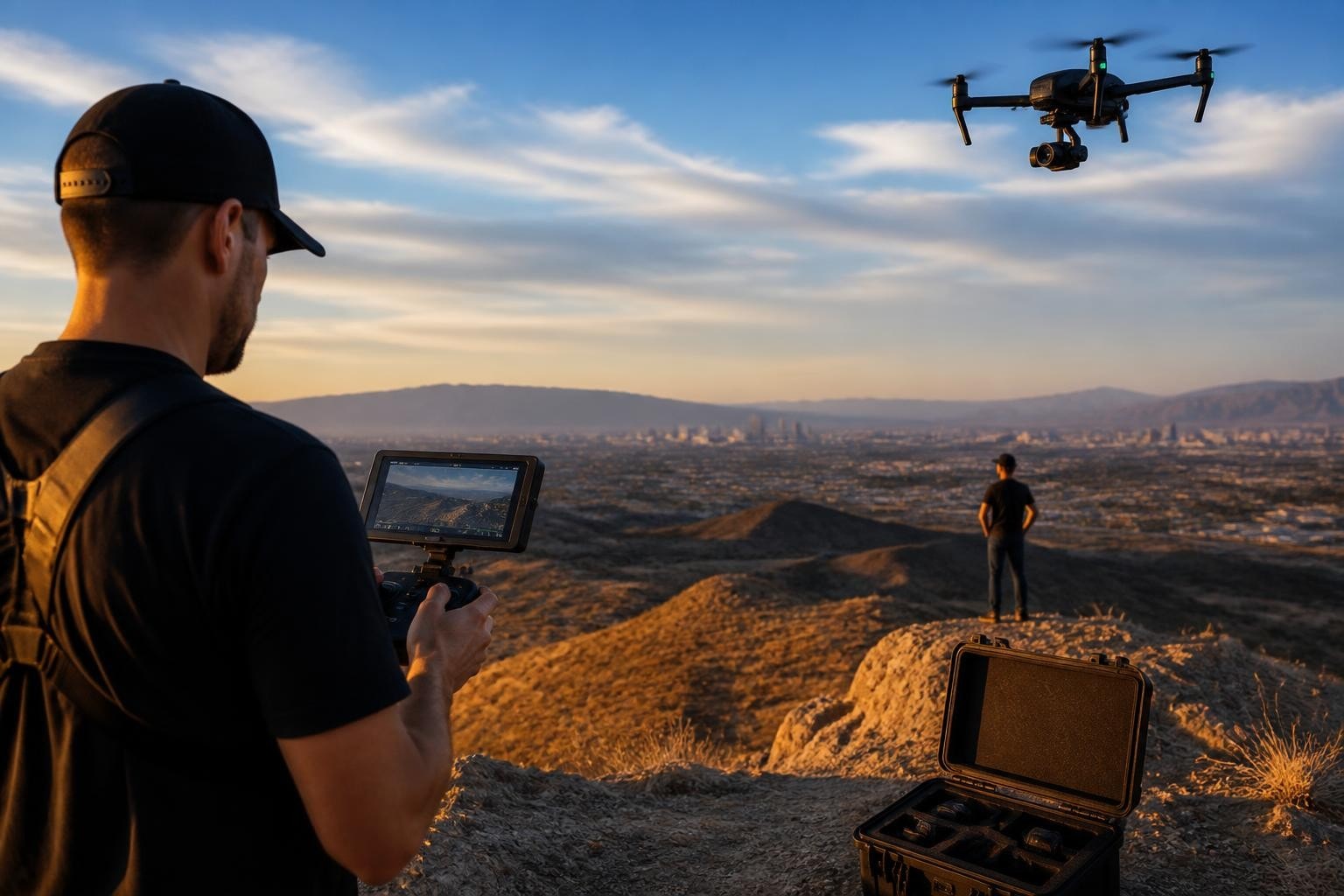
Property and community marketing: cinematic aerials for builders, agents, and developers. Image quality, smooth motion, and clean edits matter most. Our real estate drone work shows what that looks like in practice.
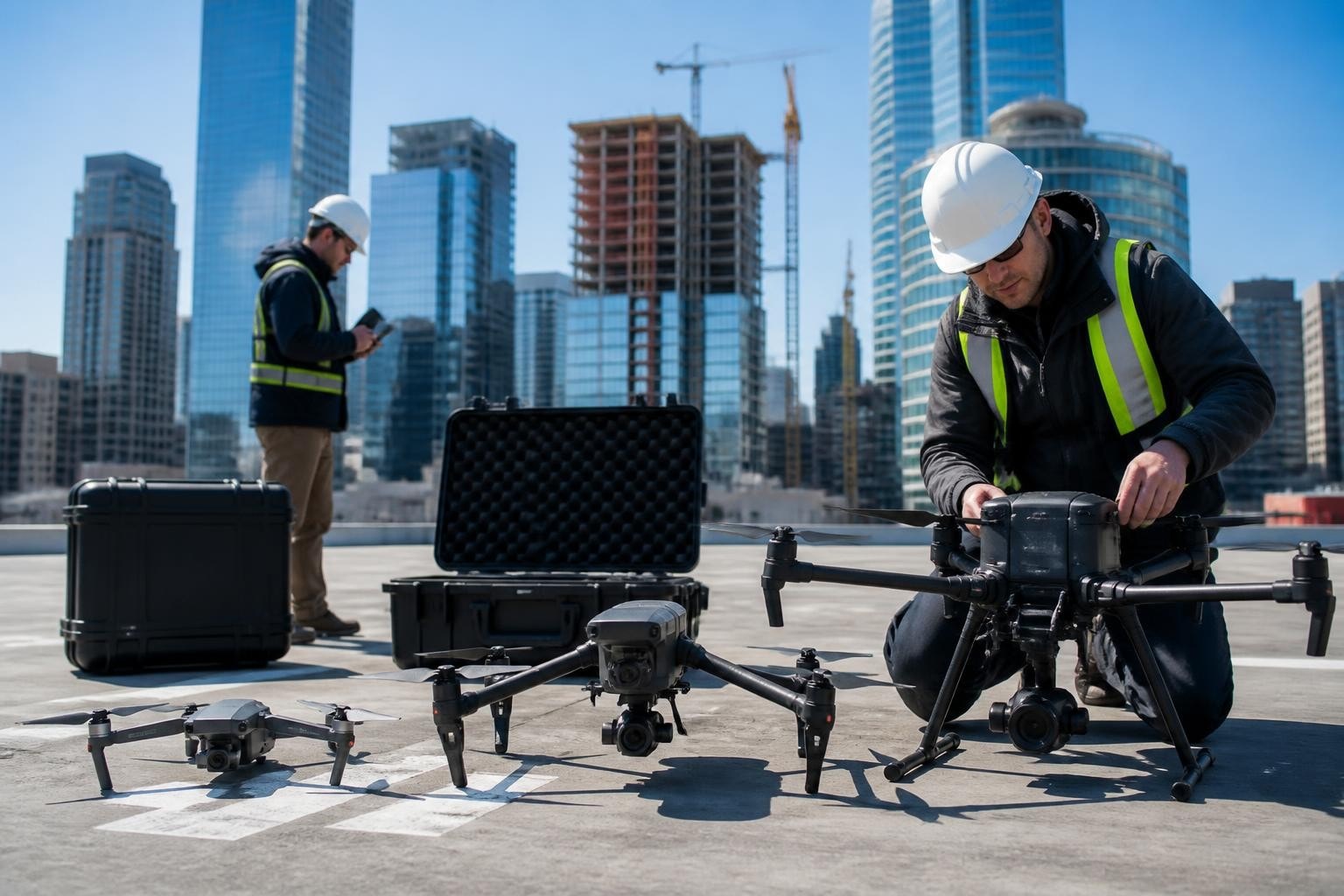
Construction progress and inspection: repeatable passes, consistent altitude, and imagery that stands up in owner meetings. See our guide to construction drone photography.
Mapping and survey data: orthomosaics, contours, and volumes. Accuracy depends on ground control, sensor, and processing more than on the airframe brand.
A drone built in the US does not make a map more accurate. Method does. We wrote about that in what drone companies won't tell you about accuracy.
Project Snapshot: Progress Capture in Las Vegas
A Las Vegas progress-capture job shows why we pick workflow before brand. The client's problem was simple: an owner's rep needed dated, comparable site imagery every month, and the earlier photos had been taken from different positions with no consistent framing.
Project Snapshot
City and industry: Las Vegas, Nevada; commercial construction
Deliverables: fixed-position progress photos and short overview clips, delivered as a dated archive
Turnaround: delivered after each flight
Constraints: active equipment on site, and restricted airspace near the Las Vegas valley that required authorization before each flight
Airspace: coordinated through the FAA authorization process before launch
The measurable outcome was consistency. The same waypoints were flown each month, so the owner's team could compare month over month without guessing where an image was taken.
Field Note
The team chose a repeatable, waypoint-based workflow over freehand flying for this job. Freehand footage looks good once, but it cannot be compared across months. A fixed route costs a little more planning time on day one and saves the owner hours in every meeting afterward.
What Is the Most Promising Drone Stock?
We are not financial advisors, and we do not recommend securities. What we can say is that publicly traded American drone names tend to trade on defense contracts, federal policy, and procurement news more than on commercial photography demand.
If you are evaluating a company as a vendor rather than an investment, the questions are different. Look at whether it has a US support team, whether parts and repairs are available domestically, and whether the aircraft appears on compliance lists your client may require. Those facts predict how your project goes better than a stock chart does.
How to Evaluate an American Drone Company
Evaluating an American drone company comes down to five checks, and you can run them in a single phone call. Use them whether you are specifying aircraft for a government-adjacent project or choosing a service provider.
Ask where the aircraft is built and where key components come from. Get specifics, not slogans.
Confirm compliance status. Ask about Remote ID, NDAA alignment, and Blue UAS status if your client needs it. DIU's Blue UAS refresh announcement shows how platforms get selected for government users.
Check support and repair turnaround. A grounded aircraft costs more than a pricier aircraft with fast service.
Ask for sample deliverables. Real footage or real maps from a comparable job tell you more than a spec sheet.
Confirm insurance and certification. Part 107 certification and a current certificate of insurance should be on file before any flight.
Why Supplier Choice Matters Less Than Operator Skill
A skilled crew with a well-supported aircraft will beat an unprepared crew with a better one. Airspace clearance, release forms, backups, and flight planning decide whether a shoot happens on schedule.
We arrive with backup batteries, backup equipment, and a plan for the day. When a master-planned community shoot has a builder's marketing team waiting on delivery, there is no time to troubleshoot a single point of failure. That preparation is part of why Melinda Oklok of Mattamy Homes Florida wrote: "Mark and his team went above and beyond capturing and delivering amazing quality videos for a master planned community."
If you are comparing service providers rather than aircraft, our guides to drone service companies and drone photography companies lay out what to ask.
FAQ
What are the top 5 drone companies in the US?
For commercial and public-safety work, the most cited names are Skydio, Teal Drones, Freefly Systems, Inspired Flight, and Parrot's US operations. On the defense side, AeroVironment, Anduril, and Shield AI lead. The right pick depends on whether you need cinema payloads, autonomy, or government compliance.
Are American-made drones better for aerial photography?
Not automatically. Image quality depends on the sensor, lens, and operator more than on where the airframe was built. American platforms often win on compliance and support, which matters for government-linked or security-sensitive projects.
Do I need to register an American-made drone with the FAA?
Yes, if you fly it for business. The FAA requires registration for Part 107 operations, and each drone is registered separately. The aircraft must also meet Remote ID requirements, regardless of where it was built.
Your next step is to write down the deliverable you need, whether that is a marketing video, a progress archive, or a site map, and the date you need it by. With that in hand, we can plan the flight, clear the airspace, and pick the right rig for your site in Phoenix, Las Vegas, or anywhere in Arizona and Nevada. If you want a number before you commit, you can Get an Estimate from our team and we will lock in the plan, the gear, and the date.

Comments