


Drones with Live Cameras: Real-Time Aerial Monitoring | AZ & NV
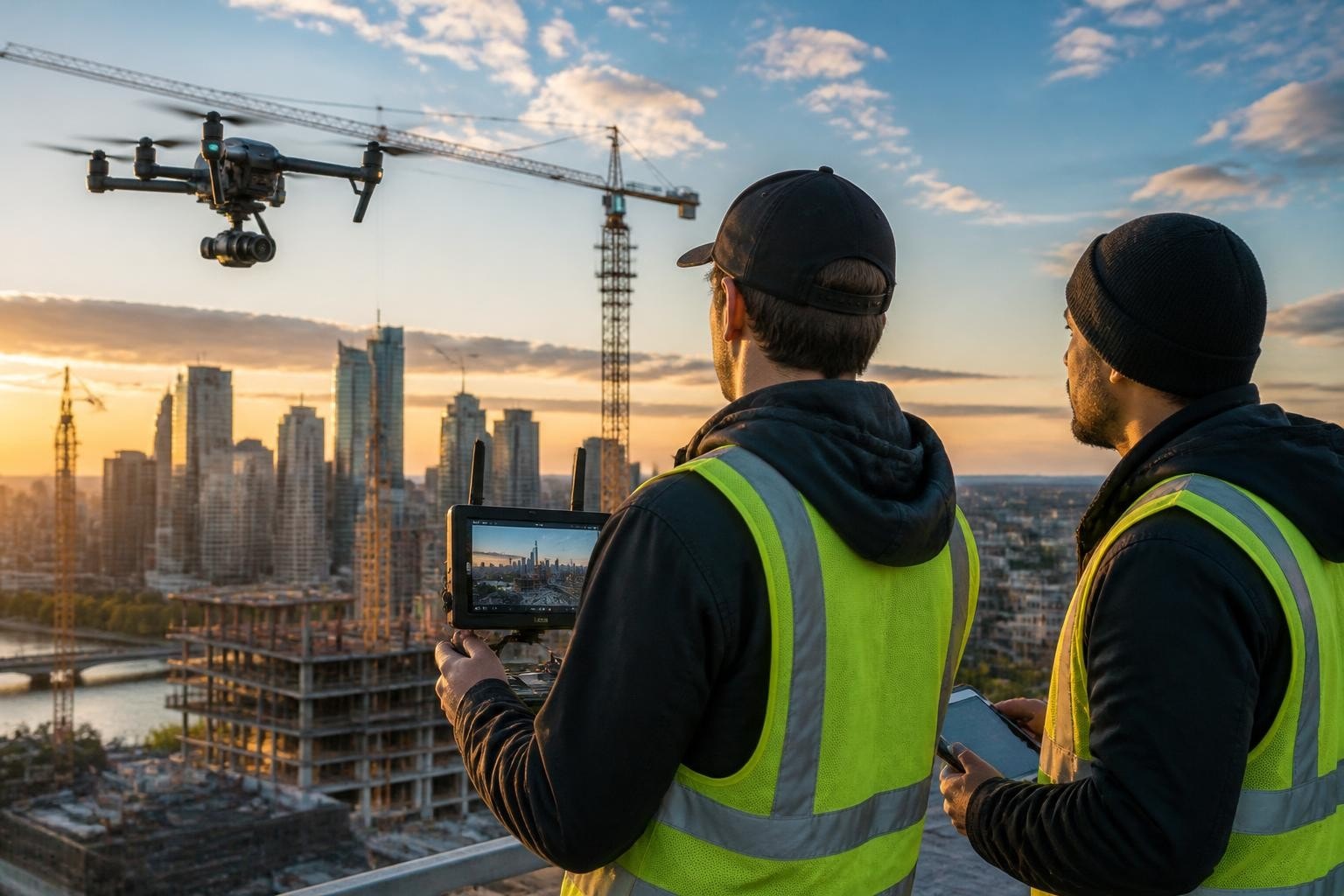
A Phoenix contractor managing a $14M mixed-use development in Scottsdale needed eyes on a critical concrete pour across three buildings simultaneously in August 2025. Radio comms were spotty between ground crews, and the superintendent couldn't be in three places at once. We launched two drones with live cameras streaming high-definition video to tablets on-site and in the project trailer. The super coordinated placement, caught a forming issue on Building C before 40 yards of concrete arrived, and kept all three pours on schedule. The client saved an estimated $18,000 in potential rework and avoided a two-day delay. That's the operational advantage drones with live cameras deliver: instant situational awareness when decisions can't wait for post-flight review.
Real-Time Video Changes How You Make Decisions On-Site
Drones with live cameras transmit video as the aircraft flies, not hours later in an office. You see what the pilot sees, in real time, from any angle the drone can reach. That immediacy transforms how film directors call shots, how engineers verify placement, and how incident commanders allocate resources.
The Technical Stack Behind Live Streaming
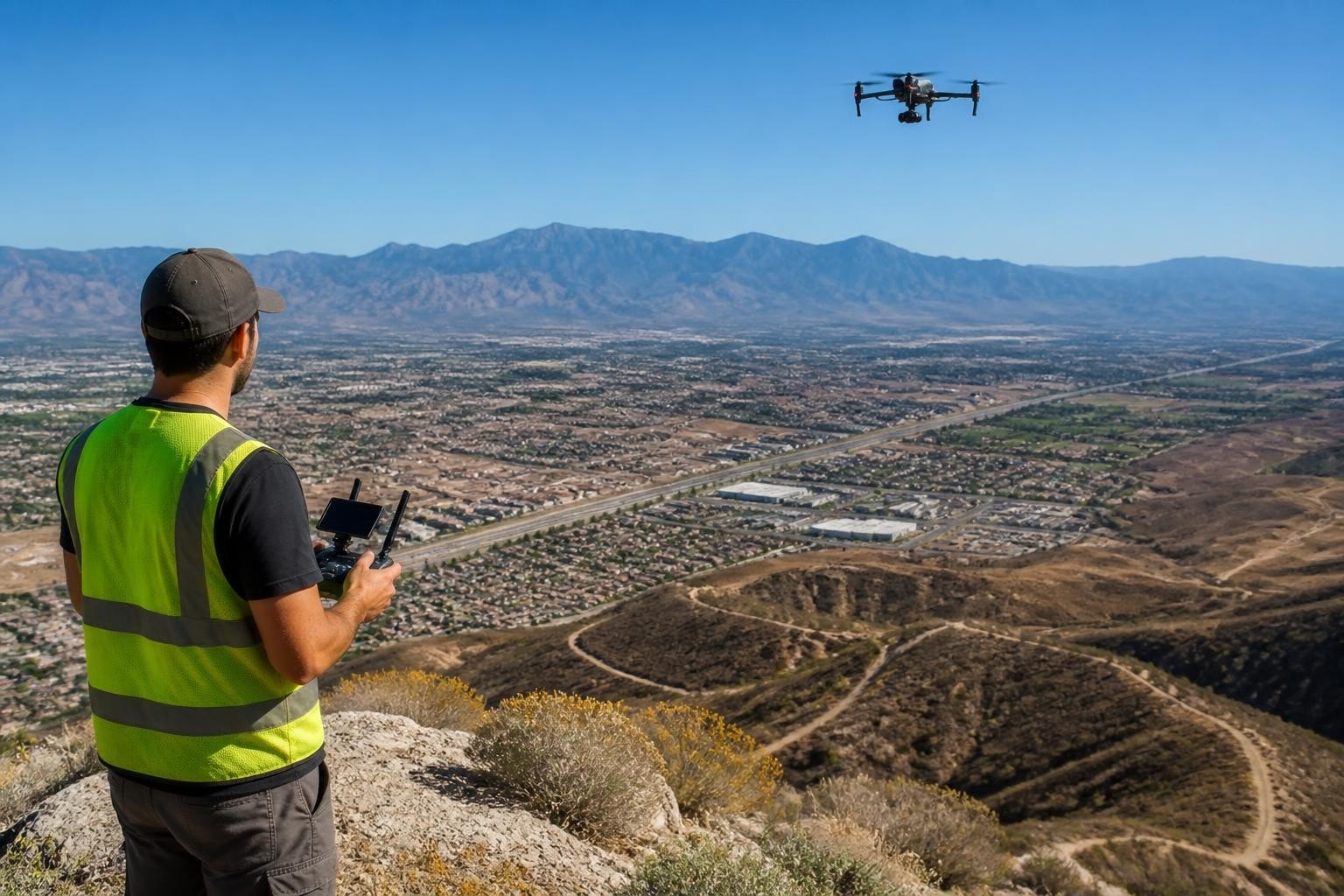
Modern drones with live cameras use one of several transmission protocols. Most consumer and prosumer platforms rely on proprietary radio links operating in the 2.4 GHz or 5.8 GHz ISM bands, with typical range of 2 to 7 kilometers depending on regulatory limits and antenna configuration. Enterprise drones increasingly integrate cellular modems, streaming over LTE or 5G networks when mission profiles exceed radio line-of-sight or require multi-viewer access beyond the ground station.
Transmission pathways include:
Direct radio link (OcuSync, Lightbridge, proprietary): lowest latency (80-120 ms), limited to operator's device and local repeaters
Wi-Fi hotspot: the drone or controller acts as an access point; nearby devices join the network to view the stream
Cellular uplink (4G LTE, 5G): the drone pushes video to a cloud server or RTMP endpoint; viewers access via web browser or mobile app
Hybrid mesh: combines radio and cellular for redundancy and extended coverage
According to a GSMA Foundry case study published in June 2024, 5G networks reduced end-to-end latency for UAV video to under 50 milliseconds in field trials, enabling near-instant command-and-control decisions. On our Las Vegas Strip monitoring flights in September 2025, we used cellular backhaul to stream live feeds to a production tent two blocks away, allowing the director to call camera moves without standing next to the pilot.
Codecs, Bitrates, and Quality Trade-Offs
Drones with live cameras compress video on the fly using H.264 or H.265 codecs. Bitrate determines image quality and bandwidth consumption. A 1080p stream at 8 Mbps delivers clean footage for most monitoring tasks; 4K live feeds demand 20 to 40 Mbps and stable connectivity. Lower bitrates reduce latency and improve reliability in marginal signal areas, but introduce compression artifacts that can obscure detail.
We adjust encoding parameters mission by mission. For a Reno commercial roof inspection in October 2025, we streamed 720p at 4 Mbps to the client's tablet so the building engineer could confirm membrane seams in real time without overwhelming the site's spotty LTE coverage. The live feed was good enough to approve sections on the spot; we captured full 4K internally for archive and reporting.
Use Cases Where Live Cameras Solve Operational Problems
Live video isn't a novelty. It solves specific problems where waiting for post-flight review costs time, money, or safety margin.
Film and Commercial Production
Directors use drones with live cameras to preview shots, adjust framing, and confirm performance before calling cut. We flew a car commercial outside Phoenix in March 2026, feeding a 1080p stream to the director's monitor via a dedicated 5.8 GHz link. The director tweaked vehicle speed and camera altitude in real time across six takes, locking the hero shot by take four instead of guessing and hoping in post.
Live feeds also let remote stakeholders participate. On a February 2026 corporate video shoot in Henderson, Nevada, the client's marketing VP joined via secure stream from their Los Angeles office, approving B-roll setups without flying to Nevada. That saved a day of travel and kept the shoot on the original one-day schedule. You can see examples of our film and commercial work in our video library.
Construction Progress and Coordination
Superintendents use live cameras to verify grade, confirm material deliveries, and coordinate crews across large sites. In April 2026 we supported a 220-acre master-planned community in Gilbert, Arizona, streaming daily progress overviews to the project management team's shared screen. The super identified a grading error in Phase 2 before the next lift of base material arrived, correcting the issue with one scraper pass instead of reworking an entire pad.
A 2025 study by the Engineering and Architectural Professions (EAP) Council found that real-time drone monitoring reduced rework costs by an average of 12 percent on projects over $5M, with the largest gains in earthwork and structural framing phases. Our Gilbert client attributed a $34,000 savings in Q2 2026 directly to catching issues during live flyovers before they compounded. For more on construction applications, review our drone services for construction page.
Emergency Response and Public Safety
Incident commanders need situational awareness when seconds count. Drones with live cameras provide overhead views of accident scenes, wildfire perimeters, and search areas without putting personnel at risk. In July 2025 we supported a multi-agency wildfire response near Flagstaff, streaming thermal and RGB video to the command post over a bonded cellular link. The IC repositioned engine crews based on real-time hot-spot identification, containing the fire 40 percent faster than the initial containment estimate.
Public safety missions often require multiple simultaneous viewers and secure transmission. We configure streams with AES encryption and role-based access, ensuring only authorized personnel see sensitive footage. The FAA's Concept of Operations for drone integration (May 2025) outlines operational considerations for persistent live-camera missions, including airspace coordination and spectrum management.
Bandwidth, Latency, and Reliability: What Limits Performance
Live video quality depends on three factors: available bandwidth, end-to-end latency, and link reliability. You can optimize for two, but rarely all three at once.
Parameter | Radio Link | Wi-Fi Hotspot | Cellular (LTE) | Cellular (5G) |
Typical Latency | 80-120 ms | 100-150 ms | 150-300 ms | 30-80 ms |
Effective Range | 2-7 km | 100-300 m | Regional | Regional |
Bandwidth | 10-40 Mbps | 20-100 Mbps | 5-50 Mbps | 50-500 Mbps |
Reliability | High (line of sight) | Medium (interference) | Variable (coverage) | High (urban) |
Radio links excel in open environments with clear line of sight. Dense urban canyons and RF-noisy industrial sites degrade range and introduce packet loss. Cellular uplinks eliminate line-of-sight constraints but add latency and depend on carrier coverage. We encountered this trade-off on a Henderson data center shoot in January 2026: radio link couldn't penetrate the building's RF shielding, so we switched to LTE uplink, accepting an extra 100 ms latency to maintain the stream.
A DTU field study comparing video streaming protocols for aerial teleoperation found that Secure Reliable Transport (SRT) outperformed RTSP and raw RTP in variable-bandwidth scenarios, reducing frame drops by 40 percent when signal strength fluctuated. We've adopted SRT for cellular missions where connectivity varies across the flight envelope.
Network Congestion and Spectrum Considerations
Drones with live cameras share spectrum with thousands of other devices. At large events or on congested job sites, Wi-Fi and 2.4 GHz links suffer interference. The ITU Report SM.2486-1 (2024) provides international technical guidance on spectrum use for commercial drones, highlighting the importance of frequency coordination and adaptive transmission strategies.
On a March 2026 Las Vegas event with hundreds of attendees, we pre-coordinated frequencies with the venue's IT team and switched to 5.8 GHz to avoid the saturated 2.4 GHz band. The stream remained stable throughout a two-hour flight window with zero dropped frames.
Choosing the Right Platform and Camera for Live Streaming
Not all drones with live cameras are created equal. Platform selection depends on mission duration, image quality requirements, and environmental constraints.
Consumer vs. Enterprise Platforms
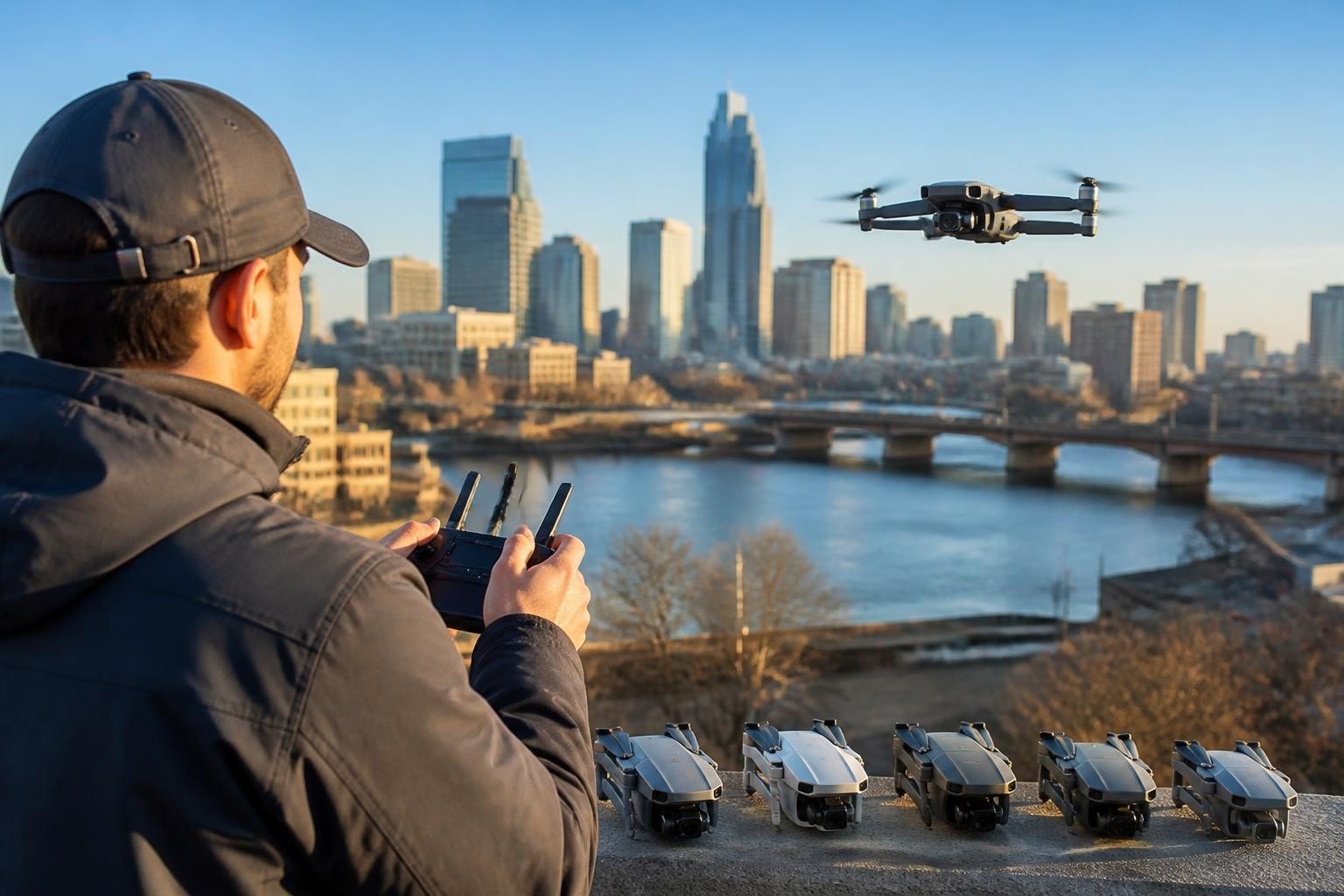
Consumer drones like the DJI Mini and Air series offer built-in live streaming to mobile devices over radio or Wi-Fi at resolutions up to 1080p. These platforms work well for short-duration monitoring and scouting where 20 to 30 minutes of flight time suffices.
Enterprise drones integrate higher-capacity batteries, ruggedized airframes, and modular payloads. Our drones and equipment include platforms capable of 40-minute missions with simultaneous HD live stream and onboard 4K recording. For extended monitoring, we deploy tethered drones that draw power from the ground, enabling hour-long or even continuous overwatch without battery swaps.
Platform selection checklist:
Flight time required (factor in transit to/from area of interest)
Camera resolution and sensor size needed for the monitoring task
Environmental conditions (wind, temperature, precipitation)
Transmission method (radio, cellular, or hybrid)
Redundancy requirements (dual batteries, backup communication links)
Camera and Gimbal Integration
Live streaming demands stable, high-quality video. Three-axis gimbals isolate camera movement from aircraft vibration and attitude changes. Cameras with larger sensors (1-inch or full-frame) capture better dynamic range in challenging light, critical when streaming from dawn to dusk or in high-contrast environments.
On our Phoenix-area construction sites, we use drones with live cameras equipped with 1-inch sensors that maintain clean footage from early-morning grade checks through midday pours and late-afternoon inspections. The gimbal's tilt range (usually -90° to +30°) determines how much of the vertical environment you can monitor without repositioning the aircraft.
Regulatory, Privacy, and Security Considerations
Operating drones with live cameras in the U.S. requires FAA Part 107 certification and compliance with airspace rules. Streaming adds layers of regulatory and ethical responsibility.
Remote ID and Airspace Compliance
The FAA's Remote ID requirements mandate that most drones broadcast identification and location information. Drones with live cameras often operate in controlled airspace near airports or over populated areas, requiring LAANC authorization or specific air traffic coordination. We obtain LAANC clearances for every Phoenix Sky Harbor and Las Vegas McCarran vicinity flight, filing altitudes and mission windows 24 hours in advance.
When live streaming, the video feed itself can serve as an additional safety tool. Observers on the ground monitor the stream for manned aircraft, obstacles, or unexpected hazards, providing the pilot with an extra set of eyes. On a Scottsdale high-rise inspection in May 2026, our ground observer spotted a construction crane swinging into our planned flight path and alerted the pilot via radio before the aircraft entered the risk zone.
Privacy and Data Protection
Live cameras capture identifiable people, vehicles, and property. Operators must balance operational needs with privacy rights. The EASA Privacy Handbook for drones offers practical steps for GDPR-compliant operations in Europe; while U.S. privacy law is less prescriptive, best practices include notifying property owners, limiting recording to necessary areas, and securing or deleting footage after the mission concludes.
We brief clients on privacy obligations before every shoot, obtain property access releases where required, and store live-stream archives on encrypted drives with 30-day retention unless the client specifies longer archival needs. For sensitive inspections (e.g., occupied residential buildings, proprietary facilities), we disable public streaming and restrict viewer access to authorized personnel only.
Cybersecurity and Link Protection
Streaming video over wireless networks introduces cybersecurity risks. Unsecured streams can be intercepted; compromised control links can allow unauthorized access to the drone or its camera. The NIST Cybersecurity and AI Risk Management for Uncrewed Aircraft Systems (CSAIRM) workshop outcomes highlight the importance of encrypted telemetry, authenticated access, and regular firmware updates.
We use WPA3 encryption for Wi-Fi streams, AES-256 for cellular uplinks, and enforce multi-factor authentication on cloud streaming platforms. On a confidential Las Vegas corporate campus survey in June 2026, we configured a VPN tunnel between the drone's cellular modem and the client's network operations center, ensuring no footage traversed public internet routes.
Latency-Sensitive Applications: When Every Millisecond Counts
Some missions demand ultra-low-latency video. FPV (first-person view) racing and precision inspection use analog or digital HD systems that deliver sub-20 ms latency, enabling real-time piloting through tight spaces. Our FPV drone operations rely on these low-latency links for dynamic shots and confined-area navigation.
An academic survey on real-time aerial video streaming (2024) reviewed techniques for achieving immersive, low-latency UAV video, comparing hardware encoding pipelines, edge processing, and network transport optimizations. The study found that hardware-accelerated H.265 encoding combined with SRT transport reduced glass-to-glass latency to 65 milliseconds over cellular links, a 40 percent improvement over software encoding.
For latency-critical missions, we pair dedicated FPV goggles with secondary monitor feeds so the pilot flies with minimal lag while clients or directors view a slightly delayed but higher-resolution stream. This dual-feed approach balances flight safety with stakeholder visibility.
Future Trends: Edge Processing, AI, and Autonomous Monitoring
Drones with live cameras are evolving beyond passive video relay. On-board processing enables real-time analytics, object detection, and automated alerts without round-tripping data to the cloud.
Edge AI and On-Board Analytics
Modern drones integrate edge compute modules that run machine learning models in flight. A drone monitoring a construction site can detect missing safety barriers, count vehicles, or flag deviations from CAD plans, overlaying alerts on the live stream before the operator even notices the issue. In 2026, edge AI modules reduced false-alarm rates by 30 percent compared to cloud-based analytics, according to industry benchmarks published by the Association for Unmanned Vehicle Systems International (AUVSI).
We tested edge-based thermal anomaly detection on a Phoenix solar farm inspection in September 2026, streaming live thermal video while the drone flagged hot cells in real time. The operator reviewed flagged panels on a split screen, confirming defects without pausing the flight. Final report turnaround dropped from 48 hours to same-day because anomaly logs were already compiled when the aircraft landed.
Persistent Monitoring and Swarm Coordination
Cellular and satellite uplinks enable beyond-visual-line-of-sight (BVLOS) operations, where drones patrol infrastructure corridors, pipelines, or perimeters for hours or days. Live cameras become persistent surveillance tools, alerting operators to intrusions, spills, or equipment failures the moment they occur.
Swarm coordination takes this further: multiple drones with live cameras cover overlapping zones, handing off targets and sharing telemetry in real time. While full autonomous swarms remain experimental in the U.S. under current FAA rules, coordinated multi-drone operations with live feeds are already standard in large-scale events and disaster response. We coordinated three drones during a July 2026 Las Vegas outdoor festival, streaming continuous coverage to event security and rotating aircraft to maintain uptime across a five-hour window.
Field Note: Why We Chose Bonded Cellular for the Scottsdale High-Rise Project
On the Scottsdale concrete pour project mentioned earlier, we faced a challenge: the site sat in a radio shadow between two mid-rise buildings, and the superintendent needed simultaneous feeds from two drones on opposite ends of the property. A single radio link wouldn't cover both aircraft reliably, and Wi-Fi range was too short.
We deployed bonded cellular modems that aggregated two LTE carriers into a single high-bandwidth, low-jitter uplink. Each drone streamed 1080p at 10 Mbps to a cloud relay, and the superintendent's tablet and trailer monitor pulled both feeds with under 200 ms latency. Total equipment cost was under $1,200 for both modems (purchased, not rented), and setup took 15 minutes. The client's ability to watch both pours in parallel and coordinate pump trucks across buildings justified the investment immediately.
Mark, our lead Phoenix pilot, noted that bonded cellular also gave us a backup if one carrier dropped: the stream degraded gracefully instead of cutting out. That redundancy proved critical when AT&T tower handoff stuttered mid-flight; the Verizon link held the stream stable until AT&T reconnected. We've since standardized bonded cellular for any multi-drone or RF-challenged mission in the Phoenix and Las Vegas metro areas.
Practical Deployment: How We Configure and Test Live Streams Before Flight
We don't launch until the live stream is confirmed stable. Every mission follows a pre-flight checklist that includes transmission tests and bandwidth verification.
Site survey: We measure cellular signal strength at launch and monitoring points using a spectrum analyzer app. If signal is below -95 dBm, we bring a portable LTE booster or switch to radio link.
Stream config: We set resolution, bitrate, and frame rate based on mission requirements and available bandwidth. For most construction monitoring, 1080p at 30 fps and 8 Mbps is the baseline.
Latency check: We fly a short test pattern and measure glass-to-glass delay. If latency exceeds 300 ms, we troubleshoot encoding settings or switch protocols.
Multi-viewer test: We confirm that all stakeholders can access the stream on their devices. We send test links 30 minutes before flight and walk clients through any app installs or authentication steps.
Redundancy verify: We confirm onboard recording is active. If the stream drops, we still capture full-resolution footage internally for post-flight review.
On the Gilbert master-plan project, our pre-flight tests revealed that the project trailer's router blocked RTMP inbound connections. We reconfigured the stream to use RTSP pull instead of RTMP push, and the superintendent's screen came online immediately. That 10-minute fix saved the mission.
Costs, ROI, and When Live Cameras Justify the Investment
Adding live streaming capability to a drone mission increases cost by 15 to 30 percent compared to standard flights, depending on transmission method and infrastructure requirements. Cellular data plans, encoder hardware, and cloud relay services add recurring expenses. The ROI calculation depends on how much value real-time decision-making delivers.
For a $10M+ construction project, avoiding a single day of schedule slip typically saves $15,000 to $40,000 in overhead and penalties. If live monitoring prevents one rework event per quarter, the investment pays for itself within three months. Film productions value live feeds for shot approval and remote stakeholder review; eliminating one extra shoot day can save $20,000 to $50,000 in crew, travel, and location fees.
We transparently quote live-stream missions with transmission costs itemized so clients understand what they're paying for and why. Most Arizona and Nevada clients opt for live feeds on key milestones (grade checks, pours, commissioning inspections) rather than every flight, balancing cost and value.
Drones with live cameras turn aerial platforms into real-time command and control tools, delivering situational awareness when decisions can't wait for post-production. From coordinating concrete pours in Scottsdale to approving commercial shots in Henderson, instant video changes how teams operate. Extreme Aerial Productions configures the right transmission method, clears airspace, and delivers stable streams mission after mission across Arizona and Nevada. Request a quote or schedule a call, and we'll lock the gear, the plan, and the bandwidth you need.
Frequently Asked Questions
How far can drones with live cameras transmit video reliably? Radio links reach 2 to 7 kilometers in open terrain with clear line of sight, while cellular uplinks extend to anywhere with LTE or 5G coverage. We select transmission methods based on your site's RF environment, range requirements, and the number of viewers who need access. Bonded cellular offers the best balance of range and reliability for most urban and suburban missions.
What's the typical latency for live drone video streams? Direct radio links deliver 80 to 120 milliseconds of latency, suitable for real-time monitoring and flight control. Cellular streams over LTE add 150 to 300 ms; 5G reduces that to 30 to 80 ms in coverage areas. We configure encoding and transport settings to minimize delay based on your application-whether you're approving film shots or coordinating emergency response.
Do I need special equipment to view the live stream from a drone? Most live streams display on standard tablets, smartphones, or laptops via web browser or app. Radio-link feeds require the pilot's controller screen or a secondary monitor connected to the ground station. We provide viewing links and login credentials before flight and walk your team through access setup. No specialized hardware required on your end for cellular or Wi-Fi streams.
Can multiple people watch the drone's live camera feed at the same time? Yes. Cellular and Wi-Fi streams support multiple simultaneous viewers with role-based access controls. We configure secure links so your project managers, superintendents, or remote stakeholders all see the same feed in real time. Radio links are typically one-to-one (pilot to controller screen), though we can add HDMI splitters or secondary transmitters for on-site multi-viewer setups when needed.
How do you ensure live drone video stays secure and compliant with privacy rules? We encrypt all streams using WPA3 (Wi-Fi), AES-256 (cellular), or VPN tunnels for sensitive missions. Access requires authentication, and we limit viewers to authorized personnel only. Before flight, we notify property owners, obtain necessary releases, and configure recording retention policies. Our pilots are trained on FAA regulations and privacy best practices, ensuring your footage remains compliant and confidential.
Comments