


UAV Drone Services: Proven Deliverables for AZ & NV Projects
When a Phoenix civil engineering firm needed a complete topo of a 42-acre industrial site in Chandler with two-day turnaround in March 2025, they didn't have time for traditional ground surveys. We flew a DJI Matrice 300 RTK with a Zenmuse P1 sensor, captured 1,847 images in 90 minutes, and delivered orthomosaic and contour files 36 hours later. The surveyor had actionable data for permit drawings, and the developer stayed on schedule. That's what uav drone services look like when you skip the guesswork and focus on repeatable workflows.
What UAV Drone Services Actually Cover
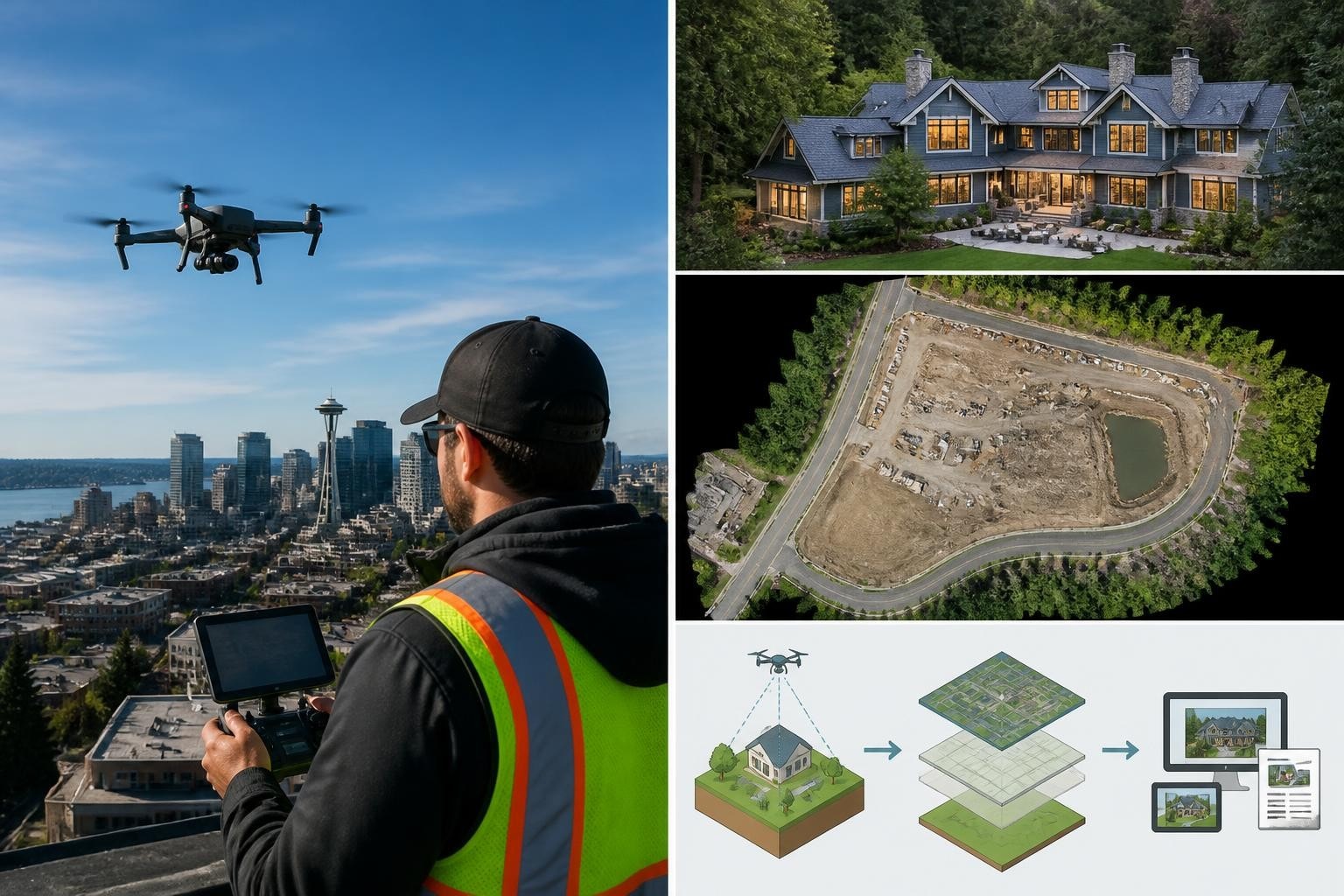
UAV drone services span industries, but the core demand centers on speed, accuracy, and delivery formats you can import directly into workflows. We see three main categories in Arizona and Nevada: cinematic production for film and TV, engineering and surveying data capture, and inspection imaging for construction and infrastructure teams.
Film and television crews need hero shots that integrate cleanly into edits, repeatable camera moves, and FPV sequences that traditional rigs can't capture. We deliver ProRes files, match camera metadata, and coordinate with picture car teams and stunt coordinators so aerial units don't slow down production schedules.
Engineering and surveying clients require orthomosaics, digital surface models, contours, and volumes with known accuracy. We process point clouds, GCPs, and RTK corrections to meet project specs, whether that's a Nevada highway expansion or a Phoenix subdivision grading plan.
Construction and infrastructure managers rely on progress documentation, thermal scans, and high-resolution inspection imagery that holds up in RFI meetings. We capture time-stamped photo sets, annotated defect reports, and comparison overlays that track changes across multiple site visits.
According to research on UAV applications, civil uses of drone technology have expanded rapidly since 2016, with precision agriculture, infrastructure monitoring, and real-time surveying representing the fastest-growing segments. The global UAV industry forecast projects the drone services market to reach $63.6 billion by 2029, driven by construction, energy, and media adoption.
In our experience, clients who get the best results understand exactly what file types and formats they need before the flight. Vague requests for "drone footage" create delays. Specific requests like "4K ProRes HQ at 23.976 fps with ND filters for outdoor midday shoot" or "1 cm GSD orthomosaic in GeoTIFF format with NAD83 Arizona Central Zone projection" let us bring the right sensor, set the right flight parameters, and deliver files that import without conversion.
Choosing the Right UAV Service for Your Project Type
Different project types demand different platforms, sensors, and processing workflows. We match the rig to the deliverable, not the other way around.
Cinematic and Broadcast Production
For narrative film, commercials, and broadcast work, we fly DJI Inspire 3 or Matrice 300 platforms with Zenmuse X9 or X7 cameras. You get full manual control over aperture, shutter, ISO, and ND filtration. We shoot ProRes or CinemaDNG RAW depending on post workflow, and we match frame rates and color profiles to A-camera specs.
Key deliverables include:
Establishing shots and hero aerials that cut into edits without color grade mismatches
Repeatable camera moves (rising reveals, tracking shots, orbital moves) for multiple takes
FPV sequences through interiors, tight spaces, or dynamic action where traditional drones can't operate
Coordination with picture vehicles, stunt teams, and ground crew so aerial units integrate smoothly into shooting schedules
We've supported productions across Arizona and Nevada since 2014, from indie features to network television. Crews value reliability: we show up with backup batteries, redundant rigs, and airspace clearances already handled. If you're planning a drone video production, we lock the shot list, confirm weather windows, and coordinate with your AD team so call sheets stay accurate.
Engineering and Surveying Data Capture
Surveyors and engineers need accuracy, not just pretty pictures. We fly RTK-enabled platforms with high-resolution mapping cameras, process GCPs when required, and deliver geospatially corrected datasets you can import into CAD, GIS, or design software.
Deliverable Type | Typical Accuracy | Use Case | Processing Time |
Orthomosaic | 1-3 cm GSD | Site planning, permit exhibits, base maps | 24-48 hours |
Digital Surface Model | 2-5 cm vertical | Grading plans, volume calculations, drainage analysis | 24-48 hours |
Contour Lines | 0.1-0.5 ft intervals | Topographic surveys, earthwork design | 48-72 hours |
Point Cloud | Sub-centimeter with GCPs | As-built verification, BIM integration, clash detection | 72-96 hours |
In February 2026, we captured a 28-acre grading site in Henderson, Nevada for a civil firm needing contours and a cut/fill analysis before bid documents went out. We flew a Matrice 300 RTK with P1 sensor, placed eight GCPs, processed 1,423 images, and delivered a 0.2-foot contour DWG file in 40 hours. The surveyor confirmed accuracy within tolerance, and the client issued bids on schedule.
For teams considering drone surveying and mapping services, we recommend clarifying coordinate systems, vertical datum, and accuracy requirements upfront. We work in State Plane, UTM, or local grid systems, and we adjust GCP density based on your project tolerance.
Construction Progress and Inspection Services
Project managers and superintendents rely on consistent, time-stamped imagery to track progress, document conditions, and resolve disputes. We establish repeatable flight paths, capture high-resolution stills and video, and deliver annotated reports that integrate into project management platforms.
Our construction-focused services include:
Weekly or monthly progress flights with consistent camera angles for before/after comparisons
Thermal inspections for roofing, HVAC, solar installations, and building envelope analysis
Defect documentation with GPS-tagged images and measurement overlays
Orthomosaic overlays showing site changes, material stockpiles, and layout accuracy against design plans
A Scottsdale commercial developer needed monthly progress documentation on a 19-acre mixed-use project from May 2025 through March 2026. We flew the same flight path every four weeks, captured 4K stills and video, and delivered labeled photo sets within 48 hours of each flight. The PM used the imagery in owner meetings, subcontractor coordination, and schedule recovery planning when foundation delays threatened the critical path.
According to 2025 drone industry research, construction firms investing in regular drone documentation report 18 percent faster issue resolution and 12 percent reduction in rework costs compared to projects relying solely on ground-level photography.
If you're managing construction site monitoring, we set up recurring flight schedules, archive all imagery with date stamps, and provide cloud access so your whole team can review current conditions without waiting for reports.
Field Note: Why We Standardize Flight Parameters
Our lead pilot Mark emphasizes consistency over improvisation. Every project gets a pre-flight checklist covering airspace clearance, weather minimums, battery status, sensor calibration, and backup plans. We use the same camera settings, flight speeds, and overlap percentages for repeat missions because consistency makes data comparison possible. When a client asks for monthly progress flights, we lock the flight path in our mission planner and execute the same route every time. That's how you get usable before/after imagery instead of random snapshots from different angles and altitudes. It's boring, but it works.
How UAV Drone Services Integrate Into Your Existing Workflow
You don't restructure your project around drone flights. You integrate uav drone services into milestones, deliverable schedules, and coordination sequences that already exist.
Film and TV production integration:
Scout calls with directors, DPs, and ADs to review shot lists and identify aerial opportunities
Pre-production site surveys to confirm flight zones, lighting conditions, and backup locations
Day-of coordination with picture vehicles, stunt teams, and ground camera units
Same-day or next-day file delivery in formats that match your post pipeline
We've worked on productions where aerial units were scheduled for golden hour only, weather-dependent backup days were built into the call sheet, and we coordinated directly with air traffic control for flights near Las Vegas airports. When you hire experienced drone cinematography teams, you get crew members who understand production hierarchy and don't slow down shooting schedules.
Engineering and surveying integration:
For design and construction projects, we typically fly during specific project phases: pre-design site assessment, post-grading verification, monthly progress documentation, or as-built confirmation. We deliver files in the coordinate systems and formats your CAD or GIS software expects, so you're not converting data or correcting projection errors.
In November 2025, a Phoenix MEP engineering firm needed thermal imaging of a 340,000 sq ft warehouse roof to identify insulation defects before a tenant improvement build-out. We flew a Mavic 3 Enterprise Thermal, captured radiometric TIFF files, processed a thermal orthomosaic, and delivered annotated defect locations within 72 hours. The engineer used our data to scope repairs, and the owner avoided costly mid-construction surprises.
Research on UAV integration in engineering applications highlights how drone-based mapping and inspection reduce field time by 40-60 percent compared to traditional methods, while improving data accuracy and safety outcomes. We see similar results in Arizona and Nevada projects where site access, terrain, or schedule constraints make ground surveys impractical.
Construction and infrastructure integration:
We set up recurring flight schedules that match your project milestones: foundation completion, framing close-in, MEP rough-in, exterior finish, final walk. Each flight produces a dated image set and an optional annotated report showing progress against schedule and design intent.
For teams managing thermal inspections, we recommend early-morning or late-evening flights when temperature differentials are greatest. We capture radiometric data, not just RGB thermal images, so you can measure actual temperature values and export data for analysis.
Selecting a UAV Drone Services Provider in Arizona and Nevada
Not all drone operators deliver the same results. You want teams who understand your industry, carry proper insurance, coordinate airspace when required, and deliver files in usable formats.
What to confirm before you hire:
Licensing and insurance: Verify current Part 107 certification and liability coverage. We carry $5 million general liability and $1 million aviation liability, and we provide certificates of insurance before every project.
Equipment and sensor capabilities: Confirm the provider owns the specific platforms and sensors your project requires. We maintain Inspire 3, Matrice 300 RTK, Mavic 3 Enterprise Thermal, and FPV rigs, plus backup units for every critical shoot.
Processing and delivery capabilities: Ask about turnaround times, file formats, and processing software. We deliver RAW image sets, processed orthomosaics, DSMs, contours, and point clouds depending on project needs.
Airspace coordination experience: For flights near airports, in controlled airspace, or requiring temporary flight restrictions, confirm the provider has coordinated with FAA and ATC. We've cleared airspace for flights near Phoenix Sky Harbor, Las Vegas McCarran, and multiple regional airports across Arizona and Nevada.
According to a comprehensive definition of drone services, the commercial UAV sector has evolved from experimental applications to mission-critical operations supporting construction, agriculture, energy, and media industries. Providers who've operated since 2014 or earlier bring institutional knowledge that newer entrants lack.
Regional Considerations for Arizona and Nevada Projects
Desert climate, high summer temperatures, and varying terrain create specific challenges. We adjust flight times to avoid midday thermals, carry extra batteries in climate-controlled cases, and plan missions around seasonal wind patterns.
Arizona-specific factors:
Summer heat limits battery performance and increases thermal turbulence between 11 AM and 4 PM
Monsoon season (July-September) requires flexible scheduling and weather backup days
Phoenix Class B airspace and multiple military operations areas require advance coordination
Nevada-specific factors:
Las Vegas Class B airspace and high-density helicopter traffic demand precise flight planning
High desert elevations reduce air density and affect aircraft performance
Seasonal wind events (especially spring) require conservative weather minimums
In January 2026, we flew a 52-acre solar farm inspection near Boulder City, Nevada using a Matrice 300 RTK with Zenmuse H20T thermal sensor. We captured RGB and thermal imagery of 14,200 panels, identified 37 hot spots indicating potential failures, and delivered a georeferenced defect map within 96 hours. The facility operator scheduled repairs based on our findings, preventing estimated production losses of $18,000 over the following quarter.
Deliverable Formats and Turnaround Times
Clear deliverable specifications prevent confusion and rework. We confirm file types, naming conventions, coordinate systems, and delivery methods before flights.
Cinematic Production Deliverables
We deliver video files in ProRes 422 HQ, ProRes 4444, or CinemaDNG RAW depending on your post workflow. Frame rates match your A-camera (23.976, 24, 25, 29.97, or custom). We provide metadata files, LUTs when requested, and organized folder structures that match your media management system.
Standard turnaround:
Same-day rough cuts for dailies review (when requested)
24-hour delivery of color-corrected ProRes files for editorial
48-72 hour delivery of RAW files for VFX or advanced grading
For projects requiring FPV drone cinematography, we coordinate with ground camera operators to match movement speed, framing, and action timing. FPV flights require multiple takes, so we budget extra flight time and confirm safety zones before any dynamic sequences.
Engineering and Surveying Deliverables
We process mapping data using Pix4D or DroneDeploy, export to industry-standard formats, and include accuracy reports with RMS error values and checkpoint comparisons.
Output Type | File Formats | Coordinate System Options | Delivery Time |
Orthomosaic | GeoTIFF, ECW, JPEG2000 | State Plane, UTM, Local Grid | 24-48 hours |
Digital Surface Model | GeoTIFF, XYZ, LAS | State Plane, UTM, Local Grid | 24-48 hours |
Contours | DWG, DXF, SHP | State Plane, UTM, Local Grid | 48-72 hours |
Point Cloud | LAS, LAZ, E57 | State Plane, UTM, Local Grid | 72-96 hours |
We deliver files via secure cloud transfer, include processing reports with accuracy statistics, and provide source images when requested. For teams needing 3D mapping services, we export mesh models, textured surfaces, and volumetric calculations in formats compatible with Civil 3D, Revit, and ArcGIS.
Construction and Inspection Deliverables
We organize progress imagery by date, location, and phase. Each delivery includes high-resolution JPG stills, annotated site maps, and optional comparison overlays showing changes between flight dates.
Inspection reports include:
GPS-tagged defect locations with measurement overlays
Thermal data with temperature ranges and anomaly annotations
Before/after comparison images showing remediation progress
Executive summary with findings count and recommended actions
Turnaround for routine progress flights is 48 hours. Thermal inspections require 72-96 hours for radiometric processing and defect analysis. If you need faster delivery for time-sensitive decisions, we offer 24-hour rush processing for an additional fee.
Pricing Models and Project Scoping
UAV drone services pricing varies based on complexity, deliverables, processing requirements, and travel distance. We quote projects individually after reviewing scope, location, and timeline.
Typical pricing factors:
Flight time and site size: Larger sites require more batteries, multiple flights, and extended field time
Sensor and platform requirements: Specialized sensors (thermal, LiDAR, RTK) and high-end cinema cameras increase equipment costs
Processing and deliverable complexity: Orthomosaics and contours require more processing than simple photo sets
Airspace coordination: Flights requiring ATC coordination or temporary flight restrictions add planning time
Travel and mobilization: Projects outside Phoenix or Las Vegas metro areas include travel time and mileage
We provide detailed quotes outlining flight parameters, deliverables, processing steps, and turnaround times. You know exactly what you're paying for and what you'll receive. For recurring projects like monthly construction progress flights, we offer package pricing with locked rates for the project duration.
In our experience, clients who provide clear project specs get accurate quotes faster. Vague requests for "drone services" require multiple clarification rounds. Specific requests like "weekly progress flights on 15-acre site, 4K stills from six consistent angles, 48-hour delivery" let us quote accurately on the first pass.
Common UAV Drone Services Mistakes to Avoid
We see recurring mistakes that waste time and budget. Most are preventable with better planning and communication.
Mistake 1: Waiting until the last minute to book
Weather, airspace constraints, and equipment availability all affect scheduling. We recommend booking at least two weeks ahead for standard projects and four weeks for complex productions requiring multiple flight days or specialized sensors.
Mistake 2: Unclear deliverable specifications
"We need drone footage" doesn't tell us what file type, frame rate, resolution, or delivery format you require. We can't deliver files that integrate into your workflow if we don't know what that workflow expects.
Mistake 3: Ignoring airspace and permitting requirements
Not all locations allow drone flights. Airports, military bases, national parks, and certain urban areas require advance coordination or prohibit flights entirely. We handle airspace clearances, but we need lead time to submit requests and wait for approvals.
Mistake 4: Unrealistic expectations about weather
Wind, rain, low visibility, and extreme temperatures all ground flights. We don't fly in unsafe conditions. Build weather backup days into your schedule, especially for outdoor productions or time-sensitive data collection.
Mistake 5: Skipping the pre-flight coordination call
A 15-minute planning call prevents costly misunderstandings. We review shot lists, confirm deliverables, discuss safety zones, and answer questions before anyone arrives on site. It's the easiest way to ensure we're aligned on goals and logistics.
Frequently Asked Questions
What's the difference between UAV drone services and traditional aerial photography?
UAV drone services offer lower cost, faster deployment, and access to locations helicopters and planes can't reach. We fly closer to structures, capture higher-resolution imagery, and deliver files within days instead of weeks. For construction, engineering, and most commercial work, drones provide better value and faster turnaround than manned aircraft.
How accurate are drone-based surveys compared to ground surveys?
With RTK-enabled platforms and ground control points, we achieve 1-3 cm horizontal accuracy and 2-5 cm vertical accuracy. That meets tolerance requirements for most site planning, grading, and volume calculation projects. For projects requiring higher precision or legal boundary surveys, we coordinate with licensed surveyors who use our data as a base layer for final deliverables.
Can you fly drones near airports or in controlled airspace?
Yes, with proper coordination. We submit LAANC requests for flights in controlled airspace and coordinate directly with air traffic control when required. We've cleared airspace for projects near Phoenix Sky Harbor, Las Vegas McCarran, and regional airports across Arizona and Nevada. Approval timelines vary, so we recommend booking at least three weeks ahead for airspace-sensitive projects.
What weather conditions prevent drone flights?
We don't fly in rain, sustained winds above 25 mph, or visibility below three miles. High temperatures above 110°F reduce battery performance and require shorter flight times. We monitor weather forecasts closely and recommend backup dates for outdoor projects scheduled during monsoon season or winter storm periods.
How do you ensure data security and confidentiality for sensitive projects?
All project files are stored on encrypted drives, transferred via secure cloud platforms, and deleted from our systems after delivery (unless you request archival storage). We sign NDAs when required and never share project details, imagery, or client information without written permission.
UAV drone services deliver measurable value when you match the right platform, sensor, and workflow to your specific project requirements. Whether you need cinematic aerials that integrate into post-production schedules, engineering data that meets surveying tolerances, or inspection imagery that documents defects and tracks progress, the key is working with teams who understand your industry and deliver files you can actually use. We've supported Arizona and Nevada projects since 2014, bringing FAA-certified pilots, professional-grade equipment, and zero-drama communication to every flight. If you're planning a project that could benefit from aerial perspective, contact Extreme Aerial Productions to discuss your deliverable requirements, review our equipment capabilities, and lock your flight schedule with a team that shows up prepared and delivers results on time.
Comments