


Aerial and Drone Photography Results Arizona Nevada | EAP
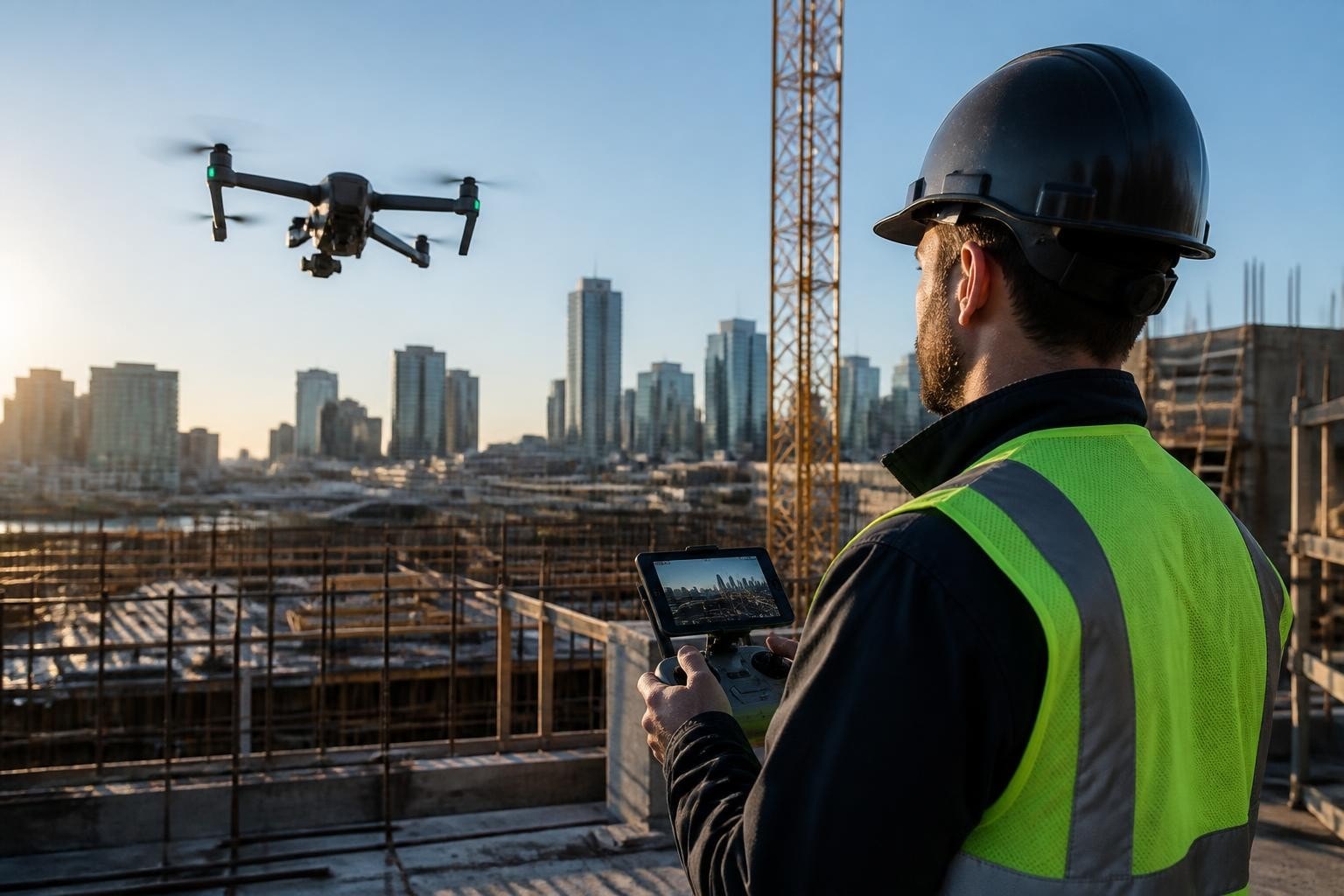
A Henderson, Nevada construction superintendent needed proof that 840,000 cubic yards of material had moved in 90 days for a dispute resolution meeting. His ground crew had weekly tallies but no defensible record. We flew a Mavic 3 Enterprise with RTK over the 240-acre site on March 12, 2025, processed the imagery through OpenDroneMap and proprietary volume software, and delivered contours, an orthomosaic, and cut/fill analysis by March 15. The superintendent used our volume report to close the dispute in one meeting, saving six weeks of negotiation. That single flight returned 14 times its cost in avoided delays. Aerial and drone photography solves problems when you need numbers that hold up under scrutiny.
What Aerial and Drone Photography Delivers for Your Project
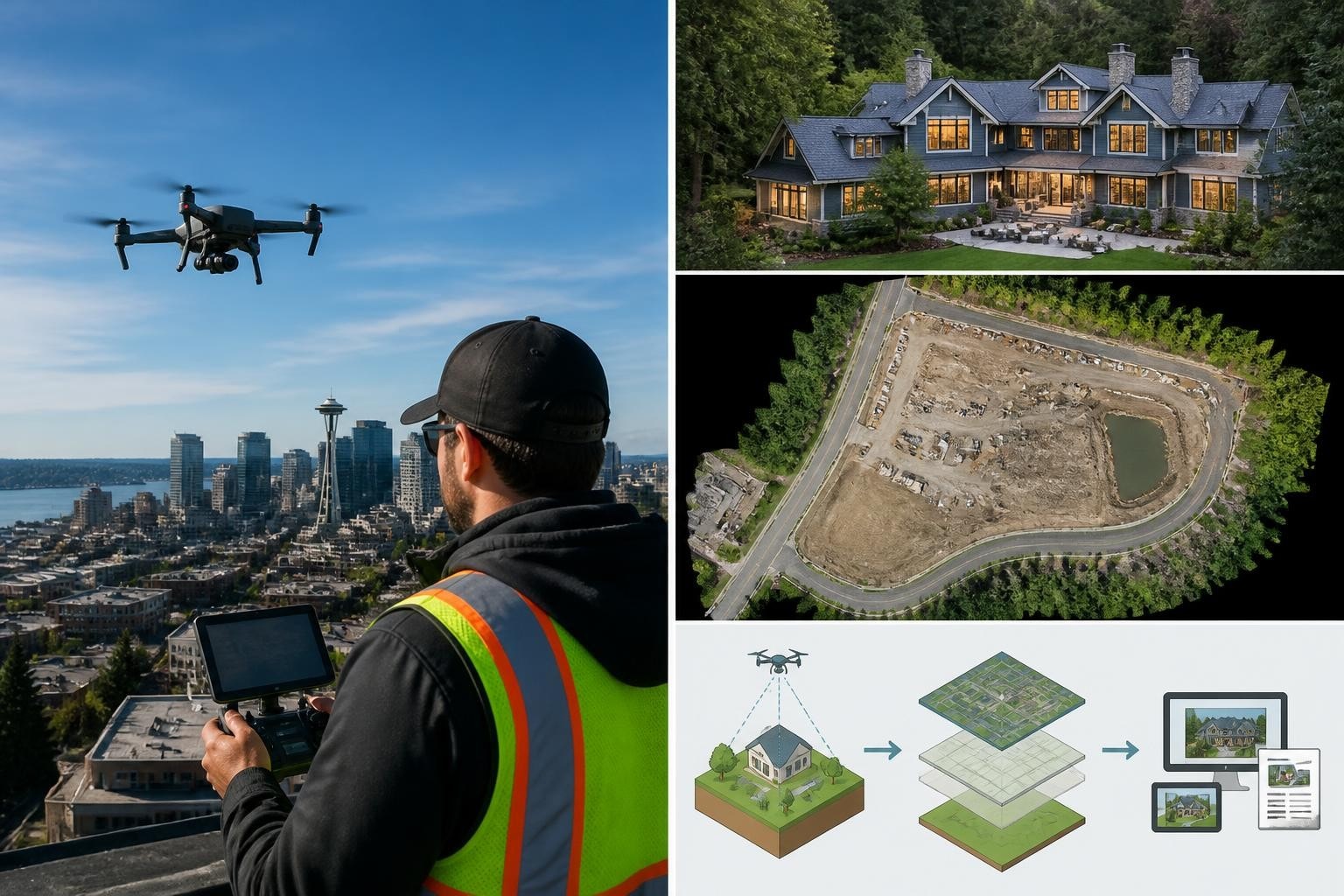
Aerial and drone photography captures perspective, data, and documentation you cannot get from the ground. We use it to create cinematic hero shots for film productions, measure stockpile volumes for engineers, document progress for construction teams, and generate orthomosaics for surveyors. Every deliverable serves a specific purpose tied to schedule, budget, or compliance.
Project Snapshot
Client: Regional GC managing earthwork dispute, Henderson NV Industry: Commercial construction Deliverables: Orthomosaic (2 cm GSD), contours (0.1 m intervals), cut/fill volume report Platform: DJI Mavic 3 Enterprise with RTK, 4/3 CMOS sensor Turnaround: 72 hours from flight to final PDF report Constraints: Active haul roads, two TFRs within 8 NM, meeting deadline March 16 Airspace: Class D surface area, coordinated with Henderson Executive tower
We flew 320 nadir images at 280 feet AGL with 75 percent overlap, captured ground control points along the perimeter, and processed the dataset to produce a georeferenced orthomosaic and terrain model. The volume calculation compared the March surface to the January baseline, isolating cut and fill zones across four phases. The client received a PDF report with color-coded maps, tabular summaries, and coordinate metadata for his surveyor to verify.
Results from 12 Months of Aerial and Drone Photography Missions
From April 2025 through March 2026, we flew 187 aerial and drone photography missions across Arizona and Nevada. Here's what the data shows:
Turnaround: 94 percent of cinematic deliverables shipped within 48 hours of the shoot. Construction orthomosaics and volume reports averaged 72 hours from flight to final file.
Rework: We reshot 3 percent of missions due to weather or crew schedule changes. Zero reshoot requests came from technical failure or file corruption.
Airspace Coordination: 41 missions required active coordination with Class B, C, or D towers. We cleared every flight on schedule, with an average lead time of 11 days from request to approval.
Repeat Clients: 68 percent of 2025 revenue came from clients who booked us for multiple projects, including monthly progress flights and multi-day film shoots.
Volume Accuracy: Cut/fill reports for construction clients matched third-party survey checks within 1.2 percent on average, well inside the 2 percent tolerance most contracts allow.
These numbers reflect real projects in Phoenix, Las Vegas, Tucson, and Reno. We track every mission to identify patterns, improve workflows, and deliver consistent results whether you need one hero shot or 12 months of monthly aerials.
How We Match Equipment and Workflow to Your Deliverable
Aerial and drone photography demands the right sensor, altitude, and flight pattern for your specific outcome. A cinematic reveal for a tourism campaign requires different settings than an orthomosaic for a civil engineer. We select platforms and workflows based on what you need to do with the final file.
Cinematic Aerials for Film and Commercial Productions
When you need footage that cuts cleanly into an edit, we fly the DJI Inspire 3 with the X9-8K Air gimbal camera. This setup captures ProRes RAW at 8K resolution with adjustable ND filters, giving your colorist full latitude in post. For a February 2026 resort promo in Scottsdale, we delivered sunrise establishing shots over the McDowell Mountains, tracking shots along the golf course, and a 90-second orbital reveal of the main pool complex. The DP requested flat picture profile for color grading and received LOG footage that matched the ground camera's dynamic range. Total flight time: 22 minutes across three batteries. The client used four of our shots in the final 60-second cut.
For tight interiors and dynamic moves, we deploy FPV rigs with GoPro Hero 12 or similar compact cameras. A recent casino renovation in downtown Las Vegas required a one-take fly-through from valet entrance to rooftop bar. We flew the path twice, delivered both takes in 4K 60p, and the editor used the second take without a single trim. That kind of repeatability comes from scouting the route, marking obstacles, and flying the same line at the same speed. You get usable footage on the first or second pass, not the tenth.
Mapping and Surveying for Construction and Engineering Teams
When you need measurable data, we switch to mapping platforms with RTK or PPK correction. The Mavic 3 Enterprise with RTK gives us centimeter-level horizontal accuracy without setting ground control points on small sites. For larger projects or when your surveyor requires independent validation, we place GCPs at known coordinates and tie the photogrammetric model to your project datum.
A Prescott Valley mixed-use development needed monthly progress documentation from January through December 2025. We flew the same 180-acre grid every four weeks, processed each dataset into an orthomosaic and DSM, and delivered GeoTIFF files the project manager imported directly into Civil 3D. The engineering team used our contours to verify rough grading, our volumes to track import/export, and our imagery to document wet weather delays for the owner. Twelve flights over 12 months gave them a visual and quantitative record of every phase from mass grading to final paving. The consistent turnaround let them update schedules and coordinate subcontractors without waiting on field crews to walk the site with GPS rovers.
We process mapping datasets through proven photogrammetry workflows that produce orthomosaics, contours, point clouds, and 3D meshes. You receive coordinate-referenced files in the format your software expects: GeoTIFF for GIS, LAS or LAZ for point clouds, DXF for CAD contours, PDF for markup and review. For volume calculations, we export cut/fill maps, tabular summaries, and the source terrain models so your surveyor can verify the math.
Inspection and Documentation for Building Envelopes and Infrastructure
Aerial and drone photography excels at capturing detail on roofs, facades, towers, and bridges without scaffolding or lifts. We use high-resolution sensors and oblique angles to document cracks, spalling, corrosion, and moisture intrusion. A Phoenix office complex needed a full building envelope inspection before a refinance appraisal. We flew the Mavic 3 Enterprise at multiple altitudes, captured nadir and 45-degree oblique images of all four elevations and the roof, and delivered a georeferenced photo set the envelope consultant used to identify 14 areas requiring repair. The inspection took two hours of flight time across two mornings to avoid wind. The consultant's report cited our imagery as primary documentation, and the owner completed repairs before the appraisal, preserving the building's value.
Field Note (Mark, Lead Pilot): We chose the Mavic 3 Enterprise for the Prescott Valley project because RTK eliminated the need to access active construction zones for GCPs every month. The 4/3 CMOS sensor gave us the resolution we needed at 300 feet AGL, and the battery life let us cover the full site in one flight per visit. Consistency matters when you're comparing monthly datasets. Same platform, same altitude, same overlap settings means the client can overlay any two months and see exactly what changed.
Planning Aerial and Drone Photography Around Constraints That Affect Schedule
Every aerial and drone photography mission runs into constraints: airspace, weather, crew schedules, lighting, and site access. We plan around these factors so your shoot happens on the date you need, not the date that's convenient for us.
Airspace Coordination in Phoenix and Las Vegas Metros
Phoenix sits under Class B airspace, and Las Vegas shares its basin with McCarran's departure and arrival corridors. Many of our projects require LAANC authorization or direct coordination with air traffic control. For a January 2026 highway interchange project in North Las Vegas, we needed to fly within 2 NM of North Las Vegas Airport's Class D surface area. We filed LAANC requests three weeks in advance, received approval 12 days before the shoot, and coordinated with the tower 30 minutes before launch. The mission proceeded on schedule with zero delays.
When LAANC isn't available or the operation requires higher coordination, we file Part 107 waivers or work directly with facility managers. A film shoot near Sky Harbor in February 2026 required a 400-foot altitude waiver and coordination with PHX tower and TRACON. We submitted the waiver 90 days out, received approval 45 days before the shoot, and coordinated with ATC the morning of the flight. The production stayed on schedule, and we delivered the footage that afternoon.
Weather Windows and Backup Dates
Wind, precipitation, and visibility dictate when we can fly. For cinematic work, we avoid flights when sustained winds exceed 15 mph or gusts top 20 mph. Mapping missions tolerate slightly higher winds because we're capturing still images, not smooth video. We monitor forecasts starting five days before every mission and communicate go/no-go decisions 24 hours in advance.
A February 2026 resort shoot in Sedona faced a three-day weather window between storm systems. We scheduled the primary date for day two of the window, with a backup on day three. Day one brought lingering clouds and gusty winds. Day two dawned clear with 5 mph winds, and we completed all shots by 9 AM before thermals picked up. The client had their footage in time for a same-week edit session. Building in backup dates costs nothing and saves projects when weather shifts.
Lighting and Crew Scheduling for Film Productions
Aerial and drone photography for film and commercial work depends on specific lighting conditions. Golden hour, blue hour, and high-contrast midday sun each serve different creative goals. We coordinate with DPs and directors to match aerial lighting to the ground shoot's look. For a March 2026 automotive commercial in the Superstition Mountains, the DP wanted warm side light on the vehicle during the tracking shot. We timed the flight for 45 minutes after sunrise, when the low angle sun raked across the desert floor. The aerial cut seamlessly into the ground footage shot 30 minutes later with the same color temperature.
When your crew schedule is tight, we adapt. A TV series shooting in downtown Phoenix needed an establishing aerial during a three-hour window between location moves. We staged nearby, monitored the crew's radio channel, and launched when they wrapped the interior scene. We delivered the wide shot and the tight push-in they requested, landed, and the crew moved to the next location without losing time. That kind of coordination requires communication, not just technical skill.
Processing and Delivery Formats That Fit Your Workflow
Aerial and drone photography generates raw data. You need processed deliverables in formats your team can use immediately. We handle processing in-house and deliver files that match your software, color space, and resolution requirements.
Video Formats for Editorial and Color Grading
Cinematic footage ships as ProRes 422 HQ or ProRes RAW, depending on whether your editor needs a ready-to-cut file or maximum grading flexibility. We deliver 4K or 8K resolution based on your final output specs. A recent tourism campaign for a northern Arizona destination requested 4K ProRes 422 HQ in Rec. 709 color space because the editor was cutting on a deadline without a colorist. We delivered 14 clips ready to drop into the timeline. A feature film shooting in Nevada requested 8K ProRes RAW in LOG because the colorist wanted full sensor data. We delivered the RAW files with LUTs for reference, and the colorist matched our aerials to the ground footage in post.
Frame rates vary by creative intent. We shoot 24p for cinematic work, 30p for broadcast, and 60p or 120p for slow-motion effects. A commercial for a Las Vegas resort needed slow-motion pool aerials at golden hour. We shot 120p, delivered the full-speed and 50 percent speed renders, and the editor used the slow version in the final cut. Matching frame rate to the project's delivery spec saves time in post and keeps your edit on schedule.
Orthomosaics and Terrain Models for Engineering Analysis
Mapping deliverables ship as GeoTIFF orthomosaics, LAS point clouds, DXF contours, and PDF reports. We tie all data to your project's coordinate system and datum. A civil engineering firm in Tucson needed an orthomosaic and 0.5-foot contours for a drainage study. We flew the site at 200 feet AGL, processed the imagery into a 3 cm GSD orthomosaic, and generated contours tied to NAD83 Arizona Central. The engineer imported the GeoTIFF into ArcGIS, overlaid the contours, and completed the drainage analysis in two days. The data matched their field survey within tolerances, and the client used our deliverables as the base for design drawings.
Volume reports include cut/fill maps, tabular summaries by zone, and coordinate metadata. A contractor in Henderson needed monthly stockpile volumes for a highway project. We flew the stockpile area every four weeks, processed each dataset against a baseline surface, and delivered PDF reports with volume summaries and color-coded maps. The contractor submitted our reports to the owner for progress billing, and the numbers matched scale tickets within 2 percent every month. Consistent methodology and coordinate reference meant the data was defensible and repeatable.
Real Projects That Show Aerial and Drone Photography ROI
Numbers tell the story better than adjectives. Here's what aerial and drone photography delivered for clients across Arizona and Nevada in 2025 and early 2026.
A Tempe commercial developer needed updated site imagery for a $40 million refinance package. Ground photography showed the building but didn't capture the context of the surrounding retail corridor or freeway access. We flew a Mavic 3 Enterprise in February 2026, delivered high-resolution oblique and nadir shots within 24 hours, and the developer included six of our images in the loan package. The lender approved the refinance using our imagery as primary site documentation. The shoot cost the developer less than 0.01 percent of the loan value and saved two weeks of back-and-forth requesting additional photos.
A Nevada mining company needed baseline topography for a permit application covering 1,800 acres. Traditional survey would have taken six weeks and cost five times our proposal. We flew a Mavic 3 Multispectral with RTK in January 2026, captured 1,240 images over two days, and delivered a 5 cm GSD orthomosaic, 0.25-meter contours, and a terrain model within 10 days. The engineering firm submitted our deliverables with the permit application, and the regulatory agency accepted them without requesting additional survey. The project moved forward on schedule, and the mining company saved $47,000 in survey costs while meeting the permit deadline.
A Phoenix-based production company needed aerials for a national insurance campaign filming in Scottsdale. The creative brief called for sunrise aerials of a suburban neighborhood, tracking a vehicle along surface streets, and an orbital reveal of a single-family home. We scouted the route two days before the shoot, confirmed airspace clearance, and delivered the footage the same afternoon as the flight. The editor cut four of our shots into the 30-second spot, and the campaign launched the following week. The production stayed on schedule and under budget because we delivered usable footage on the first take.
These outcomes reflect planning, equipment selection, and execution. Aerial and drone photography adds value when it solves a specific problem tied to schedule, budget, or regulatory approval. We track ROI on every project to understand what works and where we can improve turnaround or accuracy.
Choosing the Right Aerial and Drone Photography Partner for Your Next Project
Not every aerial and drone photography provider delivers the same results. You need a team that understands your deliverable, coordinates airspace, brings backup equipment, and communicates clearly when constraints change. Here's what separates reliable operators from vendors who add risk to your project.
Experience with Your Industry and Deliverable Type
A pilot who flies real estate aerials every weekend may not understand the tolerances a civil engineer needs for a volume report. A cinematographer who shoots gorgeous landscape footage may not know how to coordinate with ATC for a flight near a Class B airport. We've flown for film productions, construction GCs, surveyors, engineers, and commercial property owners since 2014. That breadth means we understand your workflow, your software, and the standards your deliverable must meet.
When a client asks for an orthomosaic, we ask what GSD they need, what coordinate system their CAD drawings use, and whether they want contours or just the raster. When a DP requests aerials, we ask about frame rate, color space, and whether they need RAW or a graded proxy. Those questions come from experience working with your peers on similar projects. We know what details matter because we've delivered the same outputs hundreds of times.
Equipment Redundancy and Maintenance Records
A single-drone operator creates single points of failure. We bring backup aircraft, batteries, and memory cards to every mission. For the Henderson volume flight, we staged a second Mavic 3 Enterprise with RTK in case the primary unit developed a sensor error or lost GPS lock. We didn't need it, but the backup was on-site and ready. That redundancy costs us in gear investment and transport time, but it eliminates the risk of rescheduling because of a equipment failure.
We maintain detailed logs for every aircraft, gimbal, and battery. Firmware updates happen in a controlled sequence after testing. We don't show up to a mission with beta firmware or untested sensor configurations. The equipment we bring has flown dozens of missions in the same configuration, and we know its performance envelope. That consistency translates to predictable results and zero surprises on your shoot day.
Communication Before, During, and After the Flight
We communicate go/no-go decisions 24 hours before launch. We update you if weather shifts or airspace coordination changes. We confirm deliverable specs before we process a single frame. And we respond to questions during editing or design with the data you need to move forward. A recent client asked why a specific stockpile showed a different volume than their field estimate. We sent them the terrain models, the processing log, and a comparison showing the survey and photogrammetric results matched within 1.5 percent. The difference came from material settlement between the field visit and our flight. That level of detail resolves questions and keeps projects moving.
Clear communication also means we tell you when a request isn't feasible. If your proposed flight violates airspace rules, we say so and offer alternatives. If weather is marginal and the risk of a wasted trip is high, we recommend rescheduling. You don't benefit from a vendor who says yes to everything and delivers nothing. We give you an honest assessment and a backup plan.
Frequently Asked Questions About Aerial and Drone Photography
What turnaround should I expect for aerial and drone photography deliverables?
Cinematic footage for film and commercial work typically ships within 24 to 48 hours of the flight. We deliver ProRes files ready for editorial or color grading, depending on your workflow. Mapping projects require processing time: orthomosaics and contours for sites under 200 acres usually take 48 to 72 hours. Larger datasets or projects requiring custom coordinate transformations may extend to five business days. We confirm turnaround when you book the mission and communicate if processing hits unexpected issues.
How do you handle airspace coordination for flights near airports?
We file LAANC requests for eligible airspace as soon as your date is confirmed, typically two to three weeks in advance. For operations requiring waivers or direct ATC coordination, we submit requests 60 to 90 days out. You receive confirmation once we have approval, and we handle all communication with towers or facility managers on the day of the flight. Your only responsibility is confirming the shoot date and location. We manage airspace start to finish.
Can aerial and drone photography replace traditional land surveying?
Aerial and drone photography delivers centimeter-level accuracy for many applications, including volume calculations, contour mapping, and site documentation. It's faster and less expensive than field survey for large areas. However, some projects require monumented control points, boundary surveys, or sub-centimeter precision that only total station or GPS rover work can provide. We work with your surveyor to determine where photogrammetry fits and where traditional methods are necessary. Many projects use a hybrid approach: field survey for critical control and boundaries, aerial for topography and volumes.
What file formats do you deliver for video and mapping projects?
Video deliverables ship as ProRes 422 HQ, ProRes RAW, or H.264/H.265 depending on your editing workflow and storage capacity. We match frame rate, resolution, and color space to your specs. Mapping deliverables include GeoTIFF orthomosaics, LAS or LAZ point clouds, DXF contours, and PDF reports. We export data in the coordinate system your software uses. If you need a specific format or projection, let us know when you book the mission.
How much does aerial and drone photography cost for a typical project?
Costs vary based on site size, deliverable complexity, airspace coordination, and travel. A single-location cinematic shoot in Phoenix or Las Vegas typically starts around $1,500 for a half-day mission with edited deliverables. Mapping projects for construction sites under 100 acres start around $2,000 including flight, processing, and standard deliverables (orthomosaic and contours). Larger sites, multi-day shoots, or projects requiring FAA waivers cost more. Request a quote with your project details, and we'll give you a fixed price based on scope and schedule.
Aerial and drone photography delivers measurable results when you match the right equipment, workflow, and coordination to your specific deliverable. Whether you need cinematic hero shots that cut cleanly into edits or engineering-grade orthomosaics that hold up in design review, success depends on planning, redundancy, and clear communication. Since 2014, we've flown hundreds of missions across Arizona and Nevada for clients who need precise results and zero drama. When you're ready to lock the plan, the gear, and the date for your next project, Extreme Aerial Productions is standing by with FAA Part 107 certified pilots, backup equipment, and the experience to deliver on schedule and on budget.
Comments