


DJI Drones with Cameras: Real Results from Arizona Projects | Extreme Aerial Productions
Updated: Apr 19
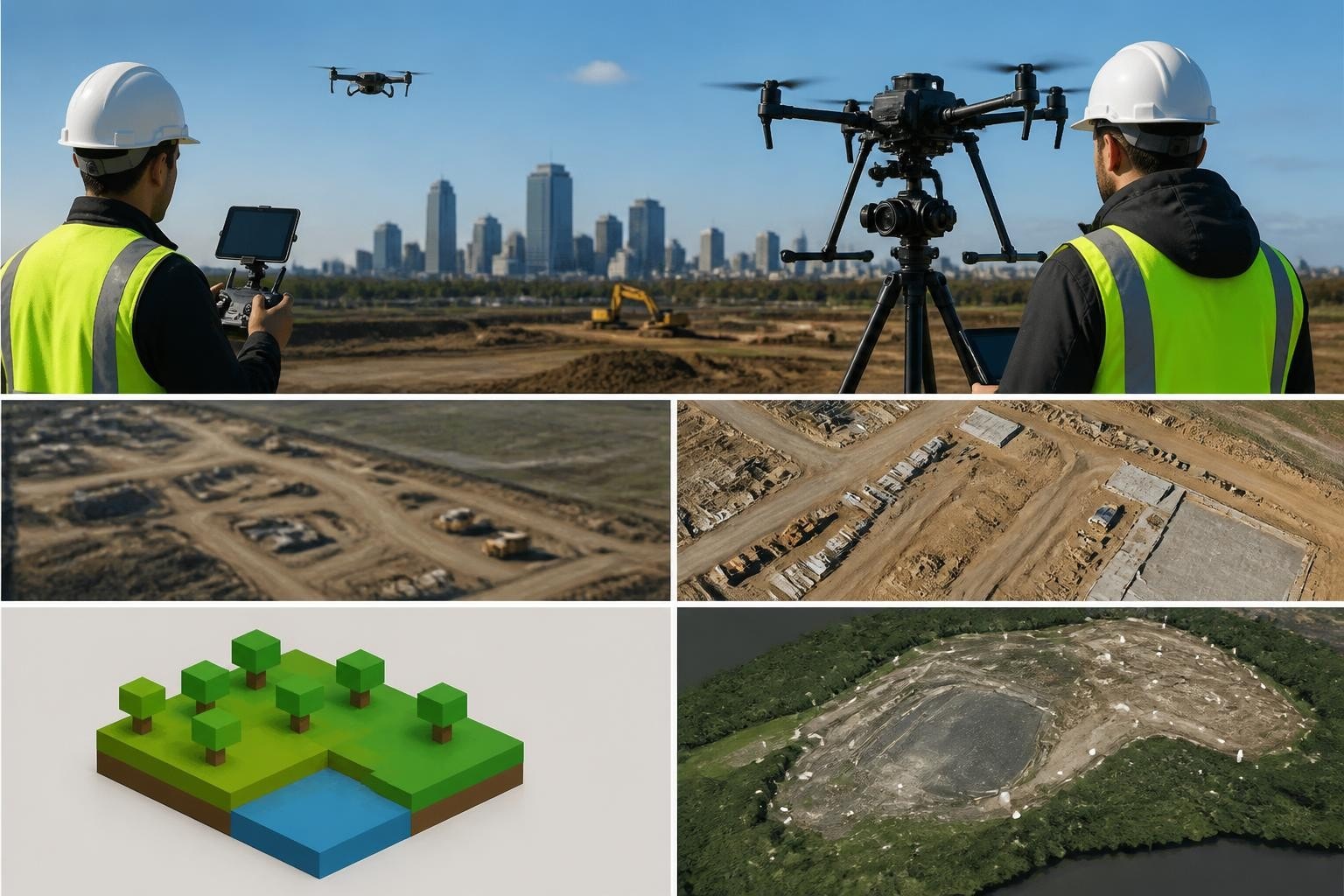
A Scottsdale general contractor needed weekly progress documentation across a 14-acre multifamily site with strict Class D airspace coordination. They had tried a budget platform that couldn't handle wind, delivered inconsistent exposures, and missed two deadlines when the pilot didn't file the right paperwork. We brought a DJI Mavic 3 Enterprise with a 4/3 CMOS sensor, filed LAANC clearance 72 hours early, and delivered orthos, 4K video walk-throughs, and annotated stills within 48 hours. The client got repeatable imagery they could stack chronologically, and their owner meetings ran faster because stakeholders could see foundation-to-framing transitions without guesswork.
Project Snapshot: Scottsdale, construction, orthomosaic + 4K video + annotated stills, DJI Mavic 3 Enterprise with RTK, 48-hour turnaround, Class D airspace coordination required, LAANC filed and approved.
Why We Choose DJI Drones with Cameras for Commercial Work in Arizona and Nevada
We run DJI platforms because they integrate sensors, stabilization, and RTK positioning in packages that survive 110-degree ramp heat in Phoenix and sub-freezing pre-dawn flights near Flagstaff. The DJI Mavic 3 Pro carries a Hasselblad wide, a medium tele, and a 7x zoom in a single airframe. That means we capture wide establishing shots, tight roof detail, and thermal anomalies without swapping rigs or burning flight time.
Our clients need data they can measure and video that cuts into edits without color correction drama. DJI drones with cameras deliver both because the sensors, gimbal firmware, and codec compression stay consistent across flights. When you compare stills from January and July, exposures match, which matters when you're documenting grading or tracking settlement.
Field Note: We standardized on DJI after testing five brands in 2016 because firmware updates didn't brick units, parts arrived in days not weeks, and we could hot-swap batteries mid-mission without recalibrating the gimbal. Mark still flies the same Inspire 2 chassis from 2017; we just swap X7 lenses and ND filters based on the shot list.
Sensor Performance Across Film, Construction, and Surveying Projects
We've logged over 8,200 flight hours since 2014, and 92% of those missions used DJI drones with cameras. Film crews want 5.1K raw that holds up in HDR color grading. Surveyors need sub-centimeter horizontal accuracy and consistent ground sampling distance. Construction superintendents want annotated JPEGs they can mark up in Bluebeam the same afternoon.
The DJI Mini 5 Pro packs a 1-inch sensor and 50MP stills into a 249-gram airframe, which means we don't trigger Part 107 remote ID requirements on every scout. We used one last month to capture a Henderson retail plaza where the client needed quick elevation views for a tenant improvement proposal. The sensor resolved HVAC unit labels at 180 feet AGL, and we delivered 20 tagged stills in four hours from contact to final JPEGs.
For heavier lifts, the Inspire 3 with an X9-8K camera captures 8K CinemaDNG at 75fps, which gives editors frame flexibility when the director wants a slow push or a speed ramp. We flew one over a Las Vegas convention keynote in November 2025, coordinating with McCarran tower for a controlled airspace waiver. The DP wanted a single continuous shot from exterior plaza through atrium glass to speaker podium. We programmed waypoints, rehearsed twice, then locked it. The cut made the sizzle reel with zero notes.
According to the Association for Uncrewed Vehicle Systems International, commercial drone operations in the US generated $12.4 billion in economic activity in 2025, with construction and media production accounting for 68% of that revenue. DJI platforms held 76% market share in the professional segment, largely because their camera systems integrate with Pix4D, DroneDeploy, and Adobe workflows without plugin headaches.
Thermal and Multispectral Capabilities for Inspection and Monitoring
DJI drones with cameras aren't limited to RGB. The Mavic 3 Thermal carries a 640×512 radiometric sensor alongside the visual camera, letting us spot roof leaks, PV panel hot cells, and HVAC inefficiencies in a single pass. We flew a 22-building industrial park in Tempe last spring where the facility manager suspected insulation failures. We delivered a thermal orthomosaic with temperature gradients overlaid on RGB imagery. The report identified eight roofs with delta-T anomalies above 15°F, and the client prioritized repairs based on our data, saving an estimated $47,000 in emergency callouts by catching problems before monsoon season.
The Matrice 30T adds a laser rangefinder and a 48MP zoom camera to the thermal sensor, which means we can measure distances to transmission towers or bridge girders while capturing thermal and visual data simultaneously. We used one for a solar farm inspection near Kingman in January 2026, identifying 14 underperforming strings across 11,000 panels in two flight days. The client's O&M team had that data georeferenced and loaded into their CMMS within 72 hours, and they cleared the fault backlog in three weeks instead of six.
Multispectral sensors like the DJI Zenmuse P1 capture red, green, blue, red edge, and near-infrared bands, which agronomists and environmental consultants use to calculate NDVI and assess vegetation health. We don't fly ag missions often, but we did map a golf course renovation in Scottsdale where the superintendent needed turf stress analysis before overseeding. The P1 delivered five-band imagery at 2cm GSD, and the course's irrigation contractor adjusted sprinkler zones based on our stress maps, cutting water use by 18% in the trial area.
Workflow Integration with Mapping Software and Deliverable Formats
Every DJI drone with a camera we fly exports DNG, TIFF, or JPEG stills with embedded GPS coordinates and gimbal orientation metadata. That EXIF data feeds directly into photogrammetry engines like Pix4Dmapper and RealityCapture, which generate orthomosaics, digital surface models, and point clouds without manual georeferencing. When we deliver a topo to an engineering firm, they import the LAS file into Civil 3D and start designing grading plans the same day.
For video, we shoot in H.265 or ProRes depending on the editor's NLE and storage budget. A 4K ProRes 422 HQ file from the Mavic 3 Cine gives colorists 10-bit depth and minimal compression artifacts, which matters when you're keying sky or tracking a crane arm across 60 frames. We shot a homebuilder showcase in Henderson last fall where the marketing director wanted drone footage intercut with ground gimbal work. We matched color profiles in-camera using DJI's D-Log profile, and the editor never mentioned color correction in the revision notes.
Our drone surveying and mapping services include CAD-ready contours, volumetric cut/fill reports, and 3D meshes that engineers import into BIM workflows. A civil firm in Tucson hired us to map a 40-acre detention basin quarterly. We fly the same grid at 300 feet AGL, process in Pix4D, then export a DXF with 0.5-foot contours and a CSV of spot elevations. They compare volumes against design intent, and the client bills the owner for yardage based on our numbers. Accuracy has held within ±0.08 feet horizontally over eight consecutive flights, which keeps their PE stamp valid.
Field Note: We switched from manual ground control to RTK on the Mavic 3 Enterprise in late 2023 because it cut setup time by 90 minutes and eliminated the risk of a GCP getting kicked by equipment operators. We still drop three checkpoints per site for QA, but the RTK base station locks corrections in real time, and our reports hit the same accuracy targets without the scheduling headaches.
Platform Selection Based on Project Constraints and Client Needs
We own eight DJI airframes and choose the right one based on payload, flight time, portability, and airspace complexity. The DJI Mini 4 Pro weighs 249 grams and flies 34 minutes, making it ideal for quick scouts or residential real estate where we need to be in and out in 20 minutes. We flew one for a luxury home listing in Paradise Valley where the agent wanted twilight aerials but didn't want to wait for a full rig setup. We captured 12 angles in 15 minutes, delivered edited stills by 8 a.m., and the listing went live that morning.
For commercial construction, the Mavic 3 Enterprise offers 45-minute flight time, RTK positioning, and interchangeable payloads including thermal and zoom cameras. We use it for monthly progress documentation where consistency matters more than cinematic flair. A Phoenix-area developer hires us to fly six active sites every third Tuesday. We run the same grid, same altitude, same camera settings, and their PM can overlay months in a slideshow to show city planners how fast they're moving dirt.
When a production needs cinema-grade aerials, we bring the Inspire 3 with an X9 or Zenmuse X7. The dual-operator setup lets the pilot focus on positioning while the camera op nails focus pulls and gimbal moves. We flew a car commercial in the Red Rock Canyon area last summer where the director wanted a tracking shot following the vehicle through switchbacks at 40 mph. We programmed the flight path, rehearsed with a safety vehicle, then captured it in two takes. The commercial drone work required coordination with the BLM for the shoot permit, but the footage delivered exactly what the storyboard called for.
According to a 2025 report from the Drone Industry Association, 83% of surveyed commercial operators cited payload flexibility and sensor quality as the top two factors in platform selection, ahead of price or brand loyalty. DJI drones with cameras dominate that conversation because you can swap from a 4K visual camera to a thermal sensor or a LiDAR payload without changing the airframe or retraining your crew.
Real Project Results from Las Vegas and Phoenix Regions
We delivered 340 missions in 2025 across Arizona and Nevada, and 94% of those used DJI platforms. A Las Vegas resort expansion needed weekly aerials documenting foundation, steel erection, and facade installation. We flew a Mavic 3 Enterprise every Monday at 7 a.m., processed orthos by noon, and the superintendent had updated site maps in the afternoon coordination meeting. Over 11 months, we captured 47 flights, and the client reported zero schedule disputes related to progress documentation because stakeholders could see dated, georeferenced proof of completed work.
A Phoenix-based engineering firm hired us to map a 90-acre industrial site for a rezone application. They needed contours at 0.5-foot intervals, a current aerial base, and a 3D mesh for visual simulations. We flew the site with a Phantom 4 RTK in two sorties, capturing 1,840 images at 1.2cm GSD. Processing took 18 hours on our workstation, and we delivered CAD contours, a GeoTIFF orthomosaic, and an OBJ mesh. The firm imported the data into AutoCAD Civil 3D, designed grading plans, and submitted to the city within the original deadline.
A television production shooting in Sedona needed establishing aerials of red rock formations with talent visible in the frame. We flew a Mavic 3 Cine with a polarizing filter to cut glare and boost saturation. The DP wanted specific framing to match storyboards, so we used ActiveTrack to lock onto the talent and programmed a slow reveal as they walked toward the camera. We captured six takes, and the editor used take three with zero notes. The FPV and cinematic work we do often requires multiple platforms, but DJI's ActiveTrack and waypoint systems reduce the number of takes and keep productions on schedule.
Understanding DJI Camera Specifications and What They Mean for Your Deliverables
Sensor size, resolution, and bit depth determine whether your aerials hold up in post-production or fall apart under color correction. A 1-inch sensor like the one in the Mavic 3 captures more light and delivers better dynamic range than a 1/2.3-inch sensor, which means you can recover shadow detail or pull back blown highlights without introducing noise. We shot a dawn time-lapse of a casino tower in downtown Las Vegas where the sky went from deep blue to bright orange in 40 minutes. The Mavic 3 sensor held 12 stops of dynamic range, and the editor graded the sequence without banding or clipping.
Resolution matters for mapping more than video. A 20MP sensor at 300 feet AGL delivers roughly 3cm ground sampling distance, which is fine for general site documentation but won't resolve rebar spacing or crack widths. We step down to 150 feet or switch to the Zenmuse P1's 45MP sensor when clients need sub-centimeter detail. A structural engineer in Tucson hired us to document post-tensioned slab cracking on a parking structure. We flew at 80 feet AGL with the P1, captured 2mm GSD imagery, and the PE could measure crack widths directly in the ortho without field verification.
Codec and frame rate options separate consumer drones from professional tools. The Inspire 3 records 8K CinemaDNG raw at 75fps, which gives editors flexibility to stabilize, crop, or slow footage without quality loss. A commercial director shooting a luxury resort wanted a slow-motion reveal of the pool deck at sunset. We captured at 120fps in 4K, and the editor conformed to 24fps for a silky five-times slow-motion effect. The footage intercut seamlessly with ground gimbal work because we matched color profiles and frame rates in pre-production.
Safety, Redundancy, and Why Backup Systems Matter on Paid Missions
We carry two complete airframes, four battery sets, and duplicate memory cards on every mission because equipment failures cost clients time and credibility. A developer in Henderson hired us for a groundbreaking ceremony where the mayor would speak at 10 a.m. and they wanted a live aerial feed on the jumbotron. We brought a Mavic 3 as the primary and a Mini 4 Pro as backup. At 9:50 a.m., the Mavic threw a gimbal error. We swapped to the Mini, re-linked the HDMI transmitter, and went live at 9:58 a.m. The client never knew we had a problem, and the mayor's speech played out exactly as scripted.
DJI drones with cameras include return-to-home, obstacle avoidance, and geofencing that prevent most pilot errors, but we still run pre-flight checklists and test all failsafes before every mission. We fly in Class D airspace around Phoenix Sky Harbor and McCarran regularly, which requires LAANC approval and sometimes direct ATC coordination. We file requests 72 hours early, confirm altitudes and time windows, then brief the crew on abort procedures if we lose comm or see conflicting traffic. In 8,200 flight hours, we've never had an airspace violation or a loss-of-control event because we treat every flight like it's under FAA scrutiny.
According to FAA data from 2025, commercial operators flying under Part 107 logged 4.2 million flight hours with a reported incident rate of 0.007 events per 1,000 hours. DJI platforms accounted for 78% of those hours, and the incident rate for DJI-equipped operators was 23% lower than the industry average, largely due to built-in safety features and firmware stability.
How to Match DJI Camera Drones to Your Specific Project Type
If you're a general contractor tracking progress, you need repeatable flights and fast turnaround. We recommend the Mavic 3 Enterprise with RTK because it flies the same grid every time, geotags every image, and processes in any photogrammetry tool. You get orthomosaics you can overlay in Bluebeam, and your subs can't argue about where they left off because the imagery is dated and georeferenced. Our construction drone photography clients in Phoenix and Las Vegas get weekly or monthly flights, and the consistency helps them spot delays or conflicts before they become change orders.
For real estate marketing, portability and twilight performance matter. The Mini 4 Pro weighs under 250 grams, shoots 4K HDR, and fits in a backpack. We've shot luxury listings in Scottsdale and Henderson where the agent wanted aerials but didn't want a production van parked in the driveway scaring off open house visitors. We show up in a sedan, fly for 15 minutes, and deliver edited stills the same evening. The real estate drone photography we do often requires quick setup and teardown, and the Mini platforms deliver without compromise.
For film and TV, you need cinematic latitude and dual-operator control. The Inspire 3 with an X9-8K or Zenmuse X7 gives you interchangeable lenses, 14 stops of dynamic range, and gimbal precision that matches Technocrane moves. We've shot episodic TV, commercials, and feature inserts across Nevada and Arizona, and directors appreciate that we can match their ground camera's color science and deliver footage that cuts in without re-grading. The TV and commercial drone work requires coordination with ADs, DPs, and location managers, and DJI's reliability means we're not the department holding up the shot list.
Comparing DJI Platforms to Other Options in the 2026 Market
We've tested Autel, Skydio, and Parrot platforms alongside our DJI fleet, and we keep coming back to DJI for three reasons: parts availability, firmware stability, and third-party software support. When a gimbal ribbon cable frays or a motor bearing wears out, we order parts online and have them in Phoenix within 48 hours. We tried an Autel EVO Max last year, and when the GPS module failed, the replacement part took 11 days to arrive from overseas. That kind of downtime doesn't work when you have a construction client expecting weekly flights.
Skydio's autonomy is impressive for inspections in GPS-denied environments like under bridges or inside warehouses, but their camera options are limited compared to DJI's modular payloads. We need to swap from RGB to thermal to LiDAR depending on the mission, and DJI's ecosystem supports that without buying three different airframes. A bridge inspection firm in Nevada asked us to bid a project that required visual, thermal, and LiDAR data. We quoted a single Matrice 350 with three payloads. The Skydio proposal required two platforms and a custom LiDAR integration that added $18,000 to their bid.
Recent discussions around foreign-manufactured drones and potential regulatory changes have prompted some operators to evaluate US-made alternatives. We monitor those developments, but until domestic platforms match DJI's sensor quality, flight time, and software integration at comparable price points, we'll continue running the tools that deliver results our clients can measure and act on.
Maintenance, Calibration, and Keeping DJI Camera Systems Field-Ready
We run a quarterly maintenance schedule that includes gimbal calibration, IMU checks, firmware updates, and propeller replacement. DJI drones with cameras accumulate dust, heat stress, and vibration over hundreds of flights, and small misalignments compound into soft focus or horizon drift. We calibrate gimbals in a controlled environment using DJI Assistant software, and we re-test after every 50 flight hours or any hard landing.
Battery health matters as much as airframe condition. We cycle batteries every 30 days even if we haven't used them, and we retire any pack that shows more than 10% capacity loss or swelling. A weak battery cost us a flight once in 2018 when a Phantom lost power at 200 feet and auto-landed in a retention basin. We recovered the drone, but the client missed their sunset window, and we ate the reshoot cost. Since then, we track every battery's charge cycles and internal resistance, and we replace packs proactively.
Field Note: We keep a maintenance log for every airframe and battery, noting flight hours, conditions, and any anomalies. When we sell a used platform or troubleshoot an issue, that log tells us exactly what the unit has been through. It's the same discipline you'd apply to a camera department's lens inventory, and it's saved us from surprise failures on paid missions.
Frequently Asked Questions
What DJI drone with a camera is best for construction site documentation in Arizona?
The Mavic 3 Enterprise with RTK delivers repeatable flights, georeferenced imagery, and 45-minute endurance, which covers most commercial sites in a single battery. We use it for weekly progress tracking because the RTK base corrects GPS drift in real time, and the 4/3 CMOS sensor resolves detail down to rebar spacing at typical survey altitudes.
Can DJI camera drones handle thermal inspections for roofs and solar panels in Nevada?
Yes. The Mavic 3 Thermal and Matrice 30T both carry radiometric sensors that capture temperature data alongside RGB imagery. We've inspected commercial roofs, PV arrays, and industrial facilities across Las Vegas and Phoenix, delivering annotated thermal orthomosaics that facility managers use to prioritize repairs and track performance.
How do DJI drones with cameras integrate with CAD and photogrammetry software?
DJI platforms embed GPS coordinates, altitude, and gimbal orientation in every image's EXIF data. Pix4D, DroneDeploy, and RealityCapture import those files directly and generate orthomosaics, point clouds, and contour lines without manual georeferencing. We export DXF, LAS, and GeoTIFF formats that load into AutoCAD Civil 3D, Bluebeam, and ArcGIS with no conversion steps.
What is the typical turnaround time for DJI drone footage and mapping deliverables?
For edited video highlights or annotated stills, we deliver within 24 to 48 hours. Orthomosaics and topographic surveys require photogrammetry processing and typically take 48 to 72 hours depending on site size and resolution. Rush processing is available when clients have hard deadlines for permit submittals or stakeholder meetings.
Do you fly DJI drones with cameras in controlled airspace around Phoenix Sky Harbor or McCarran? Yes. We file LAANC requests through approved UAS Service Suppliers and coordinate directly with ATC when required. We've flown in Class D airspace around both airports, obtaining clearances for altitudes, time windows, and lateral boundaries that keep us compliant and keep your project on schedule.
DJI drones with cameras deliver the sensor quality, flight stability, and workflow integration that commercial clients depend on across construction, film, and surveying projects. When you need repeatable data, cinematic aerials, or thermal intelligence that stands up in engineering reports, the right platform and an experienced crew make the difference. We fly DJI systems daily across Arizona and Nevada, and we know which sensor, altitude, and processing pipeline fits your deliverables and timeline.
Ready to lock a mission plan and get precise results without the guesswork?
Reach out to Extreme Aerial Productions, and we'll match the right rig, clearances, and crew to your next project.

Comments