


FPV Drone Cinematography Phoenix: Immersive Aerial Shots | EAP
Updated: Jun 17
When a commercial director needed to fly through the atrium of a Scottsdale office complex in March 2026, traditional stabilized drones couldn't deliver the tight turns and aggressive angles. We brought an FPV rig and a precise flight path, capturing a 45-second single-take interior shot that eliminated three days of crane and dolly rental. The final sequence became the centerpiece of a brand film that opened a national conference. That's the advantage of FPV drone cinematography Phoenix teams deliver: you get immersive, motion-forward storytelling that pulls viewers into the frame. We've flown FPV for automotive launches, real estate showcases, and documentary work across Arizona and Nevada, and the demand keeps climbing as more production companies recognize the creative and budget advantages.
FPV Drone Cinematography Phoenix: Quick Answer
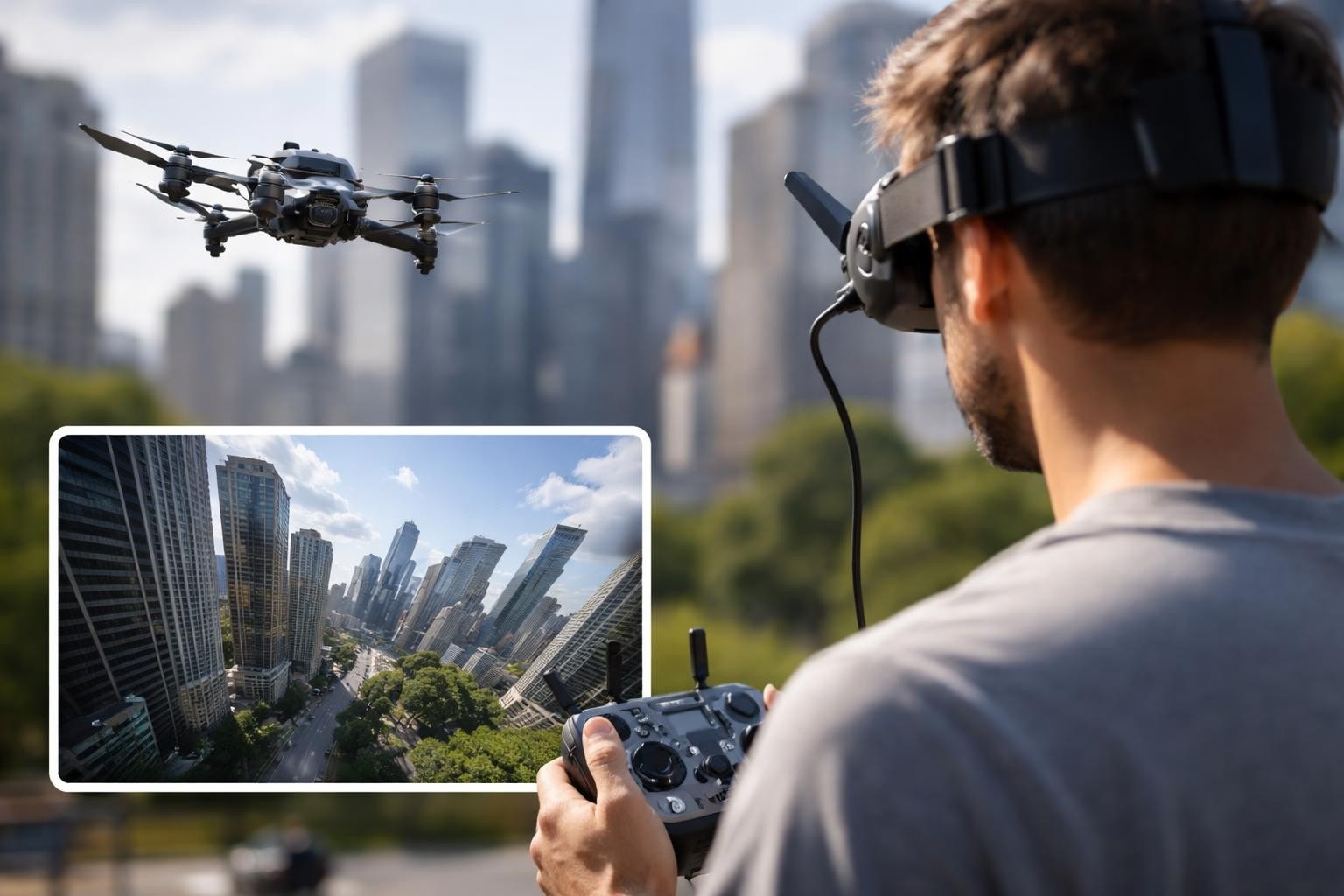
FPV drone cinematography uses agile first-person-view drones to capture immersive, single-take aerial footage that traditional camera systems cannot achieve. For Phoenix productions, FPV drones are ideal for automotive shoots, commercial properties, resorts, events, construction interiors, and branded content where dynamic movement and visual impact matter.
Why FPV Drone Cinematography Phoenix Productions Choose This Approach
Where FPV Drone Cinematography Works Best
FPV drones are particularly effective when movement is part of the story. We've used FPV systems for:
Automotive launches and vehicle tracking
Resort and hospitality marketing
Real estate flythroughs
Commercial advertising campaigns
Live events and entertainment venues
Music videos and branded content
Construction interiors and active job sites
The ability to move through spaces, around obstacles, and between indoor and outdoor environments creates a viewing experience that traditional camera systems simply cannot replicate.
Traditional cinematic drones excel at sweeping vistas and smooth orbits. FPV drones excel at proximity, speed, and spatial storytelling. You can thread tight corridors, chase moving subjects, and transition seamlessly from exterior to interior without cutting. For commercial spots, music videos, and narrative work, that continuity creates energy no gimbal can match. According to the Association for Unmanned Vehicle Systems International, 62% of commercial drone operators added FPV capabilities between 2024 and 2026 to meet client demand for dynamic aerial sequences. We added dedicated FPV pilots and specialized rigs in 2021, and we've logged over 300 fpv drone cinematography phoenix projects since.
Why clients choose FPV over traditional stabilized platforms:
Single-take sequences that eliminate edit cuts and compress production timelines
Interior and exterior transitions through windows, doorways, and tight spaces
High-speed tracking for automotive, sports, and action-oriented subjects
Lower overall costs compared to cranes, cable cams, and multi-day setups
We plan every FPV mission with the same rigor we bring to professional drone photography: airspace coordination, backup plans, and clear communication with your crew. The difference is speed and the learning curve. FPV pilots train differently, fly differently, and collaborate differently with directors and DPs.
Project Snapshot: Scottsdale Office Complex Brand Film
Client: National architecture firm showcasing a mixed-use development
Location: Scottsdale, Arizona
Industry: Commercial real estate and corporate branding
Deliverables: 45-second single-take FPV sequence through atrium, lobby, and outdoor plaza Drone/Sensor: Custom-built 5-inch FPV quad with GoPro Hero 12 (5.3K/60fps, HyperSmooth stabilization)
Turnaround: Two-day scout and flight planning, one-day shoot, delivered edited sequence in 72 hours
Constraints: Active office building, limited flight windows (6-8 AM), coordination with building security and tenants
Airspace: Class D airspace (Scottsdale Airport proximity), required LAANC authorization and real-time coordination
We flew 14 rehearsal passes at half speed to dial in the path, then captured the final take in four attempts. The client saved $18,000 in crane rental and compressed a planned three-day shoot into a single morning.
Planning and Executing FPV Drone Cinematography Phoenix Crews Use
Every fpv drone cinematography phoenix mission starts with a scout. We walk the path, measure clearances, identify lighting challenges, and map out backup options. You can't improvise at 40 mph indoors. We bring floor plans, use laser rangefinders, and coordinate with your DP to match lens choice and framing. According to the American Society of Cinematographers, 74% of FPV sequences require at least two scout visits to finalize flight paths and lighting setups. We typically need one in-person scout and one virtual review using reference stills and diagrams.
Safety and Flight Planning
Every FPV project begins with a site assessment, obstacle review, airspace evaluation, and rehearsal flights. We coordinate with property owners, production teams, and airspace authorities when required to ensure flights are conducted safely, efficiently, and with minimal disruption to operations.
Pre-Flight Planning Steps
Site assessment and path design: We walk every meter of the intended route, noting obstacles, ceiling heights, doorways, and lighting zones.
Speed and movement mapping: We assign speed zones (slow for tight turns, fast for open spaces) and mark acceleration and braking points.
Rehearsal passes: We fly the route at reduced speed without recording, refining timing and clearances until the pilot and director agree on the look.
Final takes: We capture three to five full-speed takes, reviewing each immediately with the DP to confirm focus, exposure, and framing.
This structured approach reduces wasted takes and keeps your crew on schedule. We've completed fpv drone videography projects in environments ranging from hotel lobbies to manufacturing floors, and the planning discipline stays the same.
Field Note (Mark, Lead FPV Pilot): We chose the GoPro Hero 12 for this Scottsdale project because the client needed shallow depth-of-field for a cinematic look, and we paired it with a neutral-density filter to maintain motion blur at high speed. The HyperSmooth stabilization handled micro-vibrations without adding latency, so the final sequence needed minimal post-stabilization. That saved the editor two days and gave the client a cleaner deliverable.
Gear and Technical Considerations for FPV Drone Cinematography Phoenix Teams Deploy
We run custom-built FPV quads for commercial work, not off-the-shelf consumer drones. You need frame durability, payload capacity for professional cameras, and tuning flexibility to match each environment's demands. The best FPV drones for cinematography balance agility with camera stabilization, and the 2026 market offers options from DJI, BetaFPV, and custom builders. We build our rigs in-house, selecting motors, flight controllers, and camera mounts based on the project's specific needs.
Component | Specification | Why It Matters |
Frame | 5-inch carbon fiber | Rigid enough for stable footage, small enough for tight spaces |
Camera | GoPro Hero 12 or DJI Action 4 | ProRes or high-bitrate recording for post-production flexibility |
Stabilization | In-camera (HyperSmooth/RockSteady) | Reduces post work, maintains natural motion feel |
Battery | 6S LiPo, 1300-1500mAh | 4-6 minute flight time, enough for rehearsal and takes |
Flight controller | F7 or H7 processor | Fast loop times for precise control in confined spaces |
We carry backup quads, spare batteries, and field repair kits to every shoot. Downtime costs money, and your crew can't wait for a rebuild. According to the Drone Industry Insights 2025 Market Report, professional FPV operators average 1.8 backup quads per primary rig to maintain schedule reliability. We bring three.
Camera and Lens Selection
You'll choose between action cameras (GoPro, DJI Action) and mirrorless micro bodies (BMPCC, Sony A7S) based on weight, resolution, and post workflow. Action cameras keep the quad nimble and recovery time low if you clip a wall. Mirrorless bodies deliver cinematic depth and color science but demand larger frames and more cautious flying. For the Scottsdale project, we used the GoPro because the client prioritized speed and single-take risk over absolute image fidelity. The result still cut cleanly into a 4K deliverable.
We also match frame rates and shutter speeds to the environment. Interiors often need 24fps and a 180-degree shutter to maintain natural motion blur, while high-speed exterior chases benefit from 60fps or 120fps for slow-motion options. Drone cinematography techniques emphasize smooth movements and controlled acceleration, and those principles apply double for FPV where viewers feel every twitch.
Creative Applications of FPV Drone Cinematography Phoenix Production Companies Request
We've flown FPV for automotive commercials, architectural walkthroughs, live event coverage, and narrative storytelling. Each application demands different planning and piloting. Automotive spots need high-speed tracking and predictable subject paths. Architectural tours need deliberate pacing and lighting coordination. Events need real-time decision-making and obstacle avoidance. According to PwC's 2025 Commercial Drone Report, creative media applications (film, TV, advertising) now represent 31% of all commercial drone flight hours in the US, up from 18% in 2023. FPV accounts for roughly half of that growth. Many clients also combine FPV footage with TV and corporate drone work to create complete commercial productions.
These projects often complement our broader Phoenix drone services across Arizona.
Common FPV cinematography applications we've delivered:
Real estate and hospitality showcases: Single-take property tours that highlight flow and spatial relationships
Automotive launches and commercials: High-speed tracking shots that follow vehicles through curves and straightaways
Music videos and narrative storytelling: Dynamic camera moves that amplify emotion and energy
Corporate brand films: Office and facility tours that convey scale and innovation
Event coverage: Concert flyovers, sports action, and live performance documentation
We collaborated with a Las Vegas production company in April 2026 on a luxury hotel reveal, flying through the lobby, up an open staircase, across a rooftop terrace, and into the penthouse suite. The 90-second sequence replaced what the director had budgeted as a multi-day shoot with dolly, crane, and Steadicam. Final cost savings: $35,000. Final creative impact: the sequence became the campaign's hero asset. That's the return on investment professional drone videography delivers when you plan it right.
Live Event Coverage
FPV drones are increasingly deployed at live events, including major sporting competitions. FPV drones made their debut at the 2026 Winter Olympics, providing immersive coverage that traditional broadcast cameras couldn't match. The pilots flew alongside athletes during downhill skiing and snowboarding events, capturing point-of-view sequences that put viewers in the action. We've applied similar techniques at motorsports events and outdoor festivals across Arizona and Nevada, though the planning complexity increases significantly when you add crowds and moving subjects.
Technical Challenges and Solutions in FPV Drone Cinematography Phoenix Environments Present
Phoenix and Las Vegas present unique environmental challenges: intense heat, strong afternoon winds, urban airspace complexity, and high-altitude density altitude effects. We schedule FPV shoots for early morning or late afternoon when temperatures stay below 95°F and winds drop below 10 mph. Battery performance degrades in heat, and turbulence destroys the smooth flight paths FPV cinematography demands. We've flown in 110°F conditions when schedules required it, but we brief clients on increased risk and reduced flight times.
Common technical challenges and our solutions:
Heat-related battery sag: We pre-cool batteries in insulated coolers and limit flight durations to 3-4 minutes in extreme heat.
Wind and turbulence: We reschedule or relocate if sustained winds exceed 12 mph, especially for interior-to-exterior transitions.
Airspace coordination: Phoenix and Las Vegas both sit under complex Class B and D airspace; we file LAANC requests 72 hours ahead and maintain real-time communication with ATC when required.
Low-light interiors: We coordinate with your gaffer to add fill lighting along the flight path, ensuring consistent exposure throughout the sequence.
We've also invested in drone FPV cameras with superior low-light performance, allowing us to maintain image quality in mixed-lighting environments without forcing your crew to overlight spaces unnaturally.
Airspace and Regulatory Compliance
Every fpv drone cinematography phoenix project we fly complies with FAA Part 107 regulations. We carry remote pilot certificates, maintain current airspace authorizations, and coordinate with local authorities when filming near airports or controlled airspace. Phoenix Sky Harbor and Las Vegas McCarran both impose strict flight ceilings and lateral boundaries, so we build those constraints into our flight planning from day one. According to the FAA's 2025 UAS by the Numbers report, Part 107 waivers for operations in controlled airspace increased 47% year-over-year as commercial drone use expanded in urban centers. We hold standing authorizations for multiple Phoenix and Las Vegas zones, reducing approval timelines from weeks to hours.
We also carry $5 million in liability coverage and maintain detailed flight logs for every mission. That documentation protects you, protects us, and satisfies production insurance requirements.
Post-Production and Delivery for FPV Drone Cinematography Phoenix Projects
Raw FPV footage often needs color grading, minor stabilization, and speed ramping to match editorial pacing. We deliver files in the format your editor requests: ProRes, DNxHD, or H.265, with frame rates and resolutions locked to your final deliverable specs. For the Scottsdale project, we delivered 5.3K ProRes files with embedded timecode, allowing the editor to drop the sequence directly into the timeline without transcoding.
We also provide backup takes and alternate angles when available. If we capture four full-speed takes and the director approves take three, we still deliver takes one, two, and four in case editorial needs options. That flexibility costs us nothing but gives you creative insurance.
Deliverable Format | Use Case | Typical Turnaround |
ProRes 422 HQ | High-end commercial and narrative work | 48-72 hours |
DNxHD 220x | Broadcast and television projects | 48-72 hours |
H.265 (HEVC) | Web and social media distribution | 24-48 hours |
RAW files (when requested) | Maximum post-production flexibility | Same-day file transfer |
We've refined our post workflow to minimize your editor's workload. That includes lens distortion correction, consistent color temperature across the sequence, and audio sync when we're matching FPV footage to ground-based sound recording.
Integration with Broader Production Workflows
FPV sequences rarely stand alone. They integrate into larger projects that include aerial photography and video from stabilized platforms, ground-based cinematography, and interview or product footage. We coordinate with your DP and editor to ensure our deliverables match the project's visual language. That might mean matching frame rates, matching color profiles, or matching movement pacing so cuts feel intentional rather than jarring.
We've worked on projects where we delivered both FPV and traditional aerial footage, cutting between the two to build visual rhythm. The stabilized drone establishes scale and context; the FPV delivers energy and intimacy. Together, they tell a more complete story than either approach alone.
Training and Skill Development for FPV Drone Cinematography Phoenix Pilots Pursue
Flying FPV for cinematography demands a different skill set than recreational racing or freestyle flying. You need spatial awareness, timing precision, and the ability to collaborate with directors who think in camera moves, not stick inputs. We train pilots on simulators first, then controlled environments, then real-world locations with increasing complexity. According to the Academy of Model Aeronautics, commercial FPV pilots average 200 hours of simulator time and 150 hours of real-world practice before they're cleared for paid cinematography work. We hold our team to that standard.
We also cross-train with camera operators and DPs. Our pilots understand frame composition, leading lines, and the Rule of Thirds. They know when to accelerate for energy and when to slow for emphasis. That creative fluency shortens communication on set and reduces the number of takes needed to nail the shot.
Skills every FPV cinematography pilot develops:
Spatial orientation in GPS-denied environments (interiors, under bridges, through tunnels)
Speed and acceleration control to match editorial pacing and maintain smooth motion blur
Obstacle avoidance at high speed using peripheral vision and predictive path planning
Collaboration with directors and DPs to translate creative intent into flight paths
Emergency recovery procedures to minimize equipment damage and production delays
We've sent pilots to workshops, flown alongside experienced cinematographers, and studied autonomous drone cinematography systems to understand how computational approaches complement manual flying. The research community is developing tools that integrate zoom, focus, and composition into automated flight controllers, but the creative decisions still come from humans who understand storytelling.
Cost and ROI for FPV Drone Cinematography Phoenix Productions Budget
FPV cinematography costs more per flight hour than traditional stabilized drone work, but it often costs less than the alternatives: cranes, cable cams, Steadicams, and multi-day setups. We price FPV missions based on complexity, flight time, number of takes, and deliverable requirements. A single-location shoot with a defined path typically runs $2,500 to $5,000 for a half-day, including planning, rehearsal, and final takes. Multi-location shoots or extended coverage scale from there. Compare that to crane rental ($1,200/day), operator fees ($800/day), and setup time (4-6 hours), and the ROI becomes clear.
We've also seen FPV replace traditional aerial establishing shots for narrative work. A 2025 study by Film Independent found that 38% of independent films budgeted under $5 million now use FPV drones for at least one signature sequence, up from 12% in 2023. The cost advantage and creative flexibility make FPV accessible to productions that couldn't afford helicopter aerials or specialty rigs.
Typical cost savings clients report:
Crane replacement: $8,000-$18,000 per project
Multi-day shoot compression: $15,000-$40,000 in crew and location fees
Cable cam or specialty rig rental: $5,000-$12,000 per setup
Post-production editing time: 20-40% reduction when single-take sequences replace multi-angle coverage
We don't sell fpv drone cinematography phoenix services as cheap. We sell them as efficient. You get cinematic results, faster turnaround, and lower total project costs. That's the value proposition. If you need detailed pricing for your next production, contact Extreme Aerial Productions and we'll build a custom quote based on your creative brief and timeline.
Emerging Trends in FPV Drone Cinematography Phoenix Teams Monitor
The FPV cinematography field evolves quickly. New camera technology, lighter frames, longer battery life, and AI-assisted flight planning all shift what's possible. We're tracking developments in 360-degree FPV systems, including the DJI Avata 360, which captures 8K spherical footage for immersive post-production. We're also watching autonomous systems that handle routine flight tasks while pilots focus on creative timing and framing. Research into optimal trajectory planning for multi-UAV cinematography suggests we'll soon coordinate multiple FPV drones in real time, capturing simultaneous angles for editorial flexibility.
We're not betting our business on automation, but we are integrating tools that improve safety, consistency, and creative options. Collision-avoidance sensors, GPS-assisted return-to-home, and automated pre-flight checks all reduce risk without compromising creative control.
Trends we're incorporating into our workflow:
Higher-resolution sensors: 5.3K and 8K recording for maximum post-production cropping and stabilization headroom
Longer flight times: New battery chemistry and more efficient motors extending usable flight time to 8-10 minutes
Integrated ND filters: Built-in or quick-swap neutral-density filters to maintain cinematic motion blur in bright conditions
Real-time monitoring: HD video downlinks that let directors and DPs review framing and composition during rehearsal passes
We test new gear rigorously before deploying it on client projects. That means our pilots fly prototype builds on internal shoots, identify weaknesses, and refine configurations before you ever see them on set. The result: reliable performance when your schedule and budget are on the line.
Whether you're producing a commercial, brand film, resort showcase, automotive campaign, architectural flythrough, or live event, the success of an FPV project starts with the right flight plan.
Extreme Aerial Productions has delivered FPV and traditional aerial productions across Arizona and Nevada since 2014, helping brands capture footage that would be difficult, expensive, or impossible with conventional camera systems.
If you're exploring an upcoming project, book an FPV scout call and we'll help determine the best approach, flight path, equipment, and production workflow for your shoot.
Frequently Asked Questions
What's the difference between FPV drones and traditional camera drones for cinematography?
FPV drones prioritize speed, agility, and proximity flying, allowing tight turns and single-take sequences through confined spaces. Traditional stabilized drones deliver smoother, slower camera moves ideal for sweeping landscapes and orbiting subjects. We choose the platform based on your creative brief and the environment.
How do you plan flight paths for complex FPV sequences?
We start with an in-person site scout, mapping obstacles, measuring clearances, and identifying lighting zones. We then fly rehearsal passes at reduced speed, refining timing and movement until the pilot and director agree on the look. Final takes typically require three to five full-speed attempts.
What camera equipment do you use for FPV cinematography in Phoenix?
We use GoPro Hero 12 or DJI Action 4 cameras for most commercial FPV work, paired with custom-built 5-inch carbon fiber quads. For projects requiring deeper depth-of-field or specific color science, we can mount mirrorless micro bodies, though that limits agility and increases crash risk.
How long does it take to deliver edited FPV footage after a shoot?
For single-sequence projects like the Scottsdale office complex shoot, we deliver color-graded ProRes files within 72 hours. Multi-location projects or those requiring extensive stabilization and speed ramping may extend to five business days. We confirm turnaround during the planning phase.
Do you handle airspace coordination and permits for FPV drone cinematography in Phoenix?
Yes. We file LAANC requests for controlled airspace, coordinate with building management or event organizers, and maintain real-time communication with air traffic control when required. All our pilots hold current FAA Part 107 remote pilot certificates, and we carry $5 million in liability coverage on every mission.
How much does FPV drone cinematography cost?
FPV drone cinematography pricing varies based on location, airspace requirements, shoot complexity, deliverables, and production timelines. Most projects include planning, rehearsal flights, production, and post-processing. Contact Extreme Aerial Productions for a project-specific quote and production plan.

Comments