


The Drone Industry's Dirty Little Secret: Most Buyers Don't Know What They're Buying

Updated: Jul 30
Everybody asks the wrong questions.
Not because they're careless.
Because the drone industry has trained buyers to focus on things that are easy to see.
The drone model.
The pilot's license.
The portfolio.
The flashy footage.
The problem is that none of those things tell you much about whether the project will actually succeed.

At first glance, two providers can look nearly identical. They may fly the same aircraft, hold the same certifications, and even charge similar rates. Yet one delivers useful, reliable results while the other leaves your surveyor, engineer, project manager, or marketing team trying to figure out what went wrong.
At Extreme Aerial Productions, we've been providing commercial drone services since 2014. Over the years, we've learned that the biggest project failures rarely happen during the flight itself. They happen before the mission starts—or after the data is delivered.
That's why smart buyers ask different questions.
What Should You Look for Before Hiring a Drone Company?
Choosing a drone company isn't about who owns the newest aircraft—it's about who can consistently deliver accurate data, reliable documentation, and results that fit your workflow. Before requesting quotes, evaluate deliverables, quality control, accuracy, airspace experience, data management, and how the provider handles unexpected challenges.
1. What Does "Done" Actually Mean?
Most drone proposals explain what gets flown.
Very few clearly define what gets delivered.
If you're receiving maps, inspections, progress reports, videos, models, or measurements, make sure everyone agrees on what the finished product looks like before the first battery is charged.
2. What Happens If the Deliverables Can't Be Used?
This question tends to make people uncomfortable.
What happens if your engineer can't use the files?
What happens if a critical area wasn't captured?
What happens if a client discovers an issue after delivery?
The answer tells you a lot about accountability.
3. What Assumptions Are You Making Right Now?
Every drone project starts with assumptions.
Site access.
Weather.
GPS reception.
Airspace restrictions.
Project goals.
Experienced operators identify those assumptions before the flight. Less experienced operators discover them while standing on site.
Usually after the clock has started.
4. How Do You Verify Accuracy?
Not every project requires engineering-grade precision.
But when it does, the process matters.
Ask how accuracy is verified, what validation methods are used, and whether quality checks are built into the workflow. If the answer sounds improvised, that's useful information.
Accuracy isn't magic. It's workflow. Understanding the difference between PPK vs. GCP drone surveying can dramatically affect the quality of the final deliverable.
5. What Quality Control Steps Are Standard?
Every provider talks about collecting data.
Far fewer talk about reviewing it.
Professional workflows include quality assurance checks before deliverables are released. Missing coverage, processing issues, and incomplete datasets are much easier to fix before the client sees them.
6. What Coordinate Systems Do You Support?
This question instantly separates operators who work with professional project teams from those who don't.
Surveyors, engineers, and construction managers often require specific coordinate systems. If the provider can't confidently discuss them, there may be challenges downstream.
The same applies when discussing collection methods. A provider should be able to explain when LiDAR vs drone photogrammetry is the better solution rather than defaulting to whichever equipment happens to be in the truck.
7. What Deliverable Formats Do You Support?
A beautiful deliverable is useless if it can't be opened.
Ask what formats are available and whether they integrate with the software your team already uses.
The drone flight is only part of the workflow. The handoff matters just as much.
This becomes especially important on complex inspections where FPV aerial inspection services may generate entirely different deliverables than a traditional aerial photography mission.
8. What Isn't Included?
This may be the most important question on the list.
Everyone discusses what's included.
Few discuss what's excluded.
Travel costs, processing time, revisions, re-flights, reporting, file conversions, and specialized exports should all be clearly defined upfront.
9. What's Your Re-Flight Policy?
Weather doesn't care about schedules.
Neither do unexpected site conditions.
A professional operator should be able to clearly explain when a return visit is included, when additional costs apply, and how project disruptions are handled.
10. Can You Deliver Consistent Results Over Time?
One successful flight proves very little.
Can the same provider return next month and produce data that's consistent with previous collections?
This is particularly important for construction drone documentation, where project stakeholders rely on repeatable results throughout the life of a project.
Long-term projects often depend on consistent data collection standards, which is why Phoenix construction drone mapping has become such a valuable tool for tracking site progress, identifying delays, and maintaining accurate project records.
11. How Is Project Data Stored?
Many clients assume they'll never need the files again.
Then six months later, they do.
Ask how long project data is retained, how archives are managed, and whether deliverables can be retrieved in the future if needed.
12. What Problem Are You Actually Solving?
This is the question that ties everything together.
Are you hiring someone to fly a drone?
Or are you hiring someone to solve a problem?
Those are not the same thing.
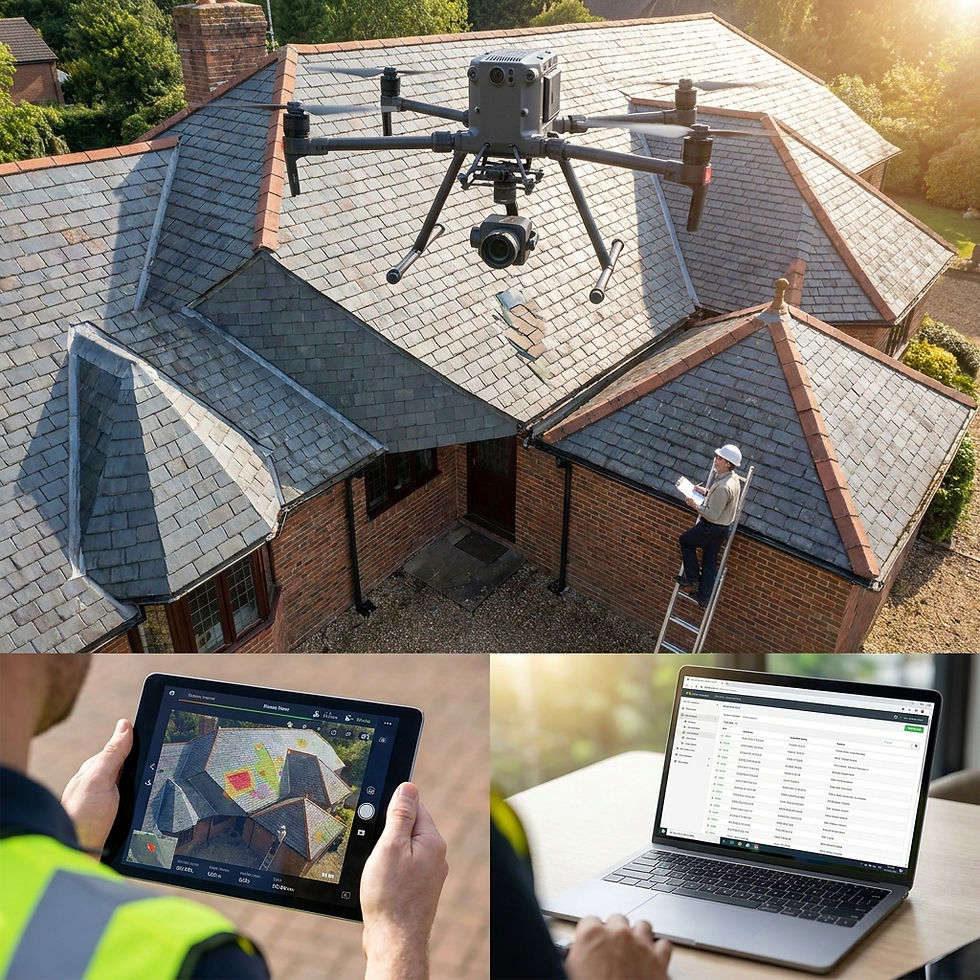
The best drone providers spend less time talking about aircraft and more time discussing outcomes. Whether the goal is drone roof inspections, mapping, marketing, engineering support, or aerial data collection, the flight is simply one step in a much larger process.
The strongest providers also invest heavily in ongoing drone pilot training, operational procedures, and quality standards long after the FAA exam is behind them.
Many buyers assume they're purchasing drone services when they're actually purchasing confidence, accuracy, documentation, decision-making tools, or risk reduction.
The difference matters.
13. Who Owns the Data?
If your project is completed today, who owns the imagery, models, and reports a year from now? Can you retrieve them? Are there additional archive fees? Data ownership should never be an afterthought.
Drone Company Evaluation Checklist
Before you sign a proposal, make sure your provider can clearly answer each of these questions:
☐ Deliverables are clearly defined.
☐ Accuracy requirements are documented.
☐ Coordinate systems are confirmed.
☐ File formats match your workflow.
☐ Quality control procedures are explained.
☐ Re-flight policy is documented.
☐ Data storage and retention policies are provided.
☐ Airspace authorizations are handled.
☐ Insurance coverage is current.
☐ Pricing, revisions, and exclusions are clearly stated.
☐ Timeline and turnaround are confirmed.
☐ Success is defined before the first flight.
Choosing the Right Drone Provider
Evaluation Criteria | Ask Every Provider | Extreme Aerial Productions |
FAA Part 107 Certified | ✔ | ✔ |
Deliverables defined before the flight | Ask | ✔ |
Quality control before delivery | Ask | ✔ |
Airspace planning included | Ask | ✔ |
Re-flight policy documented | Ask | ✔ |
Data retention policy explained | Ask | ✔ |
Survey-grade workflows available | Ask | ✔ |
Repeatable documentation for long-term projects | Ask | ✔ |
If you're evaluating providers, don't stop at licenses and portfolios. Ask harder questions. The answers will tell you far more than the drone sitting in the case.
Our guide to choosing a drone professional explores several of the practical considerations that rarely appear on a quote sheet but often determine whether a project succeeds.
Before You Request Drone Quotes
If you're comparing providers, we're happy to review your project requirements before you commit to a proposal. Whether you need drone mapping services, inspections, construction documentation, or aerial media, we'll help you identify the right deliverables, workflow, and flight strategy for your project.
Contact our drone team to discuss your project before requesting bids.


Comments