


Best Drone for Professional Photography: What to Buy
The best drone for professional photography right now is a large-sensor model like the DJI Mavic 4 Pro, which pairs a 100 MP 4/3 main camera with two telephoto cameras in a body that weighs about 1,063 g. If you market homes or developments, the sensor, lens range and flight time matter more than speed or gimmicks. This guide explains what to look for, which models fit real estate and builder work, and when hiring a licensed pilot makes more sense than owning the gear.
A note on voice before we start. We are Extreme Aerial Productions, and the specifics below come from our own flight records and the manufacturers' published specs.
Project Snapshot: What a Real Listing Shoot Demands
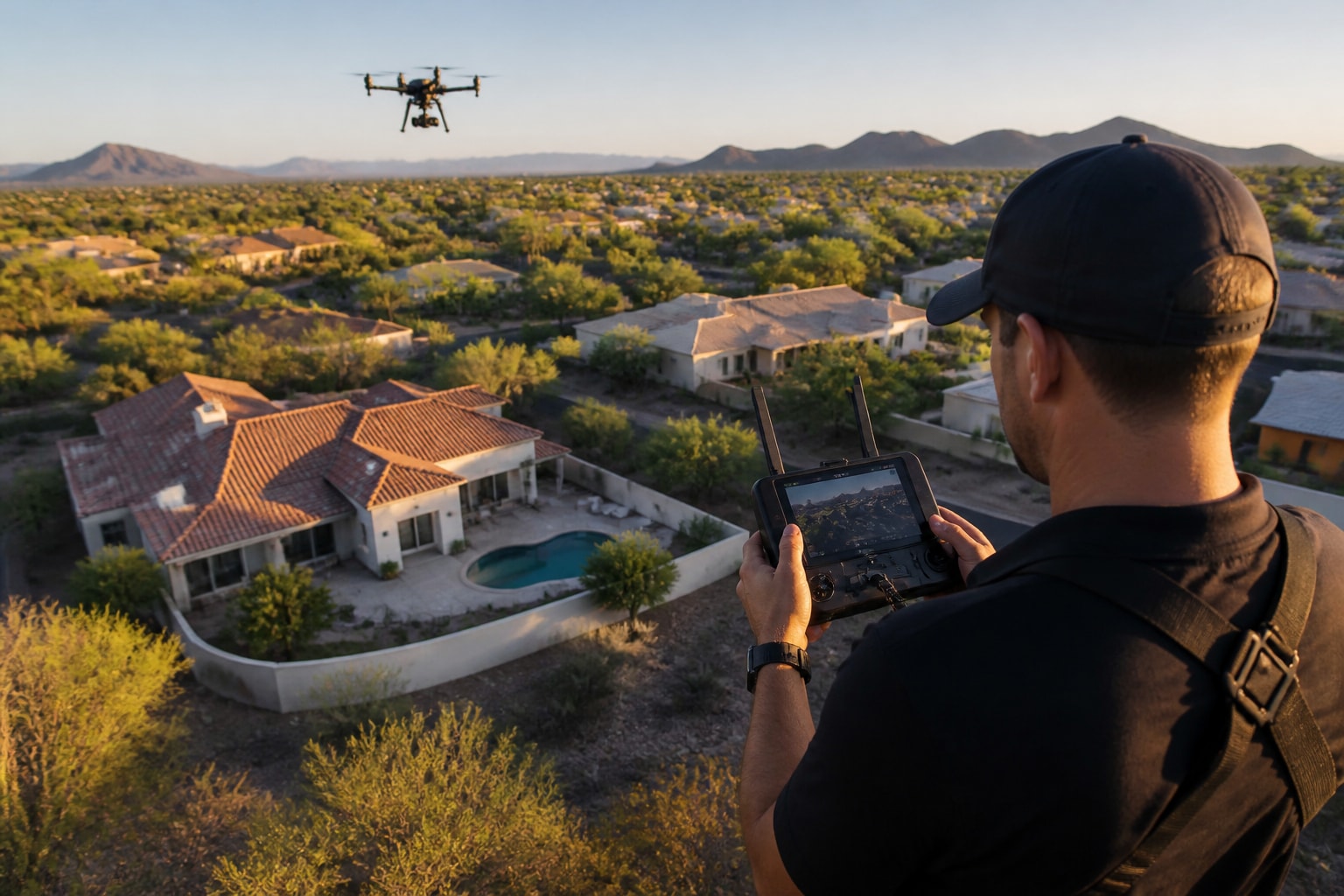
A professional photography drone has to hold up on a real job, so we start with one. The details below are drawn from a typical master planned community shoot, and the numbers that matter are the constraints, not the spec sheet.
Location: Phoenix, Arizona, with the same workflow used for Las Vegas, Nevada projects
Industry: Home builder marketing a new community
Deliverables: Edited stills of model homes and lot views, plus cut-ready video for the sales gallery
Constraints: Midday summer heat, active construction crews, and nearby controlled airspace
Airspace: Authorization requested before flight, since the site sat under controlled airspace
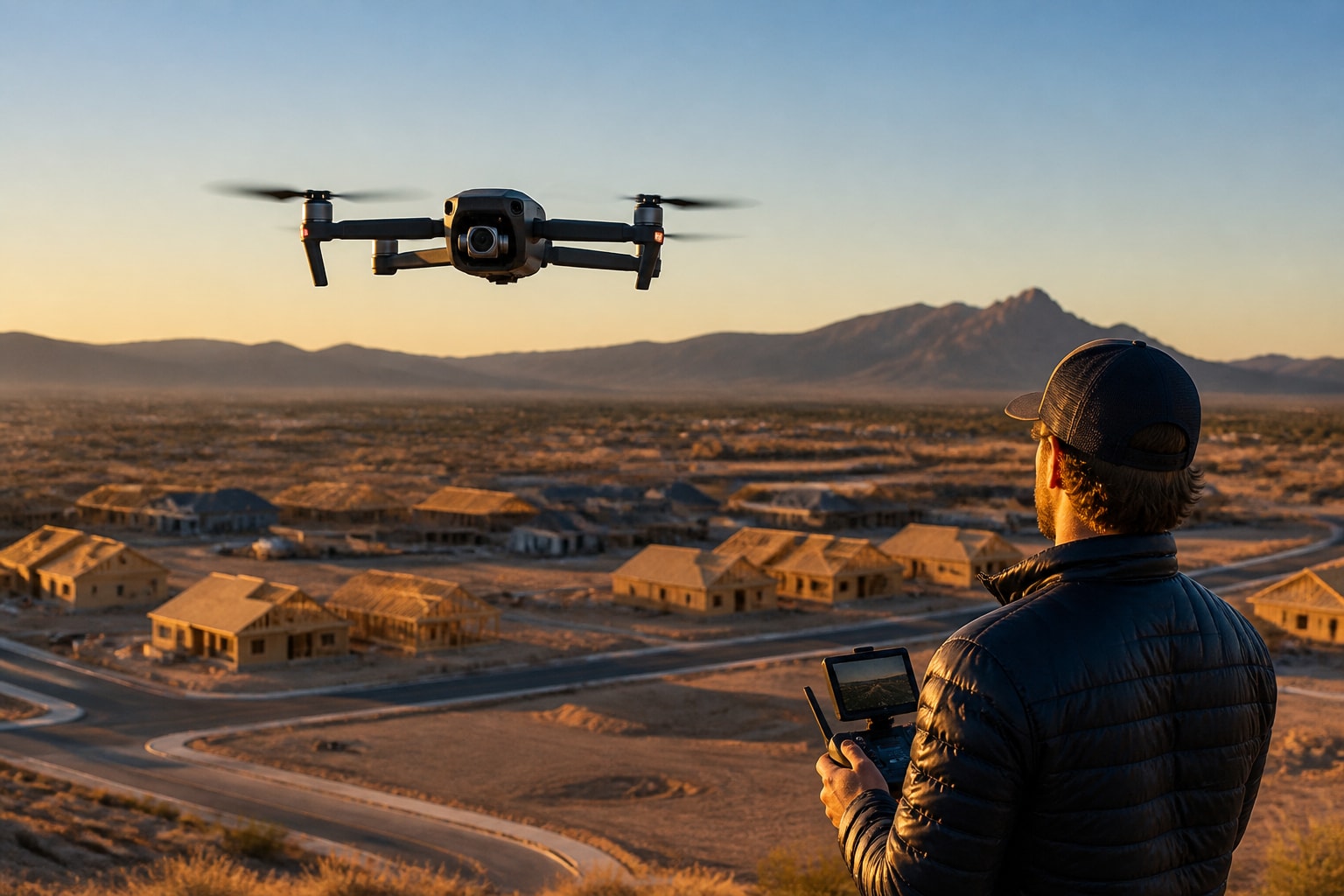
The client problem was simple. Their buyer-facing photos showed a half-built street and said nothing about the community's scale. They needed hero angles that sold the layout, delivered clean enough to drop into a brochure and a website banner.
We cannot share a measured outcome here without inventing one, so we will not. What we can say is what the shoot required from the aircraft: a big sensor for dusk skies, a long lens to compress rooflines without flying over homeowners' yards, and enough battery to work a full site without constant swaps.
What Makes a Drone Good for Professional Photography
The features that separate a professional photography drone from a consumer one are sensor size, lens options, dynamic range, and battery life, in that order. Everything else is a convenience.
Sensor size drives image quality. A larger sensor gathers more light, which cleans up shadows under eaves and holds detail in bright stucco. For marketing stills that get cropped and printed, this is the spec to prioritize.
Lens options decide what angles you can get. A single wide lens forces you to fly close, which distorts buildings and can put the aircraft over property you do not control. A medium or long telephoto lets you frame a rooftop or a cul-de-sac from a safe distance.
Dynamic range and RAW files matter because real estate lighting is harsh. Bright sky, dark shaded porch, white walls. RAW capture gives your editor room to balance all three without crunchy results.
Flight time and battery swaps matter on a development shoot, where you may photograph twenty lots in one visit. The Yahoo Tech roundup of the best drones of 2025 lists the Mavic 4 Pro with a 51-minute flight-time rating, which is a manufacturer-style rating and not what you will get in 105-degree heat with wind. Plan for less.
The Best Drone for Professional Photography: Our Top Picks
We recommend three tiers of aircraft, and the right one depends on how much you shoot and how much image quality your clients expect.
DJI Mavic 4 Pro: the top choice for large-sensor stills
The Mavic 4 Pro is a strong all-around pick. According to DJI's published specifications, it carries a 100 MP 4/3 CMOS main camera, a 48 MP 1/1.3-inch medium-tele camera, and a 50 MP 1/1.5-inch tele camera. That three-camera layout covers wide establishing shots, mid-range home framing, and long compressed views from one aircraft.
For a builder who wants one flight to produce a full set of marketing images, this is the closest thing to a single-tool answer.
Mid-size cameras for single-listing work
If your work is mostly individual homes, a smaller aircraft with a 1-inch sensor handles most listing photography well. You give up some low-light performance and lens range, but you gain a lighter aircraft that is quicker to deploy. Our write-up on the best DJI drone for photography compares these models in more detail.
Compact drones for quick social content
Sub-250 g aircraft are fine for quick social clips and low-stakes reference shots. They struggle with the dynamic range and cropping headroom that print and website hero images demand. We treat them as a scouting tool, not a deliverable camera.
Field Note: Why We Pick the Rig Before the Weather
Field Note from Mark and the team: we choose the aircraft the night before based on the sun angle and the lens we need, not on whatever is already in the truck. We look at where the sun will sit relative to the model homes and the street grid, then decide whether the shot calls for the 100 MP main camera, the 48 MP medium-tele, or the 50 MP tele. A long lens lets us compress a row of rooflines from a safe distance, so we do not have to hover over a homeowner's yard. On a Phoenix summer shoot, we plan flights for the early window when light is softer and heat is lower, then keep a second battery set shaded. Batteries left in a hot truck cab lose time before the first launch, so we stage them out of direct sun. A big sensor earns its keep at that hour, because dawn and dusk light is where the money shots live. Shadows under eaves stay open and the sky holds color without blowing out the stucco.
That habit applies whether you are flying your own aircraft or hiring someone. Ask what lens they will use and when they plan to fly. A vague answer is a warning sign.
Rules You Need to Know Before You Fly for Business
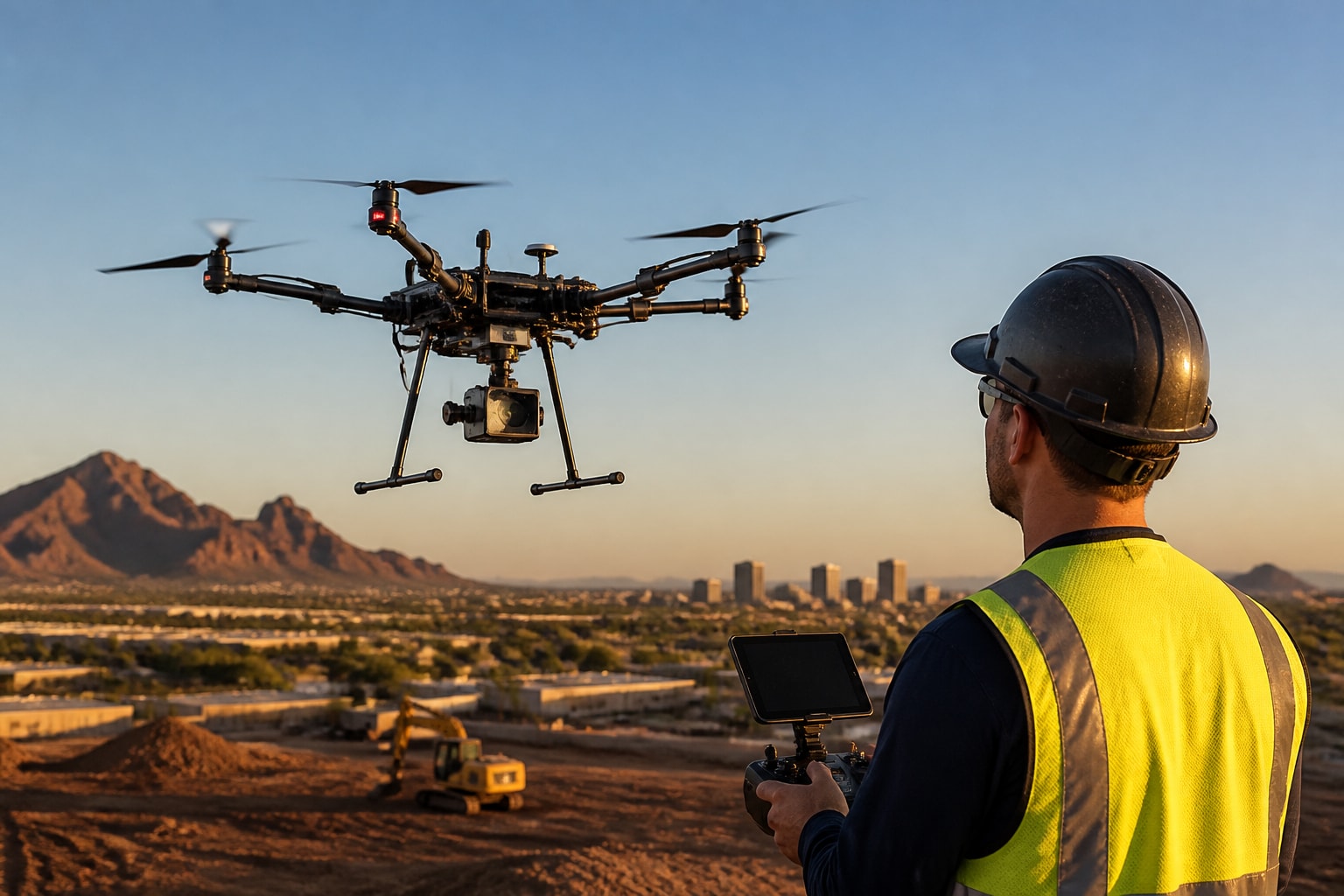
Flying drone photos for a listing or a development is commercial work, and commercial work in the United States requires a certified pilot. This is the part buyers most often get wrong.
Per the FAA's page for certificated remote pilots, commercial drone pilots flying under Part 107 need an FAA remote pilot certificate, and drones under 55 lb may be flown for work or business under those rules. The same FAA page lists registration at $5, valid for three years, and notes that drones requiring registration must generally broadcast Remote ID unless flown within an FAA-Recognized Identification Area. The FAA's Remote ID overview explains the standard and broadcast-module options.
Airspace is the next hurdle. The FAA states that Part 107 pilots need authorization to operate in controlled airspace below 400 feet, and it identifies LAANC as one way to request that authorization. Many Phoenix and Las Vegas neighborhoods sit near airports, so this comes up often.
Here is the order we follow on every job:
Confirm the pilot holds a current Part 107 certificate.
Check the site against controlled airspace and request authorization if needed.
Confirm Remote ID compliance on the aircraft.
Get property and homeowner permissions in writing.
Verify liability insurance covers aerial work.
Our full breakdown of drone photography rules and regulations walks through each step.
How Much a Good Photography Drone Costs
A good photography drone costs anywhere from a few hundred dollars for a compact consumer model to several thousand for a flagship large-sensor aircraft, and that figure is only the start of the budget. We do not quote exact current retail prices here because they shift with bundles and region, so check the manufacturer for today's number.
The hidden costs add up quickly:
Extra batteries and a charging hub
ND filters for controlling shutter speed in bright sun
Insurance that covers commercial aerial work
Part 107 study time and the exam fee
Editing software and storage for RAW files
For many agents and builders, those costs outweigh the benefit of owning. If you shoot a handful of properties a year, the math rarely favors buying. Our guides on drone photography pricing and the price of a photography drone break the numbers down.
When Hiring a Pilot Beats Buying a Drone
Hiring a licensed pilot beats buying when your volume is low, your airspace is complicated, or your deliverable needs to match a brand standard. Buying an aircraft does not make you a pilot, an editor, or an insured operator.
A hired team brings the certification, the insurance, the airspace work and the editing as one package. For home builders with multiple communities, the value is consistency: the same angles, the same color treatment, and the same delivery format on every phase. Mattamy Homes Florida's Melinda Oklok said it this way: "Mark and his team went above and beyond capturing and delivering amazing quality videos for a master planned community."
For polished promotional video, our TV, film and corporate drone production work covers aerial cinematography for commercial and corporate clients. For listings specifically, see our notes on the best drone for real estate photography and drone photography for realtors.
Results to Weigh Before You Decide
We keep our own job metrics private, and we will not publish numbers we cannot source. Here are the sourced facts that should shape your decision:
The Mavic 4 Pro's main camera is 100 MP on a 4/3 sensor, per DJI's published specs. Its 48 MP medium-tele and 50 MP tele cameras are what give you framing options without moving the aircraft.
Its listed weight is about 1,063 g, which puts it under the 55 lb Part 107 ceiling by a wide margin.
A 51-minute flight-time rating appears in the 2025 Yahoo Tech roundup, but real-world time will be shorter.
FAA registration is $5 and lasts three years, per the FAA.
Use these as a checklist, not a promise. Your site, your heat, and your wind will set the real limits. Picture a twenty-lot development visit in July: a rated flight time tells you little once you factor in hot batteries, gusts, and the hovering needed to frame each lot. The sensor and lens facts are more reliable, since they do not change with conditions. Weight and registration are fixed costs of entry, and they only matter if you plan to fly the work yourself. If a shoot needs controlled-airspace authorization, add lead time before you commit to a delivery date.
FAQ
Are DJI drones banned in the US?
Federal policy around foreign-made drones has been in flux, so check current FAA and Commerce Department guidance before buying. Ask any hired pilot what aircraft they fly. We keep our fleet and compliance current so clients do not have to track it.
How far can a DJI drone fly?
Maximum range depends on the model, the signal environment and local rules. Under Part 107, you must generally keep the aircraft within visual line of sight, so the practical limit on a listing shoot is how far you can see it clearly. Spec-sheet range rarely matters for property photography.
Do I need a license to fly a drone for real estate photos?
Yes. Using drone photos to market a property is commercial work, so the pilot needs an FAA remote pilot certificate under Part 107. If a photographer cannot show you a current certificate, do not hire them.
Your next step is simple: write down the number of properties or phases you need photographed, then compare that against the cost of gear, certification and insurance. If hiring wins, Extreme Aerial Productions can scout your Arizona or Nevada site, plan the airspace, and deliver imagery that cuts cleanly into your marketing, so request a quote and Get an Estimate for your next community or listing.
Comments