


Small Drones with Cameras: A Buyer's Guide for Pros
Small drones with cameras can capture sharp, usable aerial photo and video for property marketing, but the airframe is only one piece of a listing-ready result. The sensor, flight time, airspace, insurance and edit-ready color profile decide whether footage helps sell a home or a development.
This guide covers what to look for in a compact camera drone, where the limits are, and when a hired crew makes more sense than buying gear. We write it from the field in Arizona and Nevada, where we shoot for builders and agents.
What a Master Planned Community Shoot Taught Us About Small Aircraft
A compact aircraft can carry a professional sensor, but a job decides which size is right. Our client problem on a recent master planned community shoot was simple: the sales team needed footage that showed lot position, amenities and street layout, and the footage had to cut cleanly into a sizzle reel.
A client note from Melinda Oklok of Mattamy Homes Florida sums up the standard we work to: "Mark and his team went above and beyond capturing and delivering amazing quality videos for a master planned community." We did not shoot that project in Arizona or Nevada, but the brief is the same one we see in Phoenix and Las Vegas every month.
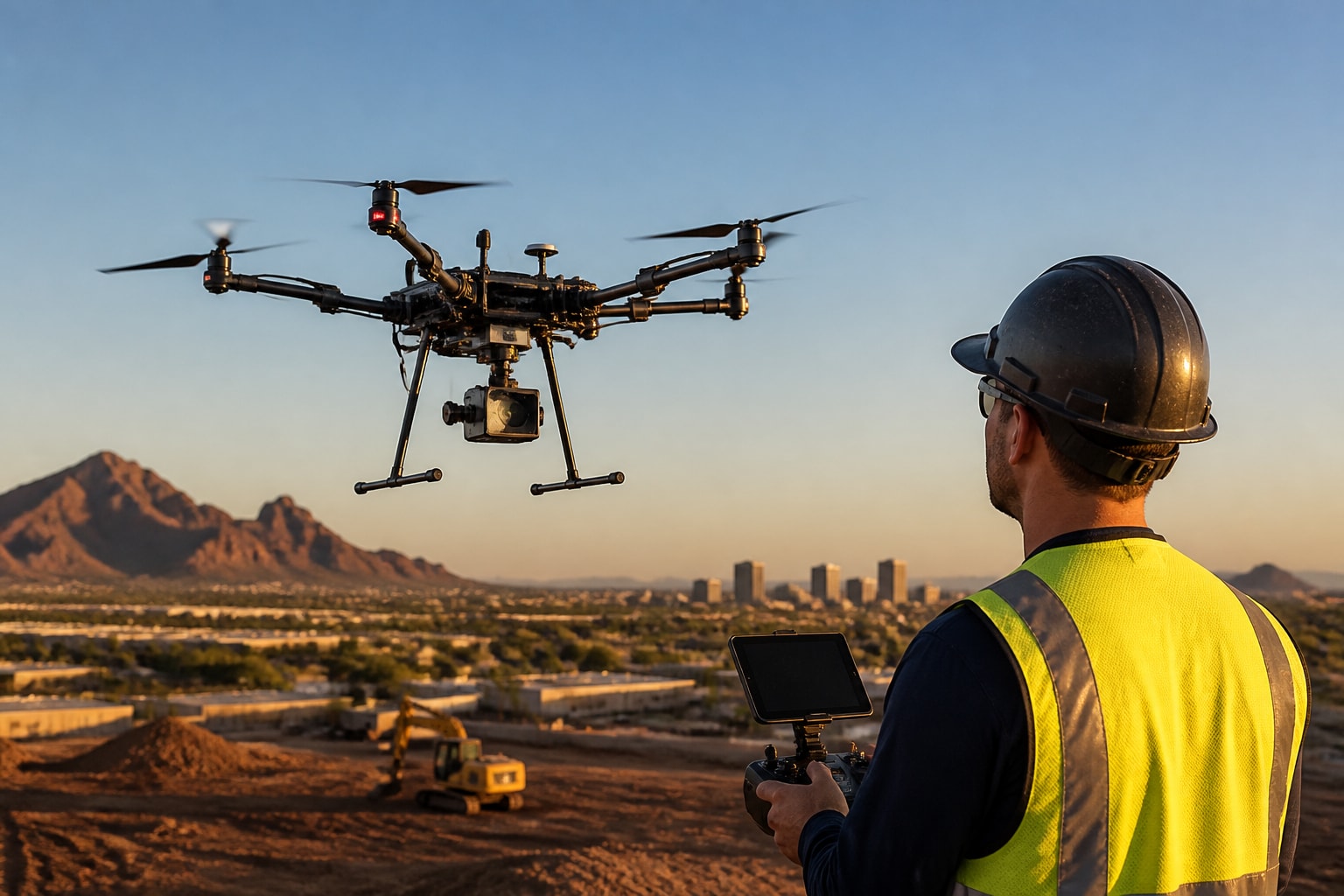
Project Snapshot (representative of our Phoenix home builder work)
City and industry: Phoenix, Arizona, residential development marketing
Deliverables: edit-ready aerial video, stills for listings and brochures, a short social cut
Aircraft class: compact camera drone for tight lots, with a larger rig as backup
Turnaround: set per project, confirmed at the scout call
Constraints: active construction, nearby residents, afternoon heat
Airspace: controlled airspace near the Phoenix metro, checked and cleared before flight
Our equipment details are on our drone equipment page, and we do not publish measured results for this snapshot because every job differs. We would rather give you the process than an invented number.
Field Note (Mark and the team):
How Small Is Small Enough? Weight, Registration and Remote ID
Small camera drones usually mean aircraft under 250 grams, and that weight class changes your paperwork only if you fly recreationally. The DJI Mini 4 Pro specifications list a takeoff weight under 249 g with the standard battery, propellers and microSD card, and note that the Plus battery pushes it above that line.
The FAA registration page is clear on the commercial side: drones of 0.55 lb (250 g) or less are exempt from registration only under the recreational exception. Flying to market a listing is commercial work, so Part 107 applies and the aircraft must be registered. The FAA lists a $5 fee per drone for Part 107, valid for three years.
Remote ID follows registration. The FAA Remote ID rule applies to drones that are required to be registered, and compliance options include a Standard Remote ID drone, a broadcast module, or flying in an FAA-recognized identification area.
Three practical points follow from this:
A light aircraft does not make a paid shoot recreational.
Registration and Remote ID are your responsibility as the operator.
Our pilots hold FAA Part 107 certification, and our own guide to registering a drone with the FAA walks through the steps.
Camera Specs That Matter for Property Marketing
Sensor size, lens, frame rate and color profile matter more than resolution claims on a box. The Mini 4 Pro, for example, uses a 1/1.3-inch CMOS sensor with 48 MP effective pixels, a 24 mm-equivalent lens and an f/1.7 aperture, according to DJI's published specs. A larger sensor and a bright aperture help in the low sun that flatters homes at golden hour.
For video, the DJI Mini 4 Pro FAQ lists 4K at 60 fps with HDR and 10-bit D-Log M and HLG color modes. That matters because a flat 10-bit profile gives an editor room to match drone footage to ground footage and fix sky exposure.
When we compare small drones with cameras for client work, we check these items in order:
Sensor size and native lens field of view
10-bit color and a log or HLG profile
Stabilization and gimbal range for smooth reveals
Obstacle sensing for tight lots and palm or mesquite clearance
Storage speed and how fast footage offloads on site
A spec sheet also hides what a client sees: whether the footage matches the rest of the video. If the agent's interior walkthrough is shot in a flat profile and the aerials are baked-in vivid, the cut looks patched. Ask your editor what profile they want before the flight.
Flight Time, Heat and Wind in Arizona and Nevada
Published flight time is a best-case figure, and desert conditions shave it. DJI lists maximum flight times of 34 minutes with the standard battery and 45 minutes with the Intelligent Flight Battery Plus, and it notes these are controlled-condition figures that vary in actual use.
In Las Vegas and Phoenix summers, we plan around heat and gusts instead of the number on the box. Batteries run warm on a 105-degree pad, and a light aircraft fights afternoon wind harder than a heavier one. Early morning or the hour before sunset is usually the better window, and it is also better light for stucco and landscaping.
What this means on a real shoot:
Plan fewer minutes of usable flying than the spec sheet suggests.
Carry extra batteries and keep them out of direct sun.
Shoot the hero angle first, then the supporting coverage.
Have a fallback date for wind or dust.
Are Cheap Drones Worth It for Listings?
Cheap drones are worth it for practice and quick personal clips, but they rarely deliver listing-grade footage. Low-priced models tend to use small sensors, compressed 8-bit video, weaker stabilization and shorter range, and those limits show on a large screen or a website banner.
If you are weighing price tiers, our write-ups on low-cost drones with cameras and the price of drones with cameras go into the trade-offs. For a single listing, the cost of owning, insuring, registering and learning a pro-grade aircraft often exceeds the cost of hiring a crew for the shoot.
There is also a risk side. A flyaway or a property incident on an uninsured flight can cost far more than the footage was worth, which is why we insure our flights.
What Small Drones Do Well and Where They Struggle
Compact drones excel at stills, short reveals and tight-space coverage, and they struggle with long projects that need repeatable, wind-proof moves. Here is how we weigh the two roles on real estate and builder work.
Where a small aircraft is the right tool
Single-family listings with a short shot list
Cul-de-sac, pool and backyard orbit shots
Fast turnaround stills for MLS and social posts
Sites where a larger drone is hard to launch
Where we reach for something bigger or different
Large communities that need wide, stable, repeatable passes
Projects needing LiDAR, mapping or a 360 VR tour
High-wind days and long-lens shots
Footage headed for TV or broadcast edits
We cover the broader decision in drones and real estate, and the camera side of that choice in our photography drones overview.
Can DJI Drones Fly in the Rain?
Compact DJI drones are generally not rated for rain, so plan to ground them in wet weather. Moisture can damage motors, the gimbal and electronics, and wet propellers lose lift. In Arizona and Nevada monsoon season, we watch radar and reschedule instead of pushing a flight.
If a shoot cannot move, a larger, weather-tolerant platform is a better plan than a light aircraft. Check your specific model's manual for its limits, and treat any splash or drizzle as a reason to land.
Airspace, Safety and Permissions Before You Fly
Airspace and permissions decide whether a flight is legal, regardless of aircraft size. Recreational flyers must keep the drone within visual line of sight and fly at or below 400 feet in Class G airspace, as the FAA recreational flyer guidance states, while commercial operations fall under Part 107.
Many Phoenix and Las Vegas developments sit near airports, so we check airspace and, where needed, coordinate with air traffic control before we launch. We also handle releases, site permissions and neighbor notice on the days that call for it. Local rules can apply to certain parks and venues, which we check per job.
Buy a Small Camera Drone or Hire a Crew?
Hire a crew when the footage has to sell something, and buy a drone when you want to learn or shoot for yourself. Hiring a crew puts a certified pilot, insurance, airspace work and an edit-ready file behind a single listing or development.
A hired team brings several things you would otherwise build yourself:
Part 107 certified pilots
Aviation insurance on every flight
Equipment from compact aircraft to LiDAR and 360 VR capture
Clients that include Invergy, McCarthy and QCells
If you simply want footage for a few listings, talk to us before you shop.
FAQ
Are small drones with cameras good enough for real estate listings?
Yes, when the model has a large sensor, 10-bit video and good stabilization, and the pilot is certified and insured. Entry-level models can work for casual clips but often fall short on a large screen. Match the aircraft to where the footage will run.
Do I need a license to fly a small camera drone for a listing?
Yes. Flying to market a property is commercial, so Part 107 certification and registration apply even when the aircraft weighs under 250 grams. Remote ID compliance applies to registered aircraft as well.
How long does a small drone battery last in the Arizona heat?
Expect less than the published maximum. DJI's 34 and 45 minute figures for the Mini 4 Pro come from controlled conditions, and heat, wind and cold-weather batteries all cut real flight time. Plan shorter flights and carry spare batteries.
Start by listing the three shots your listing or community needs most, then match them to a sensor and a date. When you want a certified crew to handle the airspace, the aircraft and the edit-ready files across Arizona and Nevada, Get an Estimate from Extreme Aerial Productions and we will lock the plan, the gear and the day.
Comments