


Drone Producers: Guide to Makers Making Drones in USA
Drone producers in the U.S. are mostly privately held, venture-backed companies that build small aircraft, plus a few large defense firms that build bigger systems. If you need aerial photos or video for a listing, a resort, a dealership, or a development, you do not need to pick a maker. You need a licensed crew that already flies the right aircraft.
We get this question from clients in Phoenix and Las Vegas more than you might expect. A builder asks why the footage looks different from one vendor to the next. A resort marketing lead asks whether a U.S.-made aircraft matters for a shoot. This guide answers both, and it explains what the maker behind an aircraft changes about your final images.
Who Are the Main Drone Producers in the United States?
The main U.S. drone producers fall into three groups: small-aircraft specialists, large defense contractors, and component suppliers that feed both. A 2025 analysis from the Center for Security and Emerging Technology found that most U.S. drone companies focus on small UAVs in Groups 1 through 3, while only a handful of larger defense firms develop the more complex Group 4 and 5 systems.
The same analysis found that most U.S. manufacturers are privately held, venture-backed companies, and many were founded after 2010. That matches what we see in the field. The industry is young, and product lines change quickly.
For marketing work, only the first group matters. Cinematic and property imaging runs on small aircraft that carry a stabilized camera. The names that come up most in U.S. discussions of domestic production include:
Skydio, known for autonomous obstacle avoidance
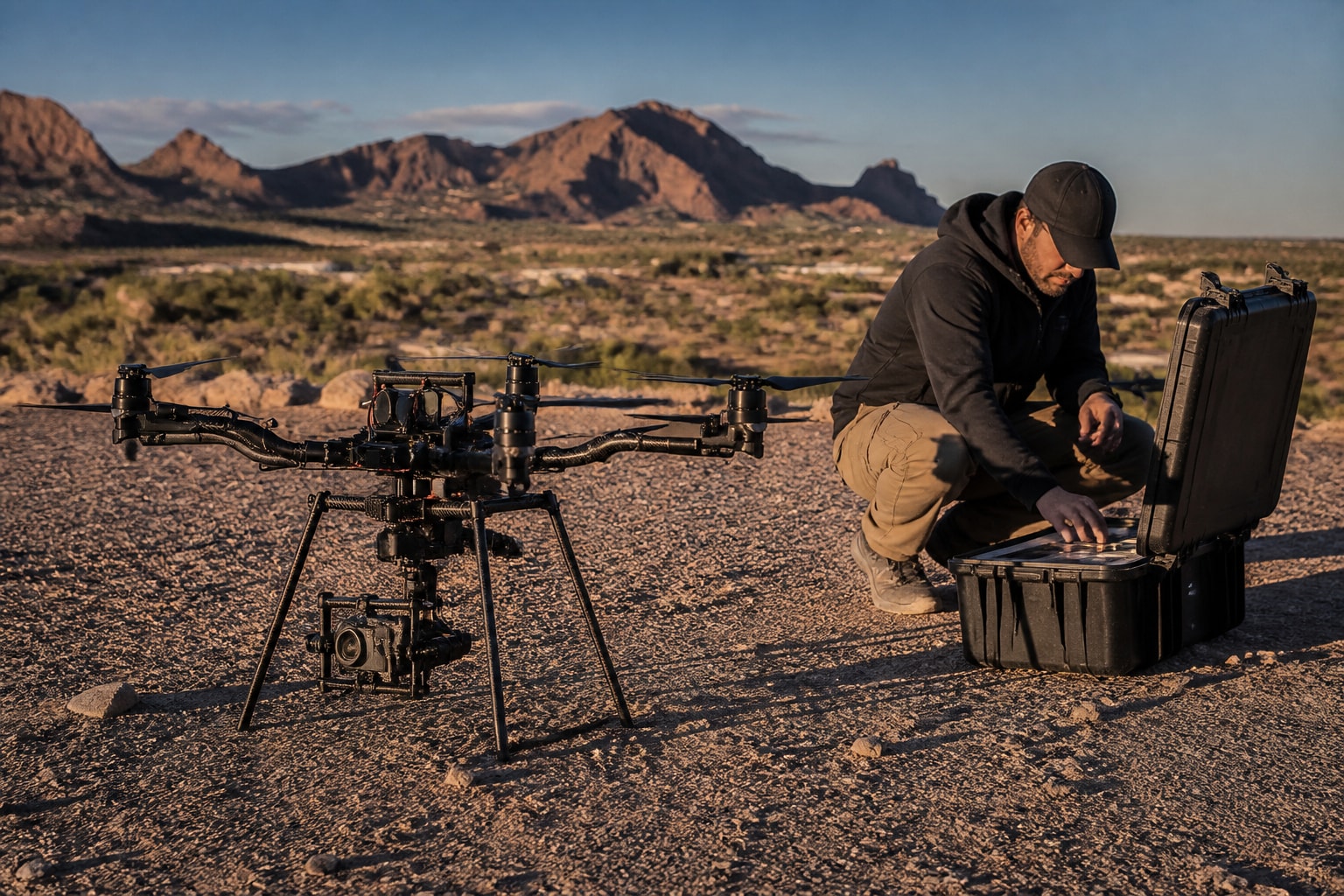
Freefly Systems, known for heavy-lift cinema platforms
Inspired Flight, known for modular commercial aircraft
Vantage Robotics, known for compact folding designs
AgEagle Aerial Systems, known for agriculture and mapping
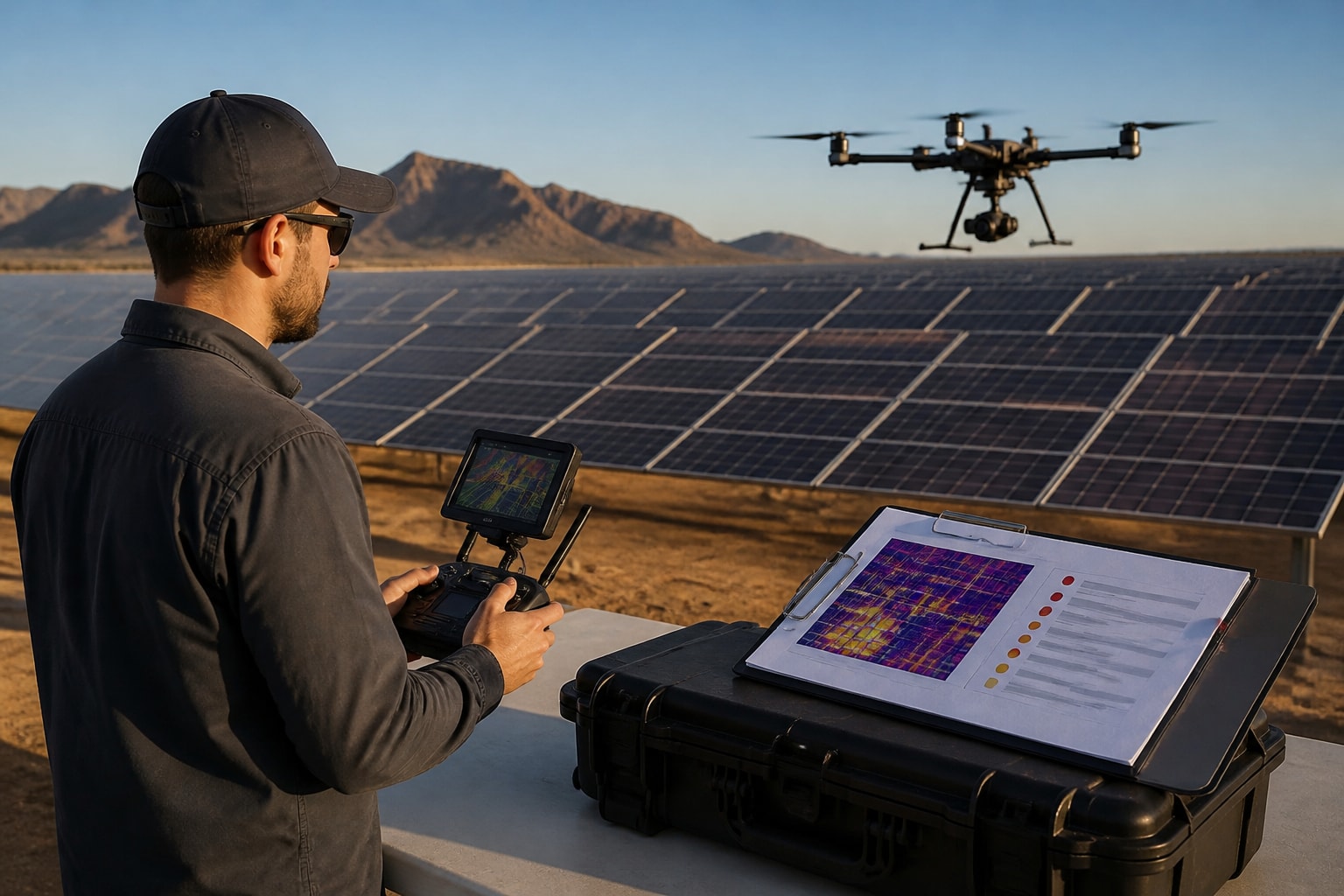
Teledyne FLIR, known for thermal imaging payloads
Large defense firms such as AeroVironment build aircraft for government customers. They rarely touch a real estate or resort shoot.
Why Do Drone Producers Matter to a Marketing Project?
The aircraft a crew flies sets the ceiling on image quality, flight stability, and what shots are possible, so the maker matters indirectly. You will never see the logo in the final video. You will see the effects: sharper detail, smoother moves, cleaner edges at dusk. Because most U.S. makers are young, venture-backed companies, product lines turn over fast, and a crew that keeps its fleet current will often fly newer camera and gimbal hardware than a crew that bought once and stopped.
Here is what the aircraft platform changes for a client:
Camera and sensor size. A larger sensor holds detail in shadows and highlights, which matters for glass-heavy resort exteriors and white stucco homes in Arizona sun. It also keeps twilight shots clean, so a model home with interior lights on does not turn into noise and clipped windows.
Gimbal stability. A steady gimbal gives you repeatable moves that cut cleanly into an edit. A slow pull-back from a clubhouse entrance only works if the horizon stays level for the full move.
Wind tolerance. Phoenix and Las Vegas afternoons get gusty. A heavier or better-tuned aircraft holds a line when a lighter one drifts, which saves you from soft, shaky passes.
Payload options. Cinema bodies, LiDAR, and 360 VR capture each need a platform that can carry them. If your project calls for a heavy cinema camera, the platform decides whether that shot is available at all.
Backup readiness. A crew that owns more than one airframe does not lose your shoot day to a single failure.
Should You Hire a Drone Crew or Buy From a Maker?
Hire a crew when the goal is finished photos and video, and buy only when you plan to fly regularly yourself. Most of our clients in real estate, hospitality, and development fall into the first group, and this article is written for them.
Buying an aircraft is the smaller part of the cost. You also take on pilot certification, insurance, airspace clearance, release forms, backup gear, and editing time. The FAA charges $5 per drone for registration, valid for three years, but the fee is the easy step. Passing the knowledge test, filing for airspace authorization near airports, and carrying liability coverage take real time.
A licensed crew handles all of that and delivers files you can post. If you want a sense of what professional coverage runs, our breakdown of drone aerial photography cost and drone videography pricing explains the main drivers.
If your question is about buying or renting equipment, we are not the right fit. We deliver imagery, not hardware.
What Do Regulations Mean for U.S. Drone Producers and Their Customers?
Regulations shape what makers must build in and what operators must do before every flight. The most visible rule is Remote ID. Drones that are required to be registered, or are registered, must comply with the FAA's Remote ID rule, and the FAA says compliance was required by September 16, 2023, subject to stated exceptions.
For producers, that means building broadcast capability into the aircraft and documenting it. The FAA publishes manufacturer guidance on Remote ID design, production, and documentation for exactly that purpose.
For you as a client, the rule has a practical edge. Any crew flying commercially needs a Part 107 certificate, a registered aircraft, and a Remote ID compliant platform. The FAA lays out the steps for commercial operators on its site, and you can ask any vendor to confirm each one.
One more point on size. The FAA exempts drones at or under 0.55 pounds from registration only under the recreational exception. Paid work does not qualify, so even a small aircraft needs registration when it flies for a client.
What Does a Real Arizona Job Look Like From Start to Finish?
A real job starts with a client problem and ends with files that fix it. Here is one we can describe from Mattamy Homes in Florida, since it shows how our process works for master planned communities. Melinda Oklok of Mattamy Homes Florida said: "Mark and his team went above and beyond capturing and delivering amazing quality videos for a master planned community."
For Arizona and Nevada work, we follow the same sequence on every residential and resort shoot. For project specifics, timing, and sensor choices on your site, contact us directly and we will scope it with you.
The steps we follow:
Scout the site. We check boundaries, obstacles, sun angle, and neighboring property lines.
Clear the airspace. Phoenix Sky Harbor and Harry Reid International both sit near active development, so we check authorization needs before the key day.
Plan the shot list. We agree on hero angles, reveal moves, and any FPV passes with the client.
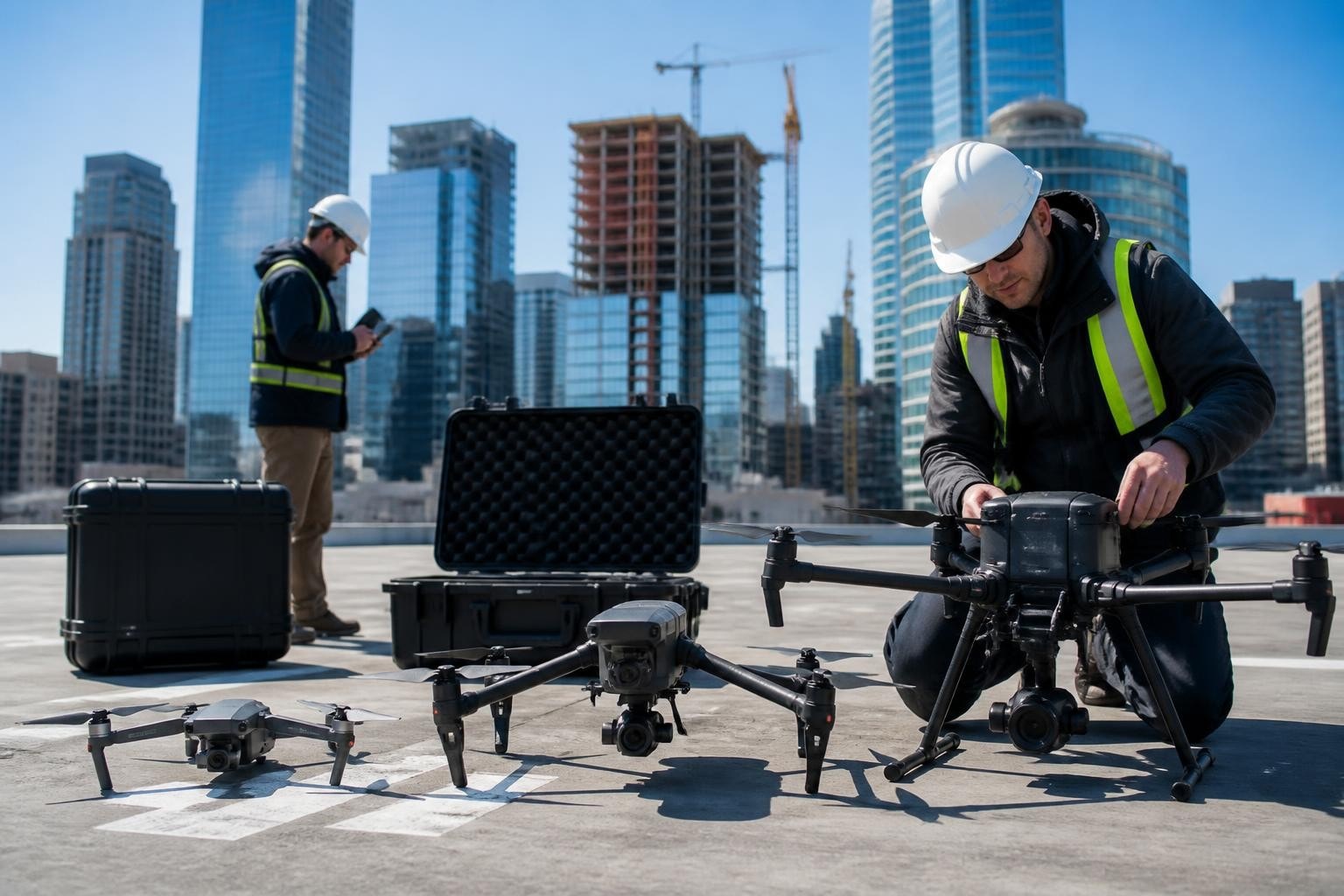
Fly with backups. We arrive with spare batteries, props, and a second airframe.
Deliver edit-ready files. Photos and video arrive ready to cut into a listing, a sales center loop, or a commercial.
Our clients have included Invergy, McCarthy, and QCells, along with homebuilders and marketing teams across the Southwest. Our pilots have over 11 years of experience.
Field Note: Why We Plan Around the Aircraft, Not the Brand
Mark and the team choose aircraft by the shot, not by logo. A slow orbit around a golf clubhouse calls for a stable cinema platform. A fast reveal through a model home courtyard calls for an FPV rig. Matching the tool to the move saves reshoots, which is where schedules usually slip. Our drones and equipment page lists the rigs we fly.
How Do Makers and Operators Differ in Phoenix and Las Vegas?
Makers design and sell aircraft, while operators fly them under a certificate and insurance policy to deliver a service. In Phoenix and Las Vegas, the gap shows up in permits, heat, and local airspace.
Summer heat in the Valley stresses batteries and electronics. Operators who work there year-round learn to schedule flights for early morning and late evening, which also gives the best light for property photography. Las Vegas adds dense airspace around the Strip and the airport, and many projects need authorization before takeoff.
A maker cannot solve those problems for you. A local crew with a record in your market can. If you are comparing vendors, our guide on how to hire a drone company lists what to ask, and our Nevada aerial photography and video page covers how we work in that market.
We also carry the paperwork a marketing client expects: releases, permits, and liability coverage. Every flight is covered by insurance.
What Should You Ask Before You Book Aerial Coverage?
Ask any crew for five things: a Part 107 certificate, proof of insurance, airspace authorization for your site, sample work in your category, and a clear list of deliverables. A good vendor answers each without hesitation. Ask for the certificate and the insurance document themselves, not a verbal yes. Ask which aircraft will fly your job and whether it is registered and Remote ID compliant, since the FAA requires that for registered or registration-required drones. If your site sits near an airport, as many Phoenix and Las Vegas developments do, ask who files for authorization and how far ahead.
Beyond paperwork, match the samples to your need. A real estate agent needs clean exterior stills and a short walkthrough reel. A resort needs sweeping reveals and amenity coverage. A car dealership needs tight, glossy passes over inventory and a showroom exterior. Our professional drone videography and commercial drone photography pages show what finished work looks like for each. Watch the samples for steady motion, accurate color, and edits that match your use, whether that is a listing page, a sales center loop, or a commercial.
We also recommend asking about turnaround and reshoot terms in writing. We scope those for each project, so contact us rather than rely on a general number.
One last check. Ask what happens if weather or a battery fault cancels the day. A crew with backup gear and flexible scheduling protects your launch date.
FAQ
Which country is the biggest drone producer?
China is widely cited as a leading producer of consumer and commercial drones, and the U.S. is strong in several defense and enterprise segments. For a marketing client, the country matters less than whether your crew flies a Remote ID compliant aircraft under a Part 107 certificate. Ask your vendor to confirm both.
What company makes drones for agriculture?
Several U.S. producers build agricultural aircraft, including AgEagle Aerial Systems, which focuses on mapping. These are specialized farm tools and have little overlap with property or resort photography. If your need is imagery rather than crop work, a cinematography crew is the better match.
Do I need to know the drone maker to hire an aerial crew?
No. You need to confirm the crew's licensing, insurance, and samples. The maker only matters when a shot needs a specific capability, such as a cinema camera, LiDAR, or 360 VR capture. We choose the platform for your shoot and tell you why.
Your next step is simple: write down the two or three shots you want, the property or location, and your target date, then send them to a licensed crew for a scope. We can take it from there with scouting, airspace clearance, flights, and edit-ready delivery across Arizona and Nevada. Send us your shot list and request a quote through Extreme Aerial Productions to get an estimate and a locked plan.
Comments