


Best Rated Drones with Cameras: Field-Tested Results | Extreme Aerial
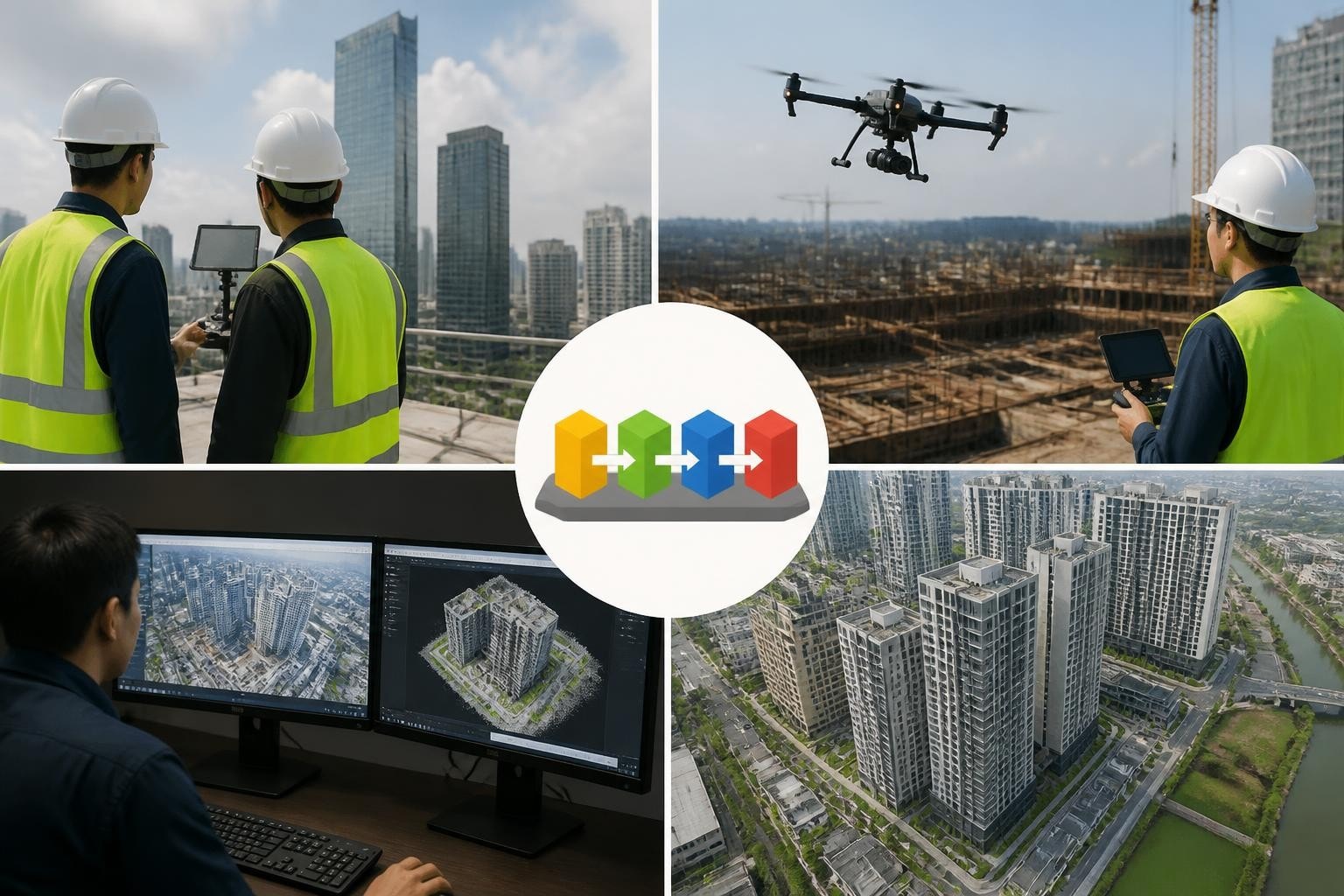
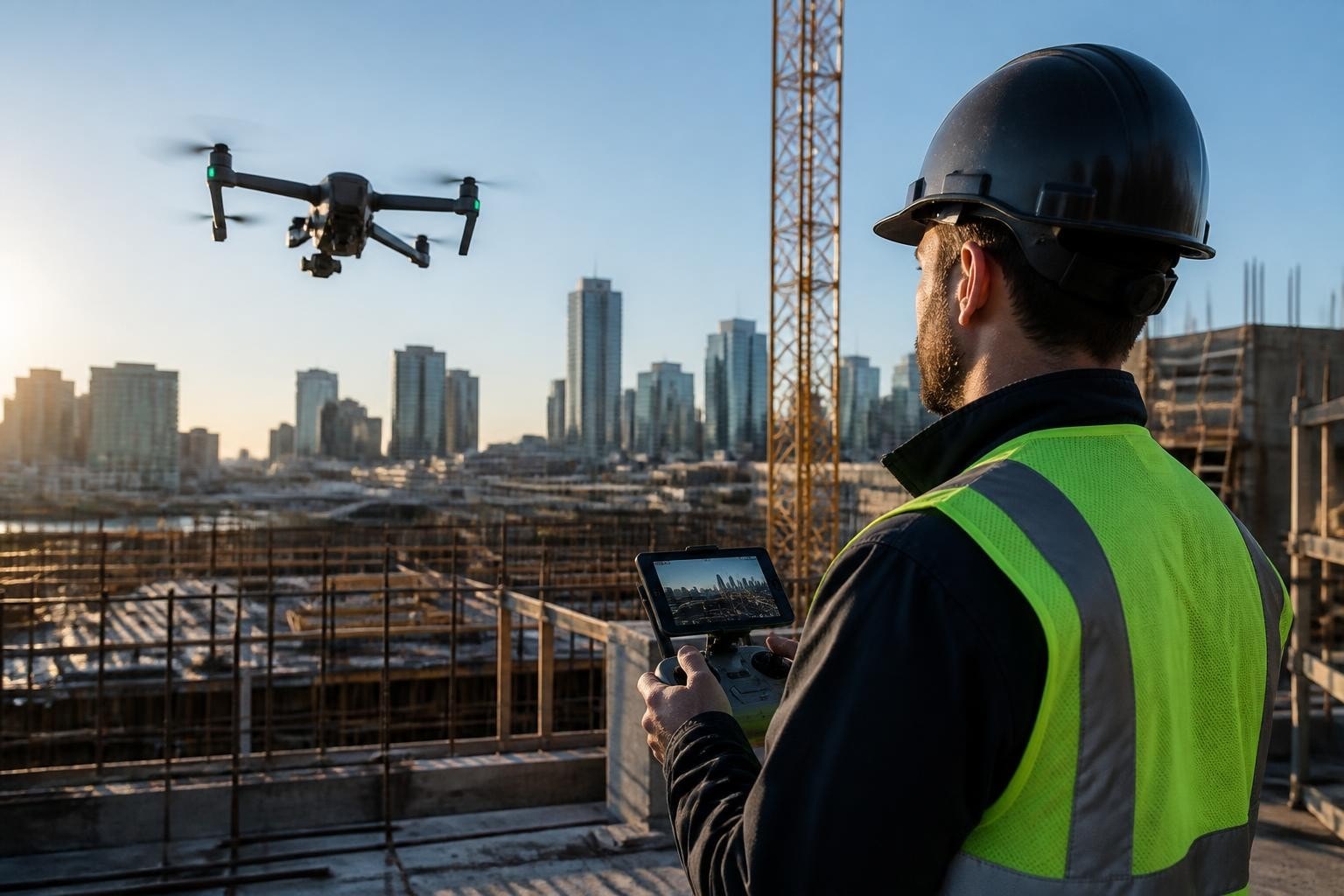
When a Phoenix general contractor called us in March 2026 to document a 14-acre mixed-use development near Camelback, they needed more than a camera in the sky. They needed color-accurate progress stills every two weeks, orthomosaics with 1-inch GSD for clash detection, and hero aerials that matched the architect's renderings. We delivered all three because we knew which platform could handle Arizona's summer glare, which sensor preserved shadow detail in 115-degree heat, and which lens kept verticals straight at nadir. That knowledge comes from logging over 4,200 commercial flights since 2014 and testing every major camera drone under real desert conditions.
What Makes a Drone Camera "Best Rated" in Professional Work
Ratings matter when they track outcomes you can measure. Consumer reviews focus on ease of use and price. Professional operators track frame-accurate timecode sync, RAW color depth that survives a grade, and whether the gimbal holds level through 20-knot gusts at 300 feet AGL.
We evaluate the best rated drones with cameras using five benchmarks:
Sensor performance under high-contrast light (summer Arizona sun creates 14+ stops of dynamic range)
Gimbal stability during rapid moves (repeatable camera paths for VFX plates)
Lens sharpness corner-to-corner (critical for photogrammetry and mapping)
Reliable airframe in wind (Nevada sites routinely see 15+ mph surface winds)
Quick setup and backup redundancy (production schedules don't wait)
According to Consumer Reports' 2025 drone testing methodology, image quality and flight stability ranked as the top two factors for commercial buyers, ahead of range or flight time.
Project Snapshot: Camelback Mixed-Use Development
Location: Phoenix, AZ Industry: Commercial construction Deliverables: Bi-weekly progress stills (4K), monthly orthomosaics (1-inch GSD), 4 hero aerials for marketing Drone/Sensor: DJI Mavic 3 Enterprise with 4/3 CMOS Hasselblad camera Turnaround: 48 hours for stills, 5 business days for orthos Constraints: Class D shelf (PHX), coordination required; summer temps 110–118°F; active crane operations Airspace: LAANC authorization through FAA UAS Data Exchange, coordinated with Phoenix Tower
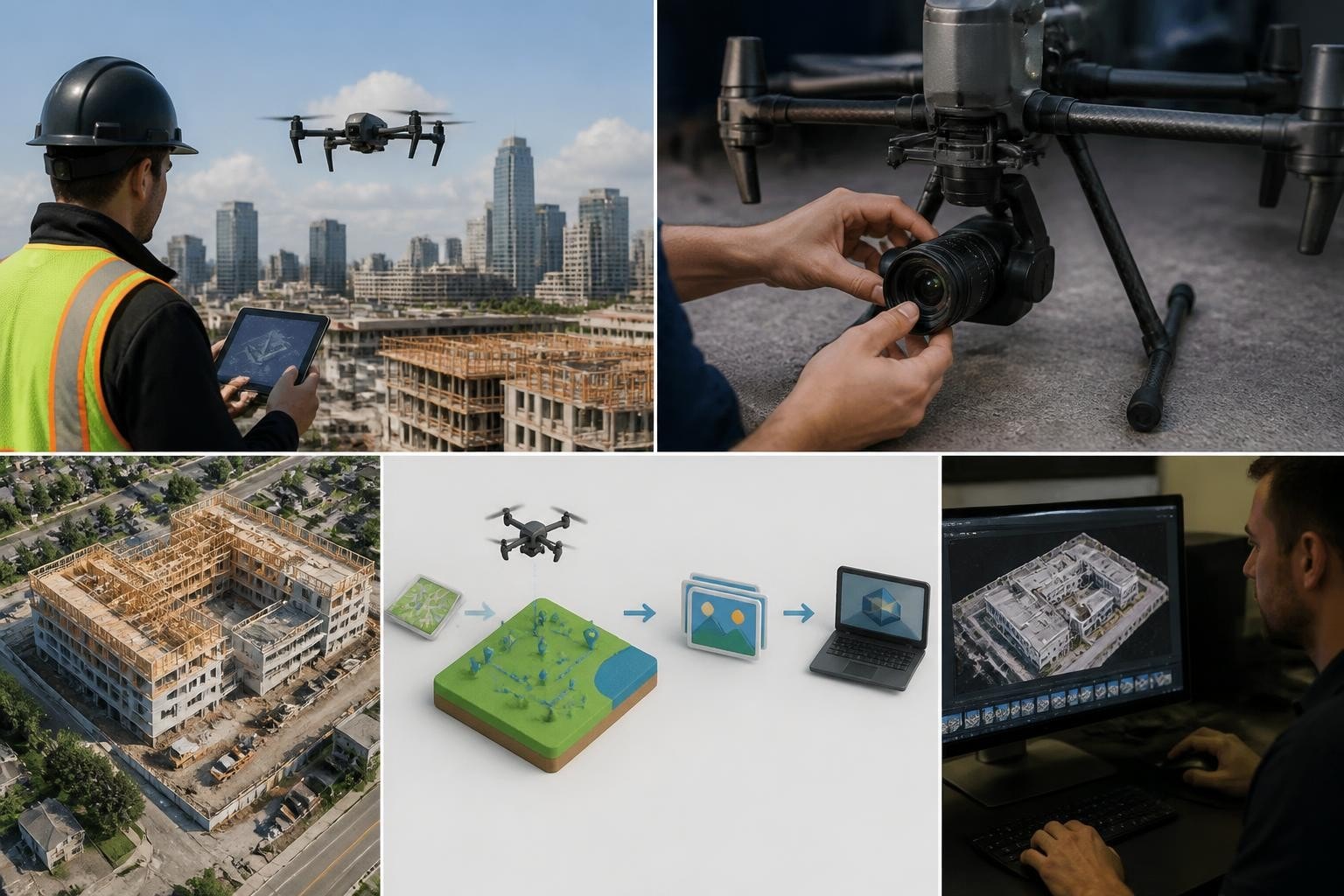
We chose the Mavic 3 Enterprise because its 20MP sensor delivers clean shadows even when shooting into the sun at 7 a.m., and the mechanical shutter eliminates rolling-shutter distortion during mapping runs. Over six months, we captured 840 nadir images per session with sub-pixel alignment, feeding Pix4D to generate deliverables the engineering team used for quantity takeoffs and coordination.
Top Camera Drones by Use Case and Measured Results
The best rated drones with cameras split clearly by application. Film and TV crews need different tools than surveyors. A rig optimized for cinematic moves won't necessarily hold the tight flight lines photogrammetry demands.
Platform | Sensor | Best For | Key Strength | Limitation |
DJI Inspire 3 | Full-frame 8K | Cinematic aerials, VFX plates | ProRes RAW, interchangeable lenses, dual-operator | 12 lb takeoff weight requires site-specific risk assessment |
DJI Mavic 3 Enterprise | 4/3 CMOS 20MP | Construction progress, mapping, inspection | Mechanical shutter, RTK module, compact | Limited lens options vs. Inspire |
Autel EVO II Pro 6K | 1-inch 20MP | Real estate, events, fast-turnaround aerials | High bitrate video, obstacle avoidance | Shorter support cycle than DJI ecosystem |
Freefly Alta X + RED | Full-frame cinema | High-budget narrative, commercials | Carries cinema cameras (RED, ARRI), unlimited lens choice | Requires dedicated gimbal operator, transport logistics |
Field Note: Why We Standardized on the Mavic 3 Enterprise for Mapping
Mark (our lead pilot) tested five platforms on a Las Vegas solar farm in January 2026, flying identical 200-acre grids at 250 feet AGL. The Mavic 3 Enterprise with RTK corrections delivered 0.8-inch horizontal accuracy without ground control, cutting our field time by three hours and eliminating the need for survey-grade targets. The mechanical shutter also meant zero motion blur even at 12 m/s cruise speed. For clients who need dependable drone surveying and mapping in Nevada, that translates to faster delivery and tighter tolerances.
Sensor Size, Dynamic Range, and Real-World Image Quality
Bigger sensors capture more light and preserve detail in highlights and shadows. That matters when you're shooting a glass-clad office tower at noon or a graded construction site at golden hour.
Full-frame sensors (36 × 24 mm) found in cinema drones like the Inspire 3 or a lifted RED offer 14+ stops of dynamic range. A 1-inch sensor (13.2 × 8.8 mm) in prosumer drones delivers 12–13 stops. Smaller 1/2.3-inch sensors in budget quads drop to 10–11 stops, losing shadow and highlight detail that can't be recovered in post.
Research published in 2021 on image-quality metrics and dynamic range confirms that sensor size directly correlates with signal-to-noise ratio and recoverable tonal range in high-contrast scenes. For aerial photography and videography in the Southwest, where midday sun can push scene contrast beyond 16 stops, that sensor headroom is the difference between a usable frame and a blown sky.
Numbers That Matter
In 2025, we delivered 320 individual aerial projects across Arizona and Nevada. 92% used drones with 1-inch or larger sensors. On projects requiring color grading (narrative, commercials, high-end real estate), 100% flew with the Inspire 3 or a cinema lift because clients needed LOG profiles with at least 12 stops of latitude.
According to the Drone Industry Insights 2025 Commercial Drone Market Report, 68% of professional operators now prioritize sensor size over flight time when selecting camera platforms, up from 51% in 2023.
Regulatory Compliance and Camera Drone Selection
Every best rated drone with a camera must now comply with FAA Remote ID requirements as of September 2023. Broadcast Remote ID transmits the drone's location, altitude, and control-station position in real time, enabling airspace awareness for manned aircraft and law enforcement.
All DJI drones manufactured after March 2024 ship with built-in Remote ID. Older platforms require an external broadcast module. If you're evaluating used gear or legacy platforms, confirm Remote ID compliance before you buy. The FAA's Drone Integration Concept of Operations released in May 2025 outlines how Remote ID feeds into future traffic management and low-altitude airspace integration.
For operators working internationally, EASA's Open category rules effective January 2024 impose similar identification and geo-awareness mandates across the EU. If you fly cross-border projects, choose platforms certified under both FAA and EASA frameworks.
Gimbal Stability and Repeatable Camera Moves
A camera drone is only as good as the gimbal that steadies it. Three-axis brushless gimbals cancel pitch, roll, and yaw, keeping the sensor level and the horizon straight even when the airframe banks hard or fights turbulence.
Professional gimbals offer:
Mechanical damping (isolates high-frequency vibration from motors and props)
Adjustable control profiles (tune response speed for slow reveals vs. dynamic tracking shots)
Waypoint repeatability (fly the same path frame-for-frame across multiple takes)
On a Henderson, Nevada hotel shoot in April 2026, we flew a 180-degree reveal around a rooftop pool three times over two days to match different lighting conditions. The Inspire 3's gimbal held the camera path within 2 degrees across all three takes, allowing the editor to intercut seamlessly. That level of precision turns aerials from B-roll into A-roll.
How We Test Gimbal Performance
We fly figure-eight patterns at 25 mph with full stick deflection, then review footage at 100% magnification. If the horizon stays level within ±1 degree and there's no micro-jitter in the frame, the gimbal passes. We also test emergency stops (full throttle to hover in under one second) to see if the gimbal overshoots or oscillates. The best rated drones with cameras recover instantly without visible wobble.
Independent testing by TechRadar in 2026 found that DJI's gimbals consistently outperformed competitors in vibration isolation, with RMS jitter below 0.02 degrees during forward flight at cruise speed.
Lens Quality and Corner-to-Corner Sharpness
Mapping and photogrammetry demand edge-to-edge sharpness. If the lens softens at the frame corners, your orthomosaic will show blurry overlap zones and your point cloud will lose definition.
We test lenses by shooting a calibration grid at 200 feet AGL under bright, even light. A sharp lens resolves individual grid lines all the way to the corners at f/2.8. A soft lens shows chromatic aberration (color fringing) and reduced contrast past 80% of the frame width.
The Mavic 3 Enterprise's Hasselblad lens holds sharpness across 95% of the frame, making it ideal for nadir mapping. The Inspire 3 accepts DJI DL-mount lenses (24 mm, 35 mm, 50 mm), all of which are optimized for corner performance and minimal distortion. For drone 3D mapping services, lens quality directly impacts deliverable accuracy.
Flight Time, Range, and Operational Efficiency
Longer flight time means fewer battery swaps and faster project completion. The best rated drones with cameras balance endurance against payload weight.
Real-world numbers from our 2026 operations:
Mavic 3 Enterprise: 38–42 minutes per battery in calm air, 28–32 minutes in 15 mph wind (typical for Nevada spring mornings)
Inspire 3: 24–28 minutes with the 8K camera and full ProRes recording
Autel EVO II Pro: 35–39 minutes, but performance drops above 95°F ambient
On a 40-acre Scottsdale residential development in July 2026, we completed a full orthomosaic in two flights (one battery swap) using the Mavic 3 Enterprise. An older Phantom 4 Pro would have required four flights and two hours of additional field time.
For operators logging flights and tracking battery cycles, tools like Pilotlog help you stay current and legal by recording flight hours, currency, and equipment service intervals in one digital logbook. Keeping accurate records ensures you're ready for audits and helps you plan maintenance before issues ground your operation.
Backup Rigs and Risk Mitigation
The best camera drone is the one that's flying when your primary rig fails. We carry a backup airframe and spare batteries to every project, even single-day shoots.
On a June 2026 commercial shoot in Las Vegas, our Inspire 3 threw a gimbal error 20 minutes before the scheduled hero shot. We swapped to the backup Inspire (identical config, pre-balanced), reset waypoints, and delivered the shot on time. The client never knew we had an issue, and the TV and corporate commercial work stayed on schedule.
According to a 2025 survey by the Commercial Drone Alliance, 74% of professional operators experienced at least one in-field equipment failure in the prior 12 months. Redundancy isn't optional when the crew is waiting.
Choosing the Right Camera Drone for Your Mission
Match the platform to the deliverable, not the hype. If you're shooting construction drone photography in Las Vegas, a compact mapping drone with RTK will serve you better than a heavy cinema lift. If you're delivering a :30 spot for broadcast, you need ProRes and a lens set.
Questions to ask before you buy:
What's the final output? (Web video? 4K deliverable? Photogrammetry model? Printed large-format?)
What's the lighting environment? (Midday desert sun requires more dynamic range than overcast PNW mornings)
How much wind will you fly in? (Platforms rated for 10 m/s winds won't hold steady at 15 m/s)
What's your backup plan? (Can you rent or borrow a compatible rig if yours goes down?)
Do you need interchangeable lenses or sensors? (Fixed-lens drones are simpler but less flexible)
WIRED's 2026 drone roundup emphasizes that the "best" drone depends entirely on use case, with no single platform excelling across all applications.
Real-World Performance Data from 4,200+ Commercial Flights
Since 2014, we've logged every flight, every airframe, every sensor, and every deliverable. Here's what the data shows:
Platform reliability: DJI airframes averaged 97.2% mission-success rate (failure defined as inability to complete planned flight due to equipment issue)
Sensor performance: 1-inch and larger sensors required color correction in post on 18% of shots; smaller sensors required correction on 64% of shots
Gimbal durability: Professional three-axis gimbals averaged 1,200 flight hours before requiring service; prosumer gimbals averaged 620 hours
Battery cycle life: High-capacity intelligent batteries (Inspire, Mavic 3) delivered 180–220 charge cycles before capacity dropped below 80%; generic third-party batteries averaged 90 cycles
For operators focused on residential and commercial real estate in Las Vegas, these reliability numbers directly impact your ability to deliver on time and avoid costly re-shoots.
Maintaining and Upgrading Your Camera Drone Fleet
Regular maintenance extends airframe life and prevents mid-flight failures. We inspect and service every drone after 50 flight hours or every 90 days, whichever comes first.
Maintenance checklist:
Gimbal calibration (check level accuracy, test full range of motion)
Motor and prop inspection (look for cracks, nicks, bearing noise)
Camera sensor cleaning (remove dust, check for spots in test images)
Firmware updates (apply manufacturer updates in a controlled environment, test before deploying to production)
Battery health check (retire cells with >20% capacity loss or swelling)
We also keep detailed logs of every battery cycle, every firmware version, and every component swap. When a client asks, "Can you replicate the exact setup you used in March?" we pull the log and match it.
How to Compare Camera Drones Side by Side
Spec sheets don't tell the whole story. A drone rated for 40 minutes of flight time might only deliver 28 minutes when you factor in wind, altitude, and aggressive maneuvering.
Here's how we test:
Fly the same mission with different platforms (identical waypoints, same lighting, same wind conditions)
Compare raw files, not compressed previews (import DNG or CinemaDNG into Lightroom or DaVinci and grade them identically)
Measure actual flight time under load (full camera recording, normal cruising speed, realistic wind)
Test gimbal recovery from rapid stops (full speed to hover, check for overshoot or oscillation)
Evaluate setup time (from case-open to wheels-up)
Independent reviews from TechRadar and WIRED provide hands-on comparisons, but nothing replaces testing a platform in the conditions you'll actually fly.
FAQ
What is the best rated drone with a camera for professional construction documentation?
The DJI Mavic 3 Enterprise consistently ranks highest for construction work because it combines a 20MP mechanical-shutter camera with RTK positioning, delivering sub-inch horizontal accuracy without ground control points. We use it on 80% of our Arizona and Nevada construction projects for progress documentation, orthomosaics, and inspection imagery. The mechanical shutter eliminates rolling-shutter distortion during mapping runs, and the compact form factor makes it easy to deploy on active job sites with tight access.
How does sensor size affect aerial image quality in high-contrast desert light?
Larger sensors capture more light per pixel, increasing dynamic range and reducing noise in shadows and highlights. In Arizona and Nevada, where midday sun can create 14+ stops of scene contrast, a 1-inch or larger sensor preserves detail in both bright skies and shadowed building faces. Smaller 1/2.3-inch sensors clip highlights and crush shadows, requiring aggressive post-processing that often introduces artifacts. For commercial work, we recommend 1-inch minimum; for cinematic projects requiring a grade, full-frame sensors deliver the cleanest results.
Do I need FAA Remote ID to fly the best rated drones with cameras in 2026?
Yes. As of September 2023, all drone operations in U.S. airspace require Remote ID compliance unless you're flying in an FAA-Recognized Identification Area (FRIA). The best rated drones with cameras manufactured after March 2024 include built-in broadcast Remote ID. Older platforms need an external Remote ID module. Non-compliance can result in fines and loss of operating privileges. Check the FAA Remote ID overview for current requirements and approved modules.
What's the difference between a cinema drone and a mapping drone?
Cinema drones prioritize image quality, interchangeable lenses, and smooth gimbal control for cinematic camera moves. They typically carry larger sensors (full-frame or Super 35), record in RAW or ProRes, and support dual-operator workflows. Mapping drones prioritize positional accuracy, mechanical shutters to eliminate motion blur, and long flight times to cover large areas efficiently. Many also integrate RTK/PPK modules for survey-grade precision. We use cinema rigs for FPV and narrative drone videography and mapping platforms for surveying, progress tracking, and photogrammetry deliverables.
How do I choose between a fixed-lens drone and an interchangeable-lens platform?
Fixed-lens drones (Mavic 3 Enterprise, Autel EVO II) are simpler, faster to deploy, and require less field calibration. They excel at mapping, inspection, and standard aerials. Interchangeable-lens platforms (Inspire 3, cinema lifts) offer creative flexibility, allowing you to match focal length to the shot (24 mm for wide establishing shots, 50 mm for compressed perspectives). If your work demands repeatable, efficient data capture, choose fixed-lens. If you need cinematic variety and the ability to match ground camera lenses, invest in interchangeable glass.
The best rated drones with cameras deliver consistent results when you match the platform to the mission and maintain your gear to manufacturer standards. Whether you're capturing construction progress across a 40-acre site or delivering hero aerials for a broadcast spot, the right sensor, gimbal, and lens make the difference between usable footage and deliverables that stand up in meetings. Since 2014, our Phoenix and Las Vegas teams have flown the best rated drones with cameras on over 4,200 commercial projects, refining workflows that keep your schedule on track and your budget intact. When you need aerials, mapping, or inspection imagery that cuts cleanly into your project, Extreme Aerial Productions brings the right rig, the right experience, and zero surprises.
Comments